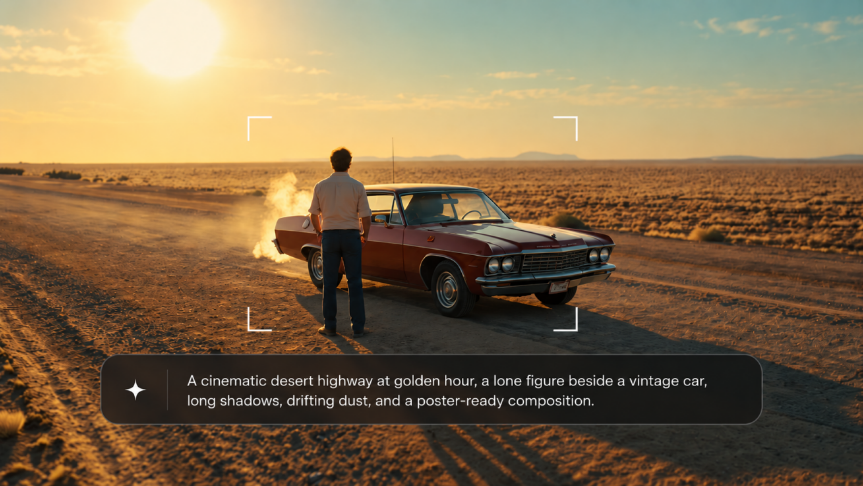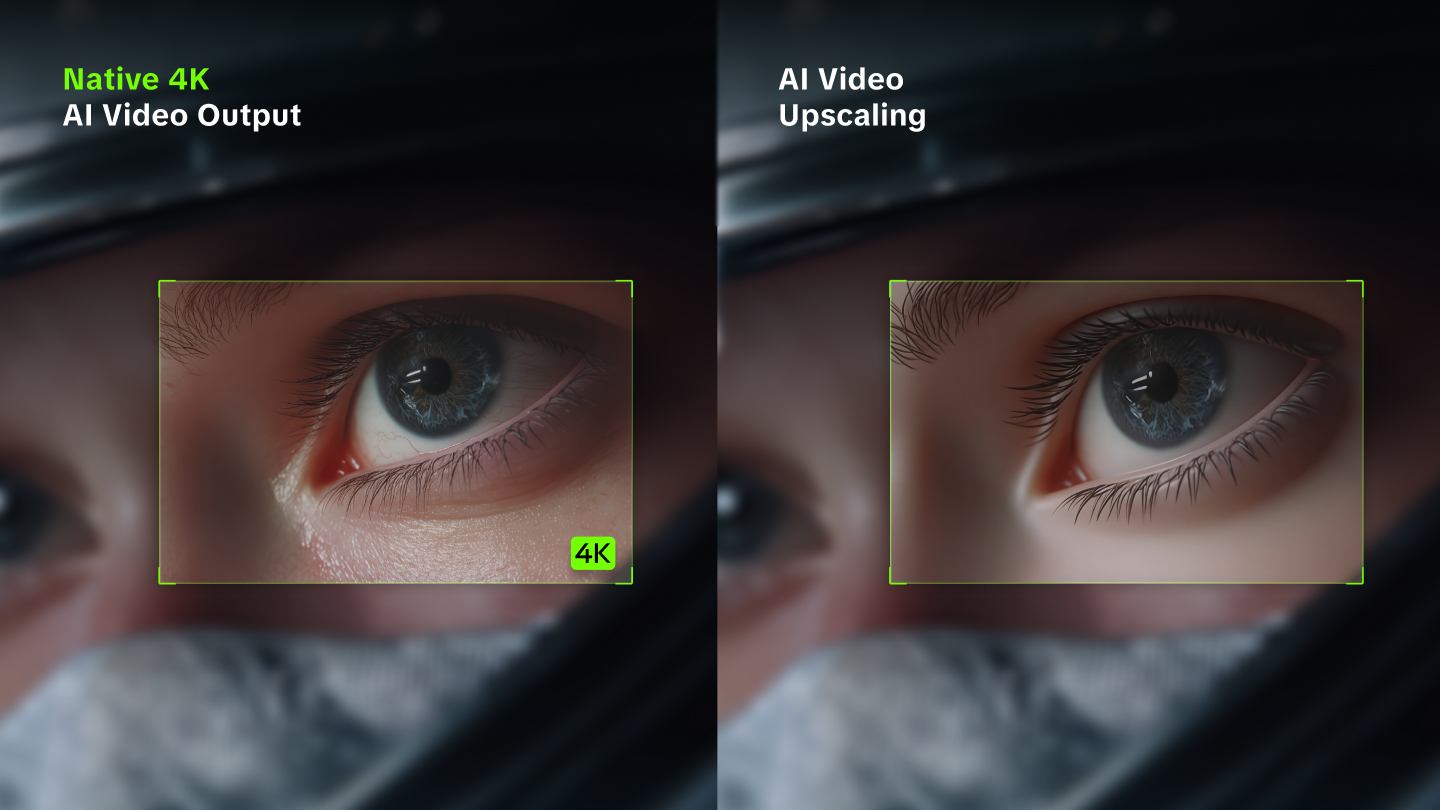
A Quick Look at Native 4K AI Video Output vs Upscaling
| Performance Metric | Native 4K AI Video Output | AI Video Upscaling |
|---|---|---|
| Generation Method | Every pixel is calculated from zero | Pixels are enlarged through estimation |
| Texture Realism | High fidelity with pores and grit | Often waxy or smooth plastic look |
| Temporal Stability | Up to 15 seconds of continuous video | Prone to flickering and shimmering |
| Post Production | High flexibility for cropping/zooming | Limited flexibility before blur shows |
| Production Tier | Studio and cinema-grade quality | Social media and casual viewing grade |
| Computational Load | High (Requires professional cloud servers) | Low to Moderate (Runs on most devices) |
| Branding Accuracy | Text and logos remain sharp and clear | Small details often warp or distort |
| Overall Realism | Authentic light and physics behavior | Interpreted and approximated visuals |
Sharp visuals define the modern digital era. High-resolution imagery has transitioned from a luxury to a standard expectation for global audiences. Every frame requires immense detail to satisfy professional demands. Choosing the correct technology determines the ultimate success of visual storytelling projects. The gap between true generation and software enhancement remains a critical topic today.
Native 4K AI Video Output
Native generation represents a process where every pixel gets calculated from the beginning of the workflow. The system produces a file with a true resolution of 3840 by 2160 pixels without relying on previous low-resolution data. Instead of stretching an existing image, the artificial intelligence builds the entire frame through complex mathematical models. Such a method guarantees that the spatial detail is baked into the footage from the very first calculation. Every aspect of light, shadow, and texture receives unique attention during the creation phase.
The Kling 3.0 series serves as a prime example of such technology. Kling VIDEO 3.0 supports native 4K video generation, while Kling’s image models may support high-resolution image workflows separately. When the model generates a 4K AI video, it accounts for background complexity and edge sharpness simultaneously. The result is a cleaner video with fewer blurring artifacts. Professional production standards require such precision because the final output holds up on large screens. Fine elements are more likely to remain visible and detailed, especially with clear prompts and high-quality references.
Why Upscaling Relies On Predictive Guesswork
Upscaling involves a different technical path where a system takes a low-resolution source and attempts to expand it. If the original clip is 720p or 1080p, the software must fill in millions of missing pixels. Most tools utilize interpolation to accomplish such a task. The algorithm looks at existing pixels and creates an educated guess about what the neighboring colors should be. While modern AI upscalers have improved, they still operate through estimation rather than original creation.
Such tools often struggle to add genuine realism. Because the algorithm lacks a deep understanding of the subject matter, the results can appear processed. Fine textures often get smoothed out because the system mistakes them for noise. The predictive nature of upscaling creates a ceiling for quality. No matter how advanced the enhancer is, it cannot recover information that was never recorded in the original low-resolution file. The software simply provides a plausible interpretation of the missing data. Viewers can often spot the difference when they look at fine patterns or small text. The edges may look sharp, but the internal details lack the grit of reality.
Understand Texture Fidelity in High-Resolution Displays
Texture fidelity marks the boundary between artificial content and lifelike imagery. In a native 4K AI video, the model renders materials with high accuracy. The Kling 3.0 Omni model demonstrates an upgraded ability to reproduce subtle elements like material rendering and natural textures. One can see individual skin pores and the grain of expensive fabrics clearly. Such details are vital for cinematic close-ups where the audience expects a certain level of physical weight. The weight of the skin and the subtle shifts in muscle are visible because the pixels carry real information.
Upscaling often produces the infamous mannequin effect. In such scenarios, human skin appears waxy or overly smooth, much like a freshly polished bowling ball. The enhancement model accidentally removes the tiny imperfections that make a person look real. Because the system prioritizes noise reduction, it flattens the microtexture that gives skin its natural depth. Native generation avoids such pitfalls. The Video 3.0 series focuses on expressive and dynamic performances for heightened realism. Characters look like living beings instead of plastic statues. The richness of the texture transitions smoothly between light and shadow, providing a professional finish.
Reference Image | Element | Output |
|---|---|---|
 |   |  |
What Challenges Exist With Temporal Consistency In Video?
Temporal consistency refers to the stability of visual details across a sequence of frames. In any video project, a character or object must look identical from one second to the next. AI upscalers frequently process frames individually or in small batches, which leads to flickering or shimmering. Hair and grass are particularly prone to such artifacts because the algorithm makes different guesses for every new frame. The result is a distracting, crawling effect that ruins the immersion for the viewer.
Advanced models like Kling 3.0 solve such issues through a unified multimodal architecture. The system supports an extended video duration of up to 15 seconds in a single generation. Such a long window allows for intricate sequences, including long takes and multiple plot twists, without losing visual coherence. The temporal data gets generated alongside the spatial data, allowing for smooth, film-like transitions. Physics-aware motion also plays a role here. Cloth dynamics and hair movement follow the laws of gravity in real time. Characters transfer weight naturally, and liquids obey the rules of nature. Such consistency is impossible to achieve with standard upscaling because the enhancement layer does not understand the underlying physics of the scene.
Strategic Advantages of Professional Storyboard Control
Professional creators require more than just high resolution: they need control. The Video 3.0 Omni model introduces native multi-shot storyboard control. Such a feature allows users to specify the duration, shot size, and perspective for every segment. The AI acts as a digital director, understanding cinematic languages with precision. It can handle classic shot reverse shot dialogues or advanced cross-cutting techniques automatically. Native 4K output combined with such control allows for the production of entire scenes in one go.
The all-in-one product framework of Kling AI integrates text to video, image to video, and reference to video into a single workflow. Creators can lock in characters using reference images or short clips. The system then maintains identity consistency across complex transitions. A character can wear a branded shirt, and the logo remains sharp and readable throughout the entire 15-second take. Such accuracy serves the needs of the e-commerce and advertising industries perfectly. Upscaling a lower-quality generation would likely warp the logo or blur the text during fast movements. Native generation protects the integrity of those vital branding elements.
Comparing Processing Speed And Computational Demands
The choice between native generation and upscaling often comes down to available resources. Native 4K AI video requires significant computational power. Generating 8.3 million pixels for every frame involves billions of operations. A 15-second render at such high quality can take several minutes on specialized cloud hardware like the Kling platform. Local high-end PCs might struggle with such workloads, often taking much longer to produce the same result. The investment in time and credits is the trade-off for studio-grade visuals.
Upscaling is generally faster and lighter. Many tools are browser-based or designed for mobile devices because they require less raw processing power. If a creator is satisfied with the existing details of a 1080p clip and only needs a larger file for social media, upscaling is an efficient choice. It serves as a practical solution for time-critical deliverables. However, for hero shots and key visuals, the extra render time for native 4K is a necessary cost. Professional workflows often use native generation for the final export to guarantee the highest possible quality for large-format displays and cinematic presentations.
Future Proofing Creative Portfolios Through Authentic Resolution
Display technology moves faster than content production. Most modern households now own 4K televisions, and 8K screens are already entering the market. Generating content natively at high resolutions is a form of future-proofing. Assets created with the Kling IMAGE 3.0 series will remain relevant and usable for years because they contain enough data for professional editing. Editors can crop, zoom, or reframe a native 4K shot without seeing the underlying pixel structure.
Upscaled footage lacks such flexibility. Once a creator tries to zoom into an upscaled frame, the interpolation artifacts become obvious. The image looks mushy and loses its professional appeal. Native 4K AI video allows for the extraction of high-resolution stills that are suitable for print or digital ads. Such versatility increases the value of every generation. As the industry shifts toward higher standards, the distinction between true resolution and software tricks will become even more pronounced. Investing in native quality today protects the longevity of a creative portfolio.
Integrated Audio And Multimodal Narrative Synergy
A significant difference in modern AI video platforms involves the integration of sound. The Kling 3.0 series features native audio generation across multiple languages and accents. Such a system allows for precise speaker attribution in multi-character scenes. The audio gets generated along with the video, allowing for perfect lip sync and environmental sounds. Native audio-powered feature decoupling enables the dual binding of visual identity and vocal tone.
When a creator uses upscaling, they must often layer audio on top of the video after the fact. Such a fragmented workflow can lead to sync issues or a lack of atmospheric depth. The unified architecture of Kling 3.0 means the model understands the relationship between the visuals and the sounds. If a character speaks on a windy terrace, the background hum and the vocal clarity match the environment perfectly. Such multimodal synergy enhances the overall realism beyond what simple resolution enhancement can offer. The final product feels like a professional film because every sensory element works in harmony.
Reference Image | Element | Output |
|---|---|---|
 |  |  |
Summary
Achieving professional results requires a deep understanding of how resolution affects the final output. Native 4K generation offers unparalleled realism and texture fidelity for modern screens.
Experience the power of native 4K AI video on the Kling AI platform to elevate your creative projects today.
FAQs
Q1. Is Native 4K AI Video Better Than Upscaled Content?
Native 4K output is superior for professional projects because every pixel is a primary calculation. Such a method provides raw sharpness and clarity that upscaling cannot match. While upscaling expands an existing image, it often misses fine textures like skin pores or fabric grains. Kling AI’s native 4K output can produce sharper and more detailed frames for professional-looking results, but output quality still depends on prompt quality and scene complexity.
Q2. How Does Kling AI Achieve Production-Ready Quality?
The Kling 3.0 series utilizes a fully upgraded multimodal architecture to produce high-fidelity visuals. The model parses deep instructions to maintain consistency across complex narrative transitions. Features such as native audio, Multi-Shot generation, and reference-based consistency allow for the creation of lifelike performances. Such technology renders videos that are ready for use in film and advertising without heavy post-production.
Q3. Can Upscaling Fix Blurry Low-Resolution Videos?
Upscaling can improve the look of soft footage, but it cannot perform miracles. The algorithm makes educated guesses to fill in missing data, which sometimes leads to waxy textures or flickering artifacts. For the best results, creators should generate content at the highest native resolution possible. Using the Kling platform allows for the generation of high-resolution assets from the start of the creative process.
Q4. What Are The Hardware Requirements For 4K Generation?
Generating 4K AI video natively requires massive computational power and high-end GPUs. Cloud-based solutions like Kling AI are the most accessible way to reach such quality without expensive local hardware. The platform handles the heavy rendering tasks, allowing users to receive cinematic videos in minutes. Such a setup is ideal for professional teams that need high-volume production.
Q5. When should creators use native 4K AI video output?
Native 4K is best for commercial visuals, cinematic shots, product videos, large-screen playback, and scenes where fine details matter. For drafts, quick tests, or casual social media content, lower-resolution generation or upscaling may still be more efficient.