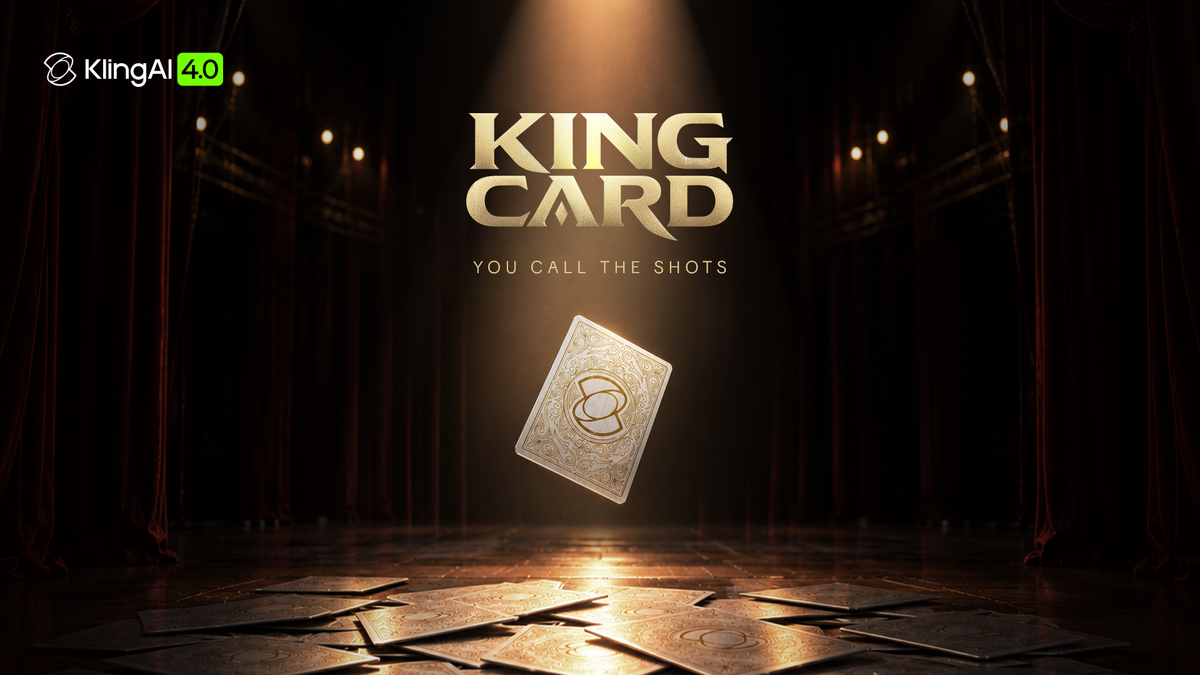
With 5 million views across social platforms, KING CARD turns a simple card trick into a cinematic journey. Guided by a magician, the audience travels through a transforming city and a star-filled sky, only to discover that the answer was there all along.
“The King was always you.”

Watch the Full Film: KING CARD
Here’s a closer look at how we brought KING CARD to life with Kling 4.0.
Choreographing Complex Motion with Dynamic Motions
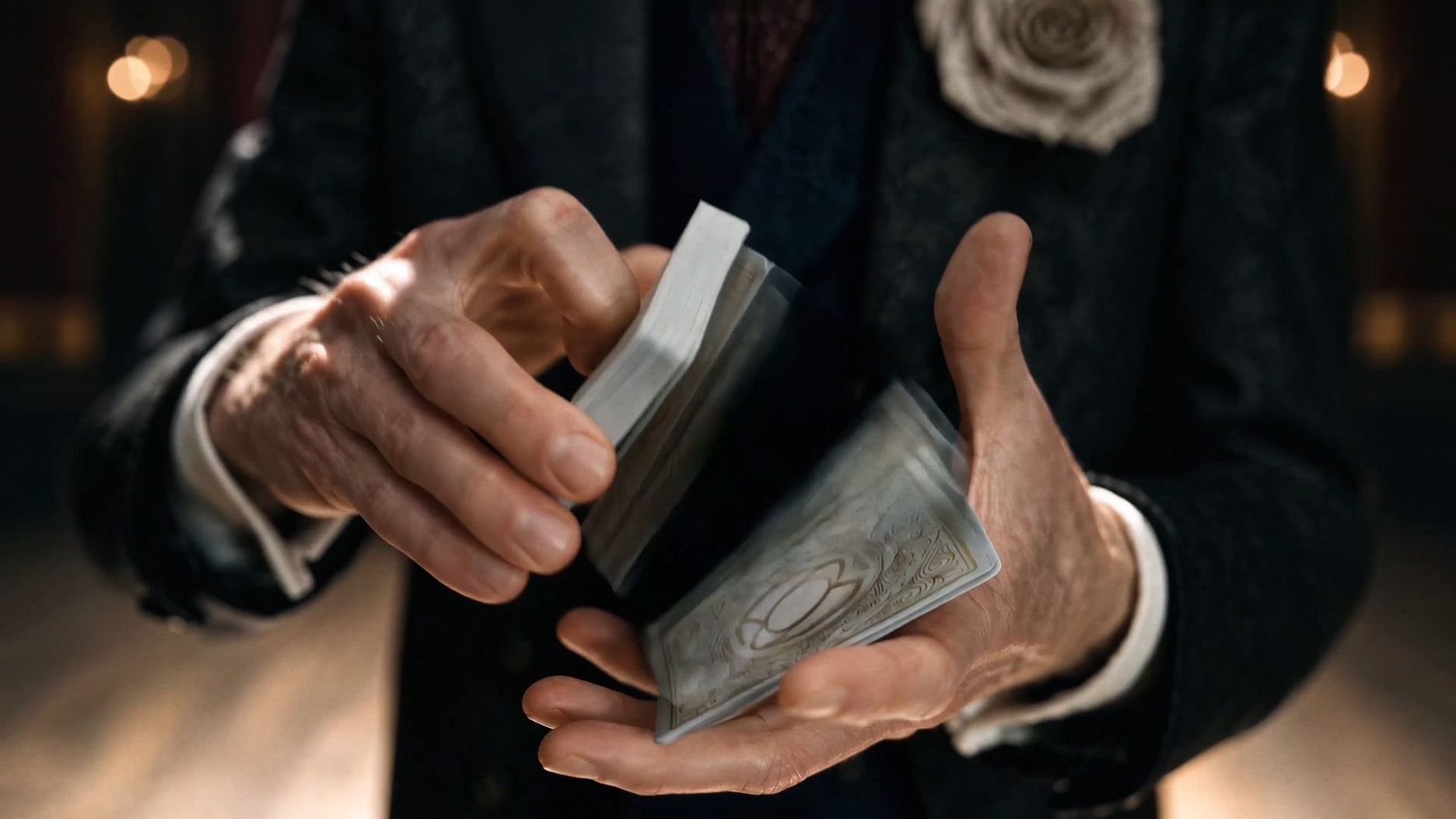
Cards break free from the magician’s fingertips, spin independently, and multiply into thousands, forming an irregular spiral band above the audience. As the camera tilts upward and retreats along the aisle, the full theater comes into view.
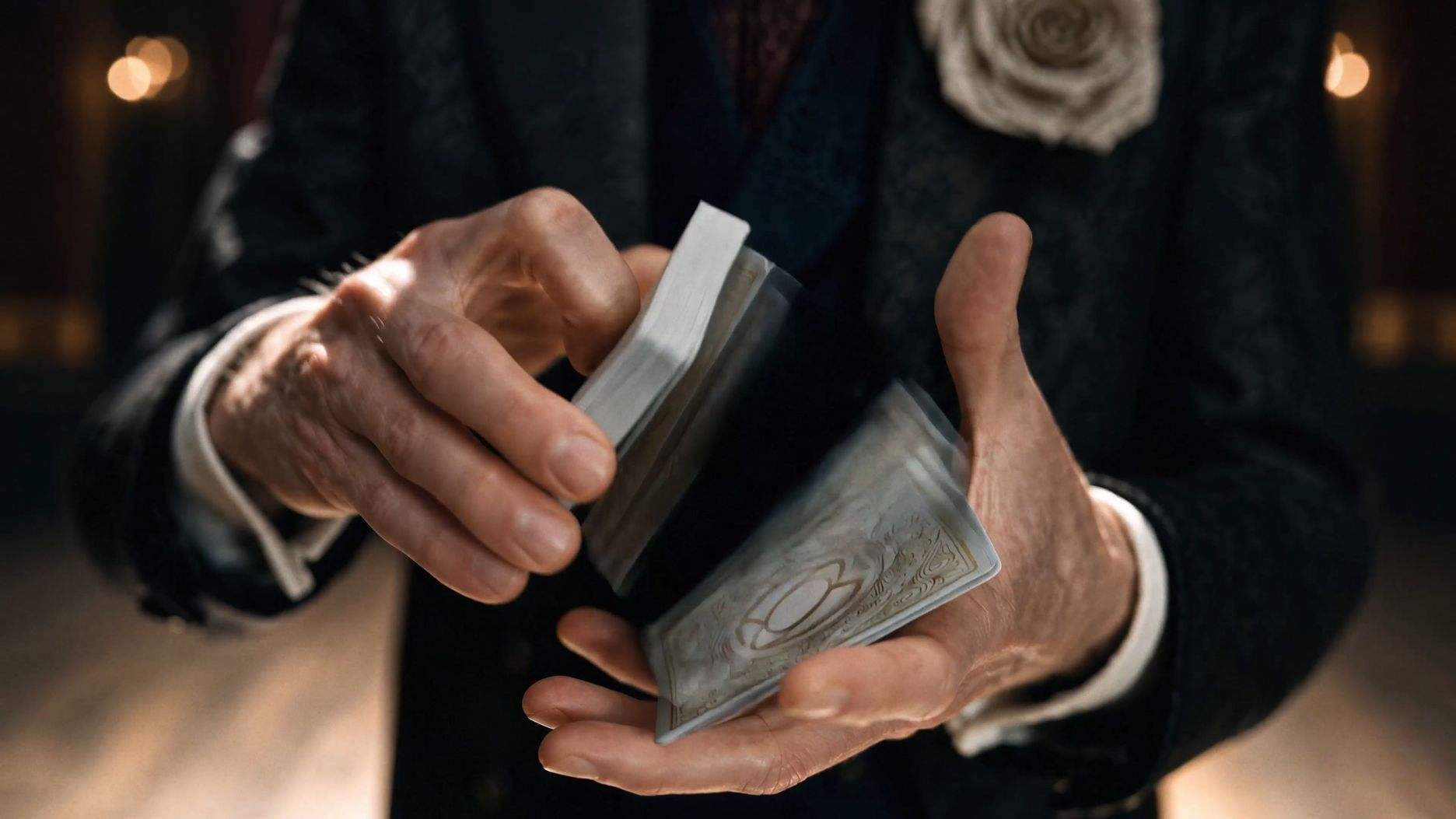
Clip: Choreographing Cards in Motion
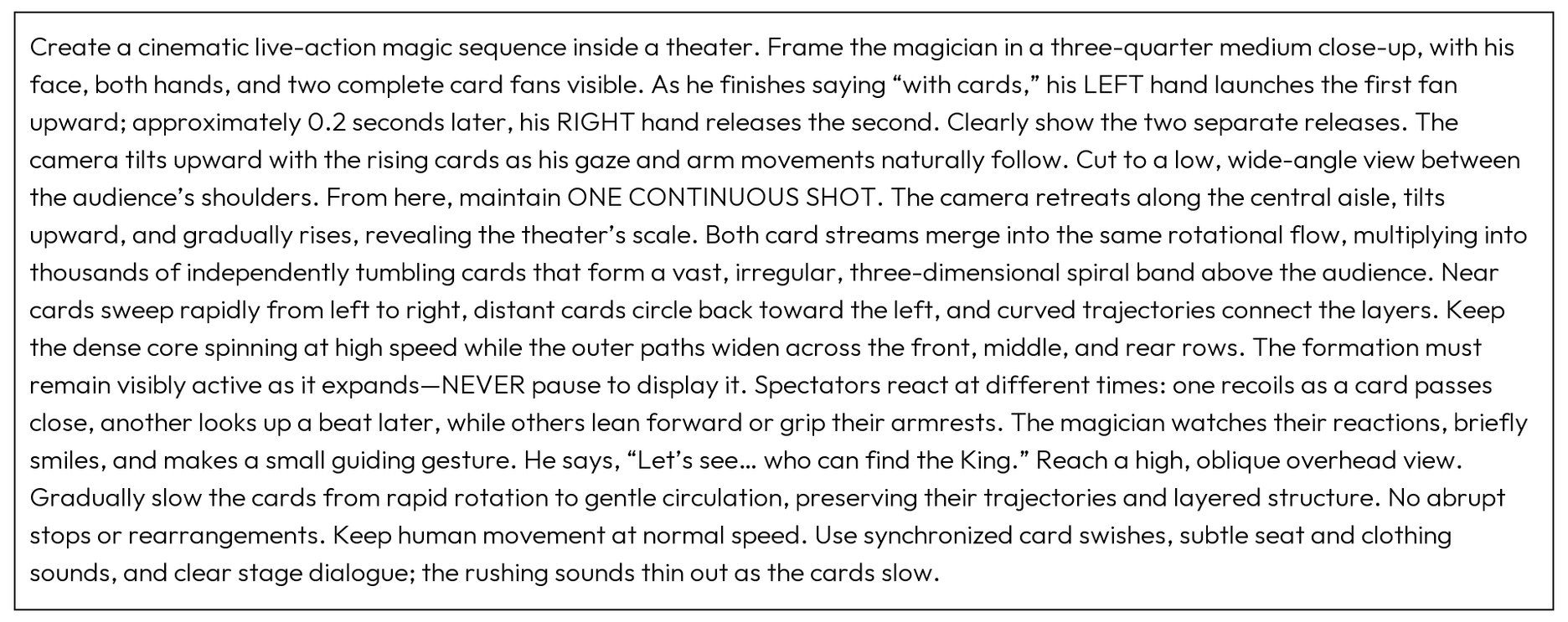
Prompt: Choreographing Cards in Motion (Excerpt)
Dynamic Motions brings the sweeping card formations to life. Multi-Keyframe control helps shape the key moments as one card transforms into a red paper bird and another into a white one, while Omni Reference helps maintain visual continuity throughout the sequence.
The red paper bird becomes our visual guide. An FPV-style camera follows it between the audience seats before thousands of paper birds sweep through the air. A rippling, water-like rupture then opens in the theater, followed by colored light that transforms the space into a pale, sculptural world.
By carrying one recognizable figure through these transformations, we could let the spectacle grow without losing the audience’s point of focus.
Using Camera Movement to Create Scale and Speed
The newspaper train turns the expanding world into a physical experience. We treated the train as an extension of the paper motif. An ordinary, lightweight material becomes something large enough to carry passengers through an entire city. The contrast between a familiar material and an impossible scale makes the train itself part of the wonder.
The camera builds the sensation of being on board. A high-angle wide shot establishes the train, the surrounding skyscrapers, and the distant skyline. The camera then drops alongside the carriages, tracks along their length, and follows the train as its front climbs alongside a skyscraper before plunging between buildings.
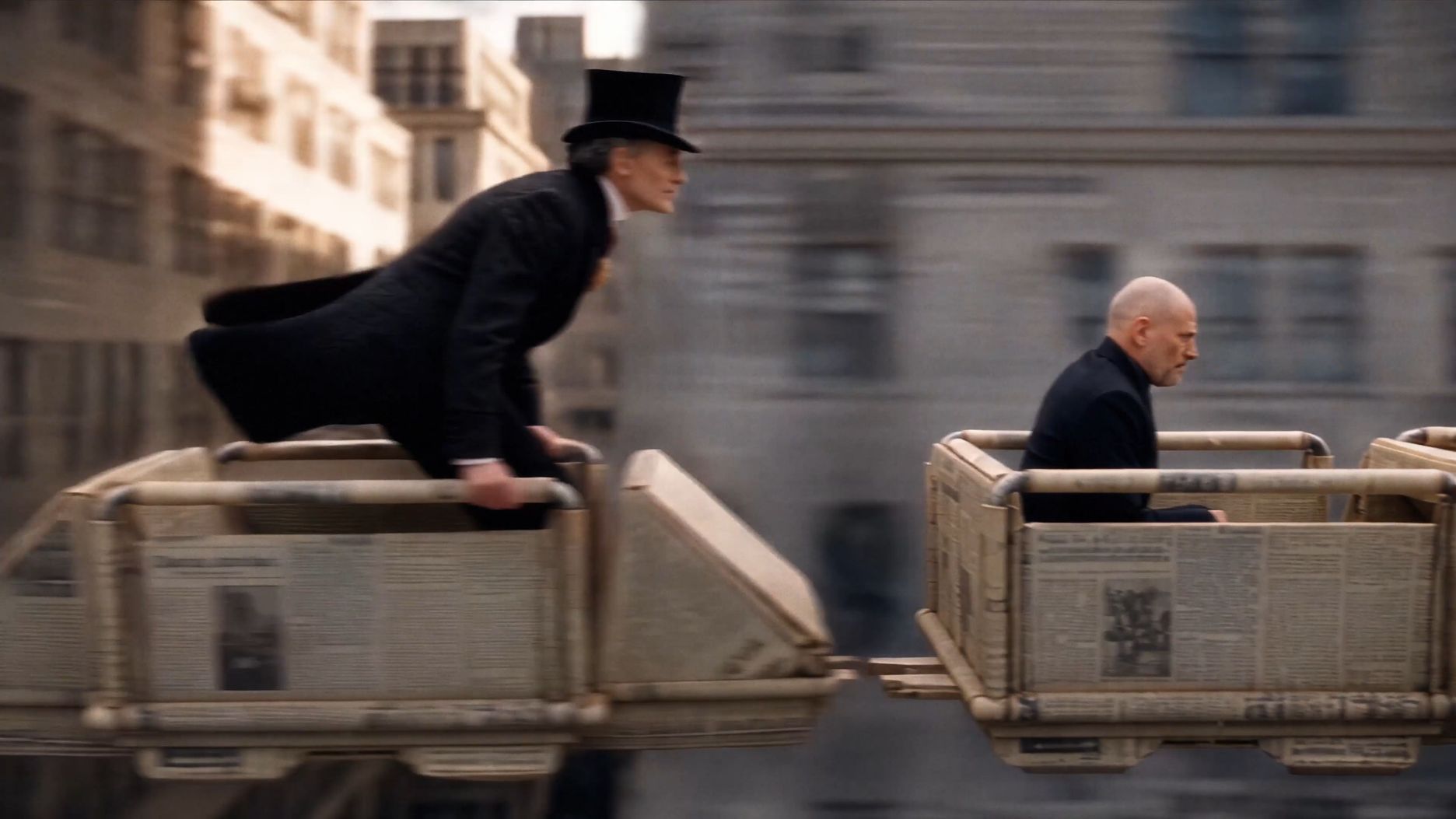
Clip: Creating Scale and Speed Through Camera Movement
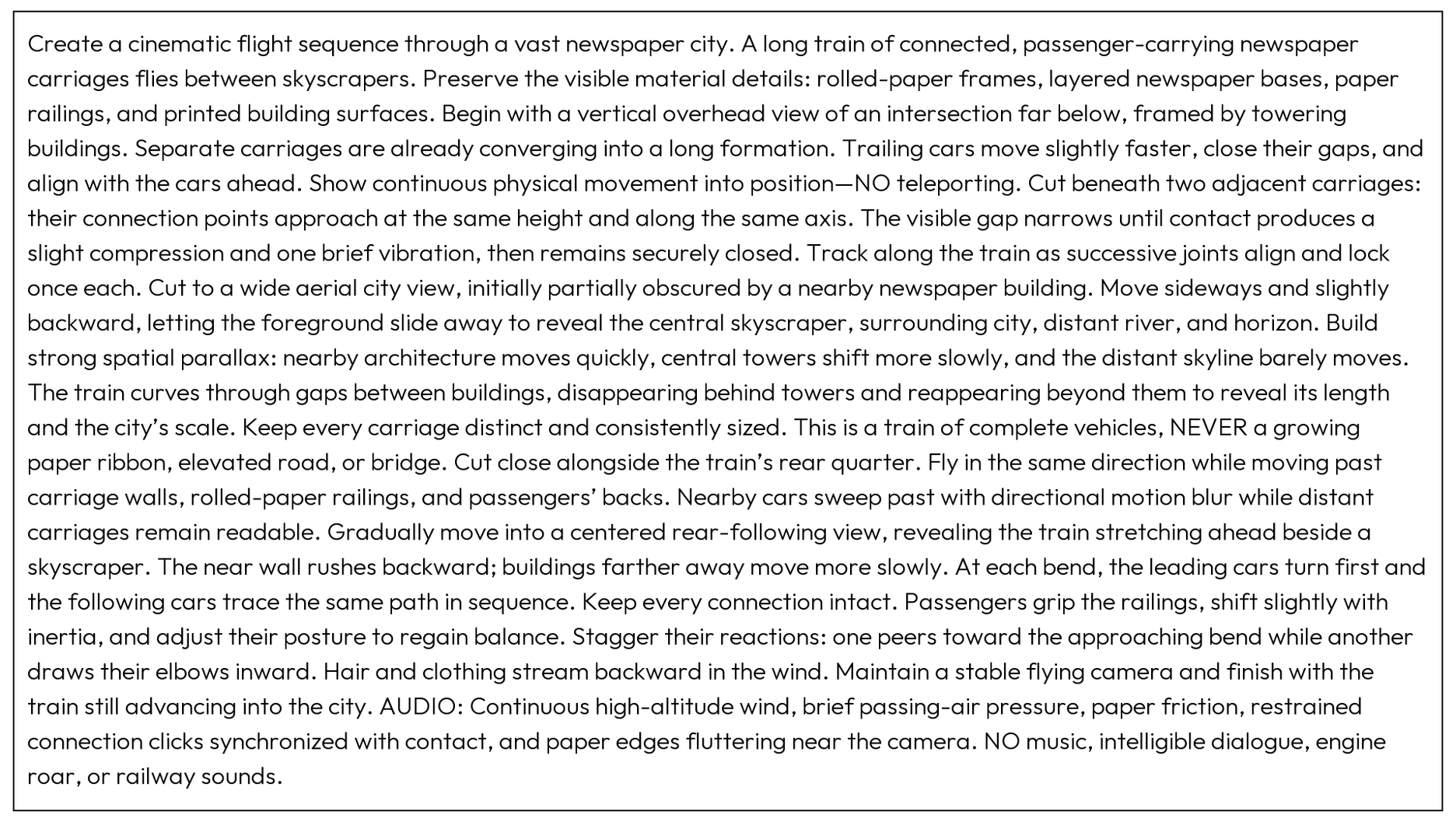
Prompt: Creating Scale and Speed Through Camera Movement (Excerpt)
These changing perspectives do more than show the train’s route. Wide shots establish the scale of the city, while closer tracking shots and forward-moving FPV views turn height and speed into something the audience can feel. The camera becomes part of the ride, bringing the audience closer to the action rather than simply observing it.
Turning Environmental Transformations into Action
A bridge tower transforms into a giant purple, pixelated octopus. Vines climb skyscrapers and intertwine as flowers bloom between them. A building becomes a towering pink cake. Familiar architecture takes on entirely new forms and behaviors: structures can reach, grow, or become the setting for a fight.
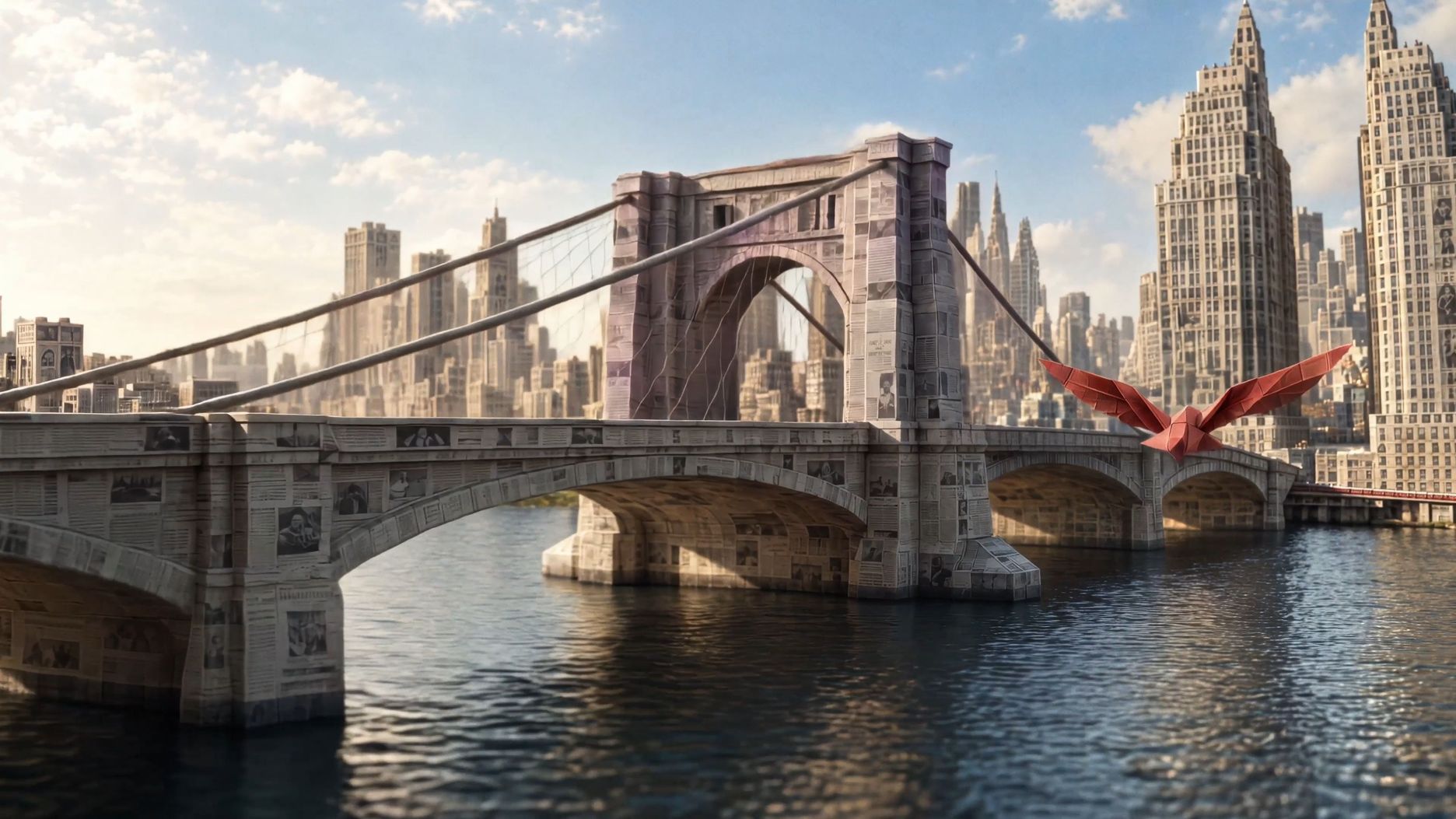
Clip: Turning Architecture into Action
We wanted these transformations to generate action, not just visual spectacle. The key was to prompt clear interactions between characters and their environment:
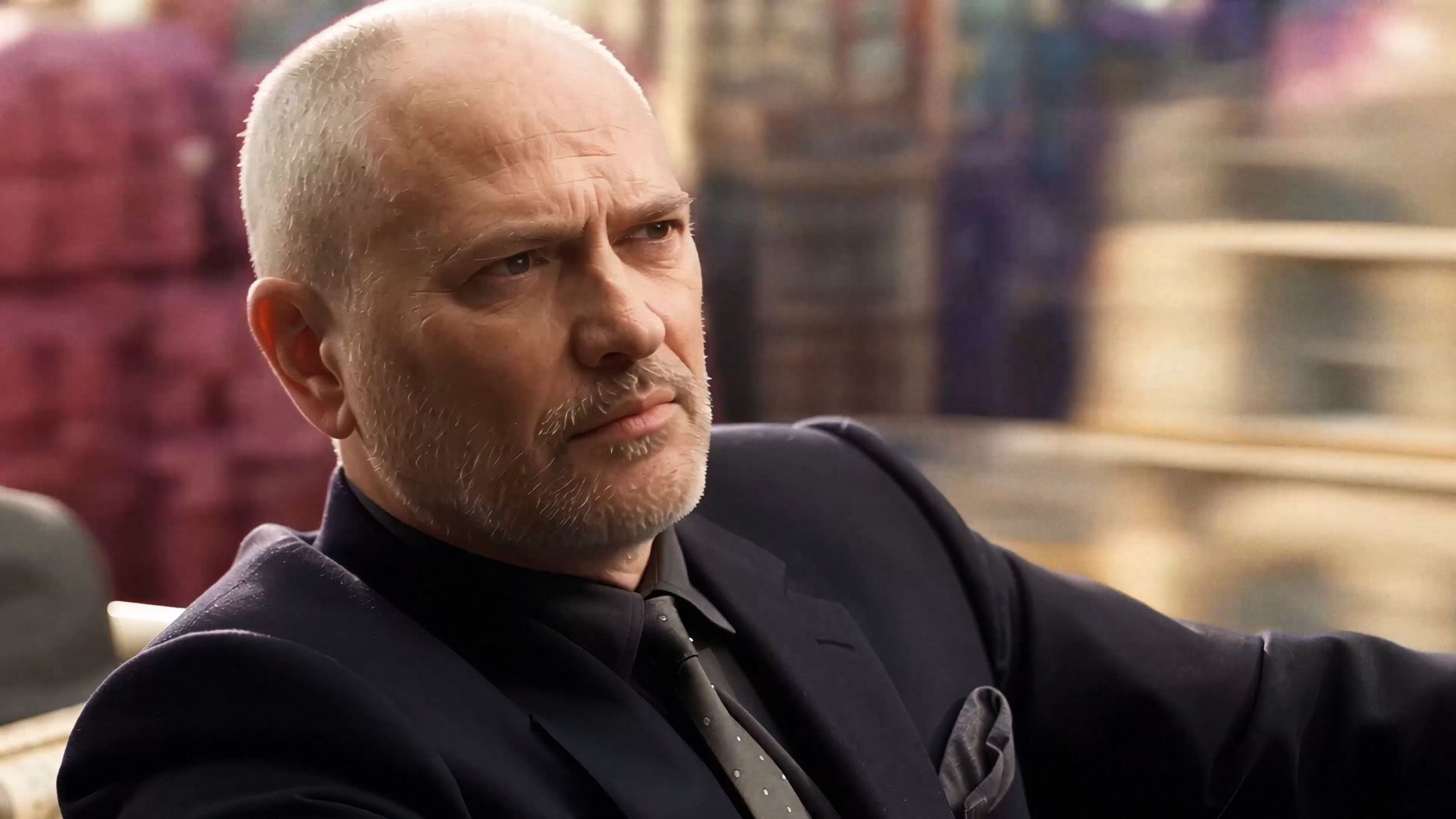
Clip: Connecting Combat with the Environment
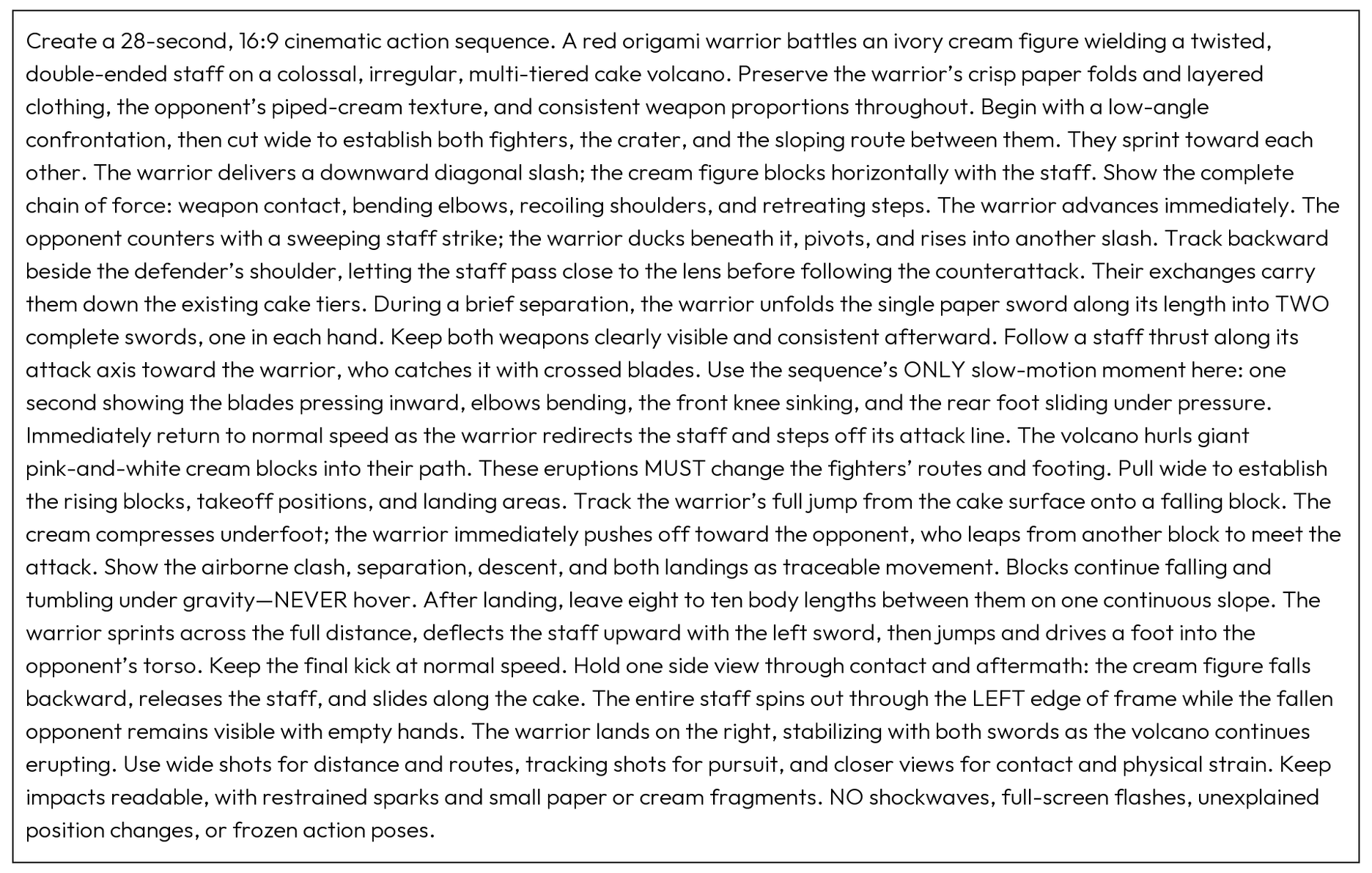
c
Camera choices follow the action: wide shots establish the opponents’ positions, tracking shots follow their movements, and close-ups emphasize contact and reaction.
As we developed these scenes, we focused on cause and effect. An attack prompts a response, a character’s movement changes the opponents’ positions, and the surrounding environment becomes part of the encounter. Keeping these relationships visible helps the action feel fast and physical without losing clarity.
Shifting from Action to Emotion
After the speed and intensity of the city, the journey slows down and makes room for a different kind of discovery.
The newspaper train curves through a tunnel and passes towering mushroom caps before the world opens into a deep blue sky filled with painterly stars. The visual style shifts dramatically, and the pace softens as attention moves from the spectacle to the individual spectators.
Each person finds a star and holds its light. As they raise it in their hands, the light gathers and transforms into a card.

Clip: Bringing Emotion into a Painterly World
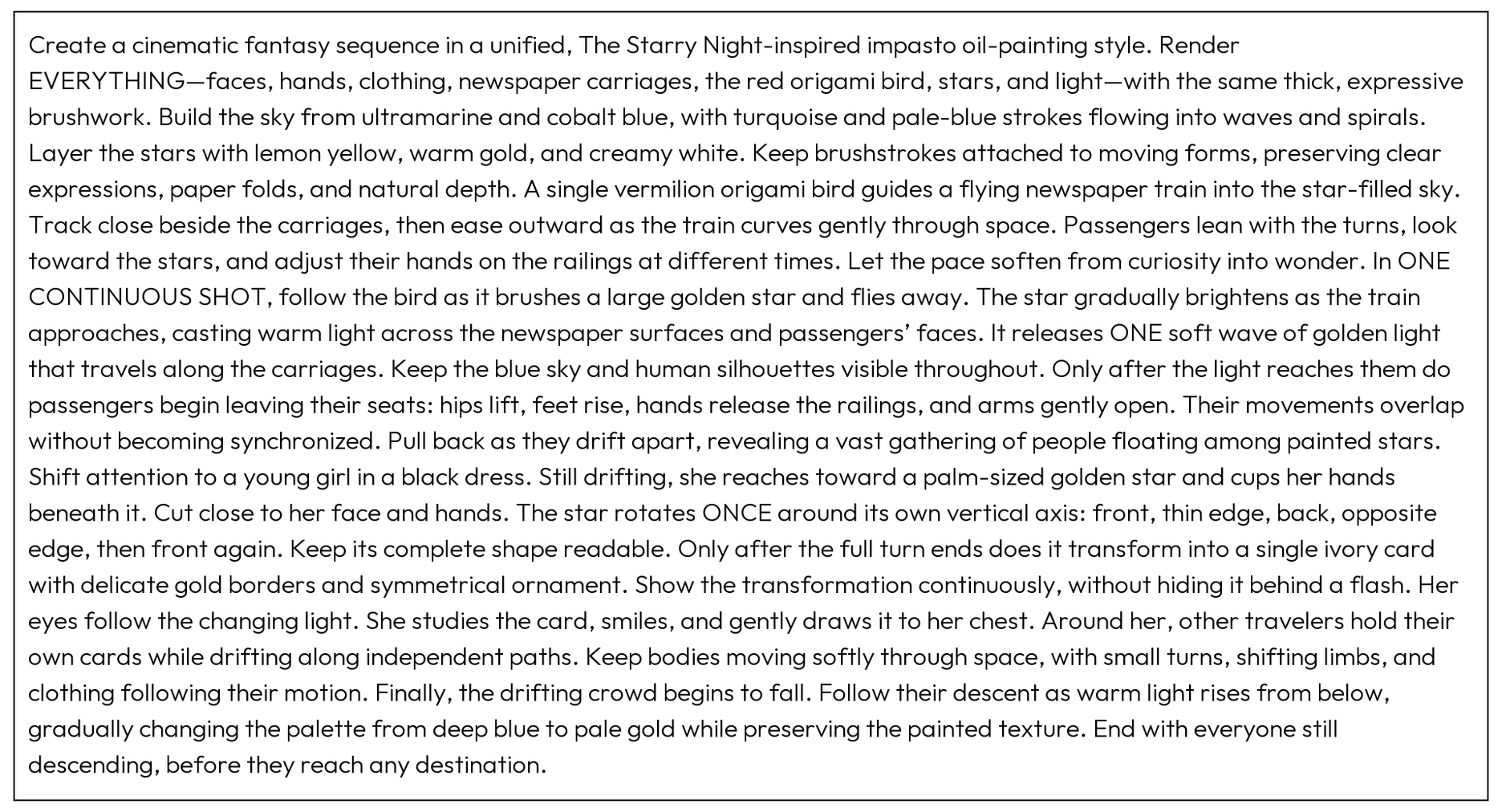
Prompt: Bringing Emotion into a Painterly World (Excerpt)
We wanted this change in visual style to feel like a continuation of the same journey. The star-filled sky introduces a new visual language, while the audience and the recurring card motif connect this unfamiliar world to the story’s beginning.
Back in the theater, each spectator finds their own face looking back. After traveling through a world transformed by imagination, they discover that the King they were searching for was themselves all along.
The King was always you.
This final reveal brings the film’s creative idea full circle: extraordinary worlds begin with the people who imagine them. Kling 4.0 gives creators and creative teams more room to explore ambitious ideas, push visual boundaries, and shape the worlds they envision.
Kling 4.0 is now fully available. Let the creating begin.