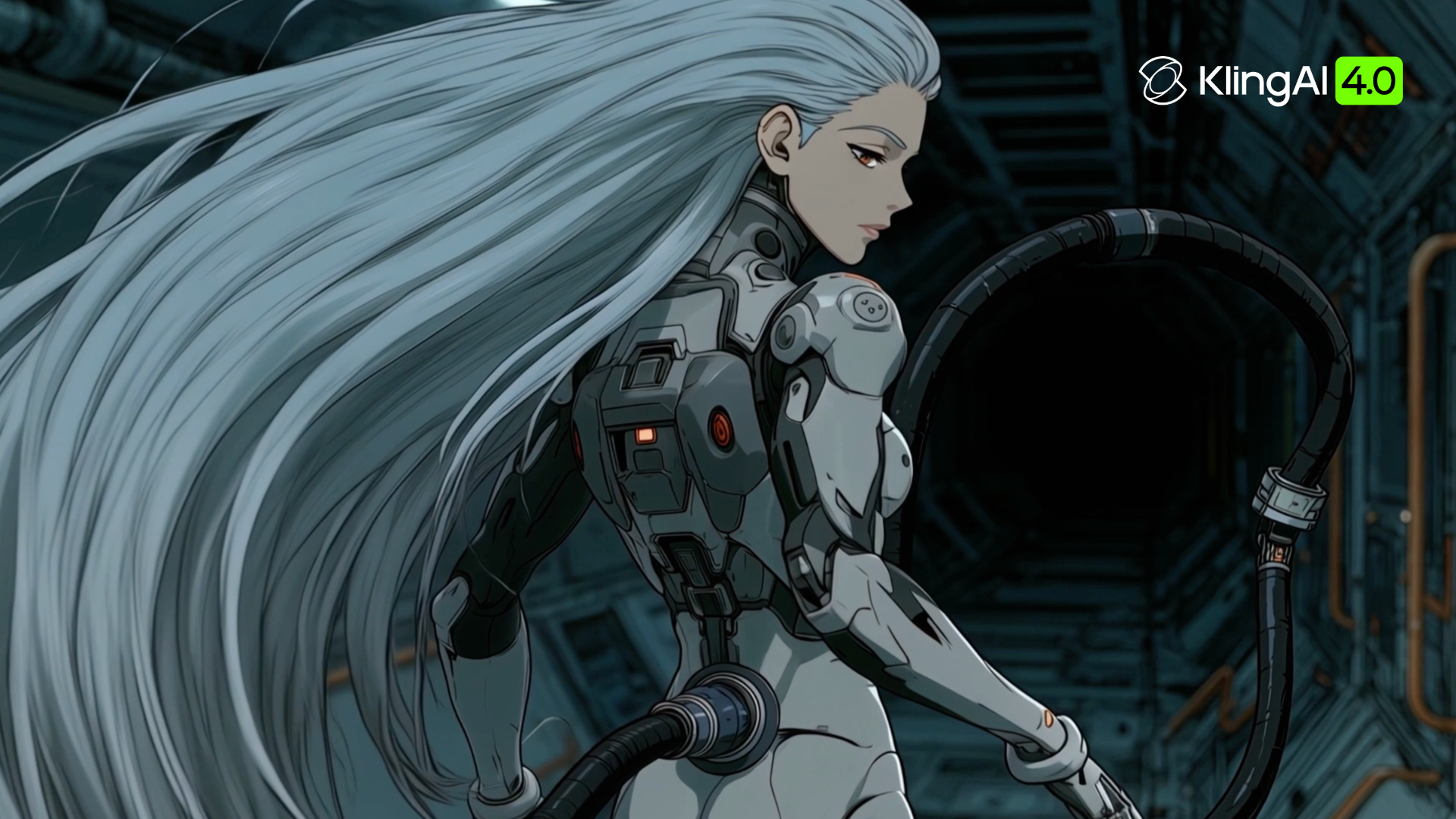
What does it take to preserve the look and feel of retro sci-fi anime in AI-generated animation? For @SwordSpeed, it's about more than visual style. Using Kling 4.0, he created THE CABLE, a sci-fi sequence exploring character consistency and believable zero-gravity movement. Here's a closer look at his creative process and what he discovered.
Notes from the Creator
My creative process begins with storytelling. Before generating a scene, I think about the environment, the character’s motivations, and how the camera should communicate information to the audience.
I primarily create animation inspired by Japanese science-fiction OVAs from 1988 to 1992. These productions had a distinct visual language: intricate mechanical designs, expressive character animation, carefully painted backgrounds, and deliberate cinematic pacing.
One of my biggest challenges with AI video generation has been maintaining that aesthetic once a scene begins moving. A reference image might perfectly capture the traditional anime look, but animation introduces additional challenges. Character proportions can shift, mechanical details can change, and environmental movement can feel disconnected from the physical world.
For me, successful AI animation isn’t simply about making a character move. It’s about making every movement feel intentional while preserving the world the character inhabits. That’s what I wanted to explore with Kling 4.0.
The Experiment: THE CABLE
For this experiment, I created a 30-second science-fiction sequence titled THE CABLE: Part 1, Follow. The story follows a female cyborg who awakens alone inside a dark spacecraft corridor. She is suspended in zero gravity, surrounded by floating debris and small droplets of water. Her extremely long silver-white hair drifts around her as she slowly regains consciousness. She discovers a thick black power cable connected to a mechanical port in her lower back. Unsure why she’s connected to it, she begins following the cable deeper into the spacecraft. Eventually, she discovers a damaged power junction and begins investigating the mechanical failure.
The sequence ends just as she identifies a bent electrical contact. The audience never learns where the cable ultimately leads. This was a deliberate storytelling decision. I wanted the mystery to develop through the character’s actions rather than dialogue or exposition.
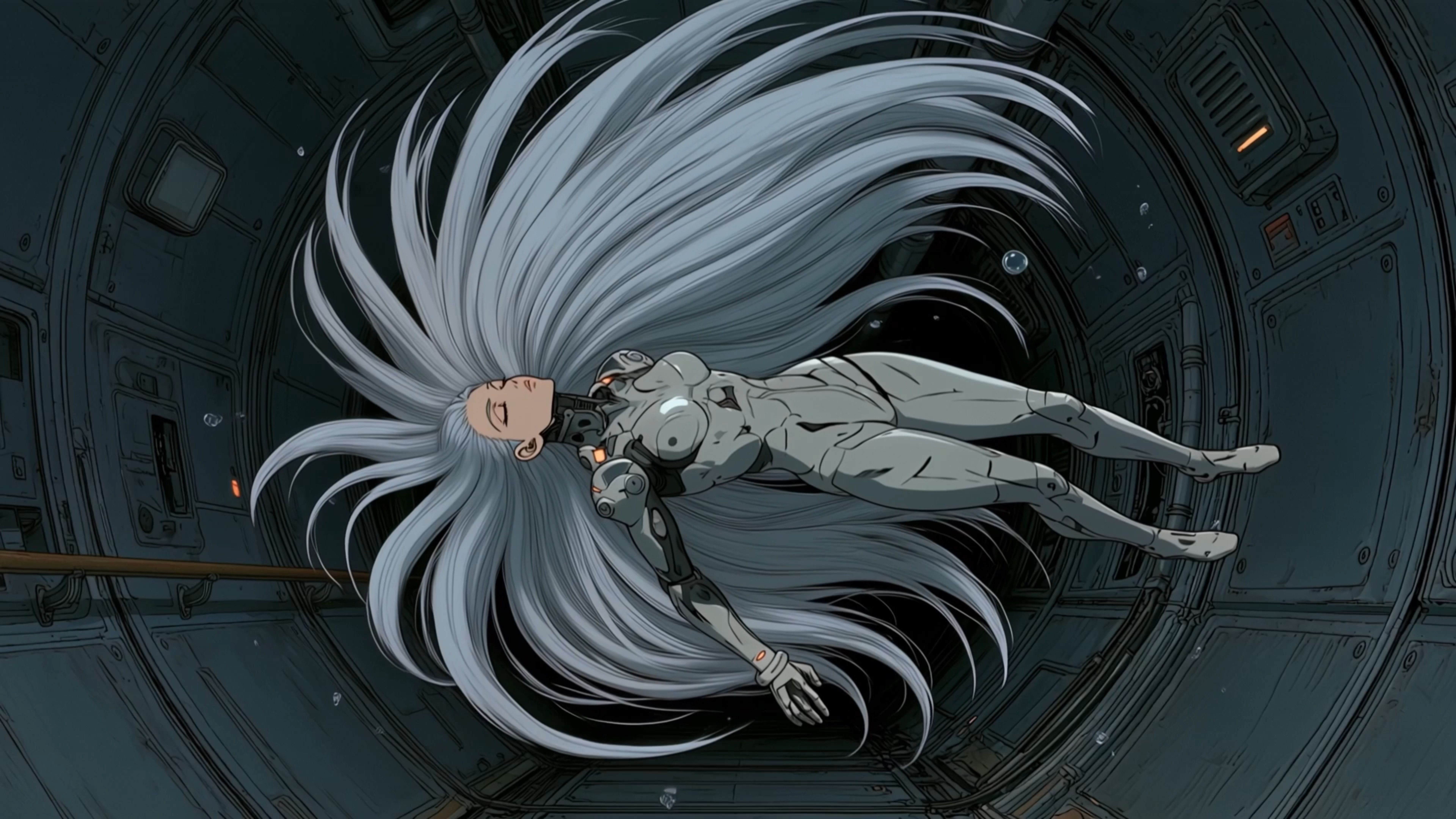

a retro science-fiction anime sequence generated with Kling 4.0-THE CABLE
Here, I wanted to evaluate three specific areas:
1) Traditional Anime Style Preservation
Could Kling 4.0 maintain the visual characteristics of late-1980s and early-1990s hand-drawn anime throughout the sequence? My references emphasized irregular ink outlines, hard cel shading, hand-painted backgrounds, muted industrial colors, and analog film texture. I wanted the animation to retain those characteristics rather than gradually becoming glossy, three-dimensional, or overly polished.
2) Character Consistency
Could the model maintain the cyborg’s design as the camera changed angles and the character rotated through the spacecraft? Her silver-white hair, mechanical components, proportions, and overall silhouette needed to remain recognizable throughout the sequence.
3) Zero-Gravity Physics
This was the most demanding part of the experiment. The character could not walk, stand, or move as though artificial gravity existed. Every movement needed to follow the physical logic of weightlessness. When she pulled against the cable, her body needed to glide forward. When she stopped, her hair and other loose materials needed to continue drifting because of momentum. The goal was to make the environment feel physically believable rather than simply placing a floating character inside a spacecraft.
Test Scenario & Prompt
I structured the animation around six story beats: WAKE → DISCOVER → FOLLOW → QUESTION → FAILURE → PROCEDURE BEGINS. The power cable serves as the visual thread connecting the entire sequence. Rather than relying on fast action or dramatic camera movements, I wanted the audience to follow the character’s discovery process. The opening establishes her isolation. The middle introduces the cable and uses her movement through the spacecraft to build suspense. The final moments transition into a mechanical repair procedure, ending before the mystery is resolved.
To support this approach, I used five reference assets:
- Cyborg humanoid
- Zero-gravity spacecraft corridor
- Power cable and cyborg connector
- Damaged power junction
- Zero-gravity junction work area
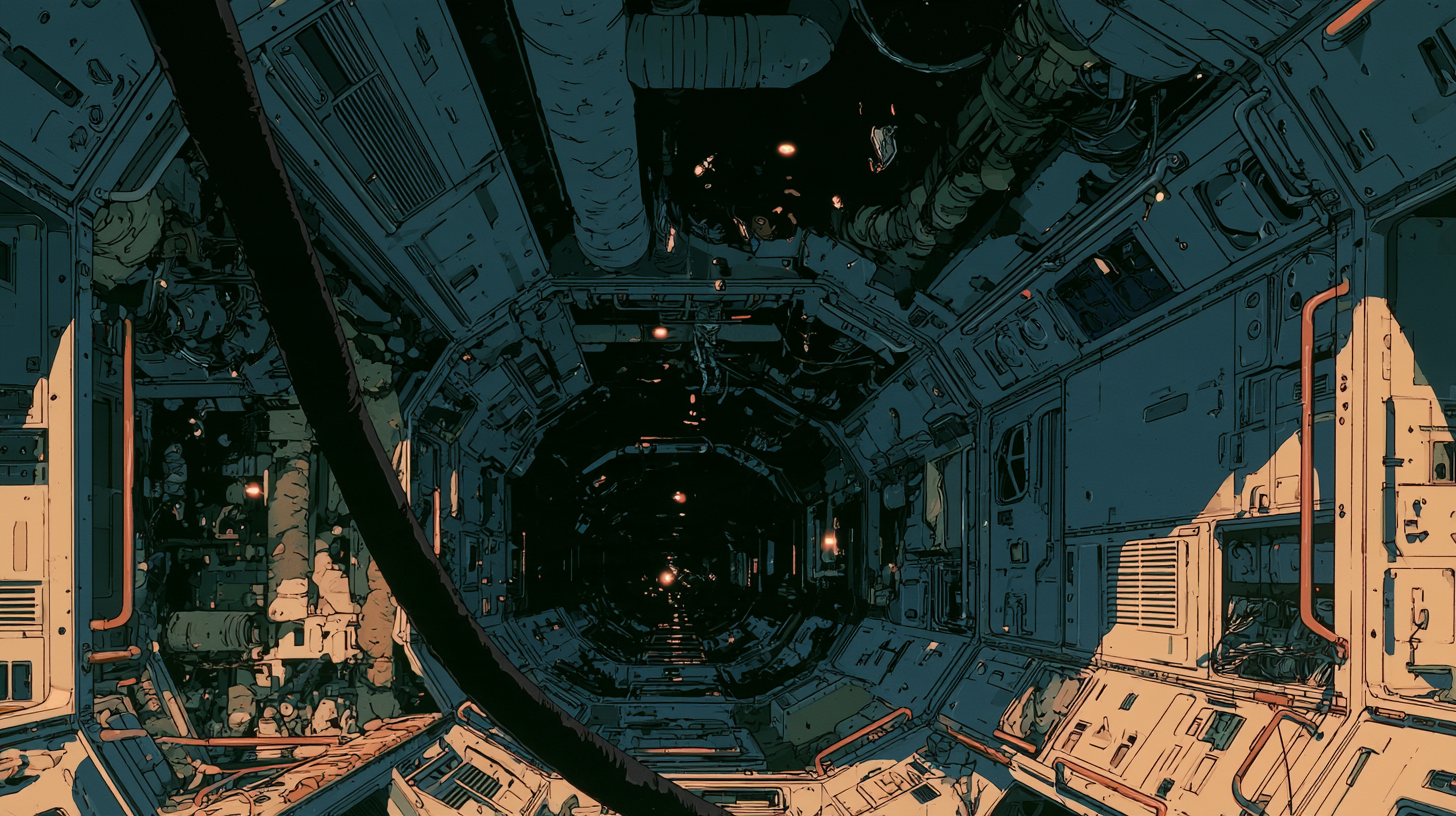
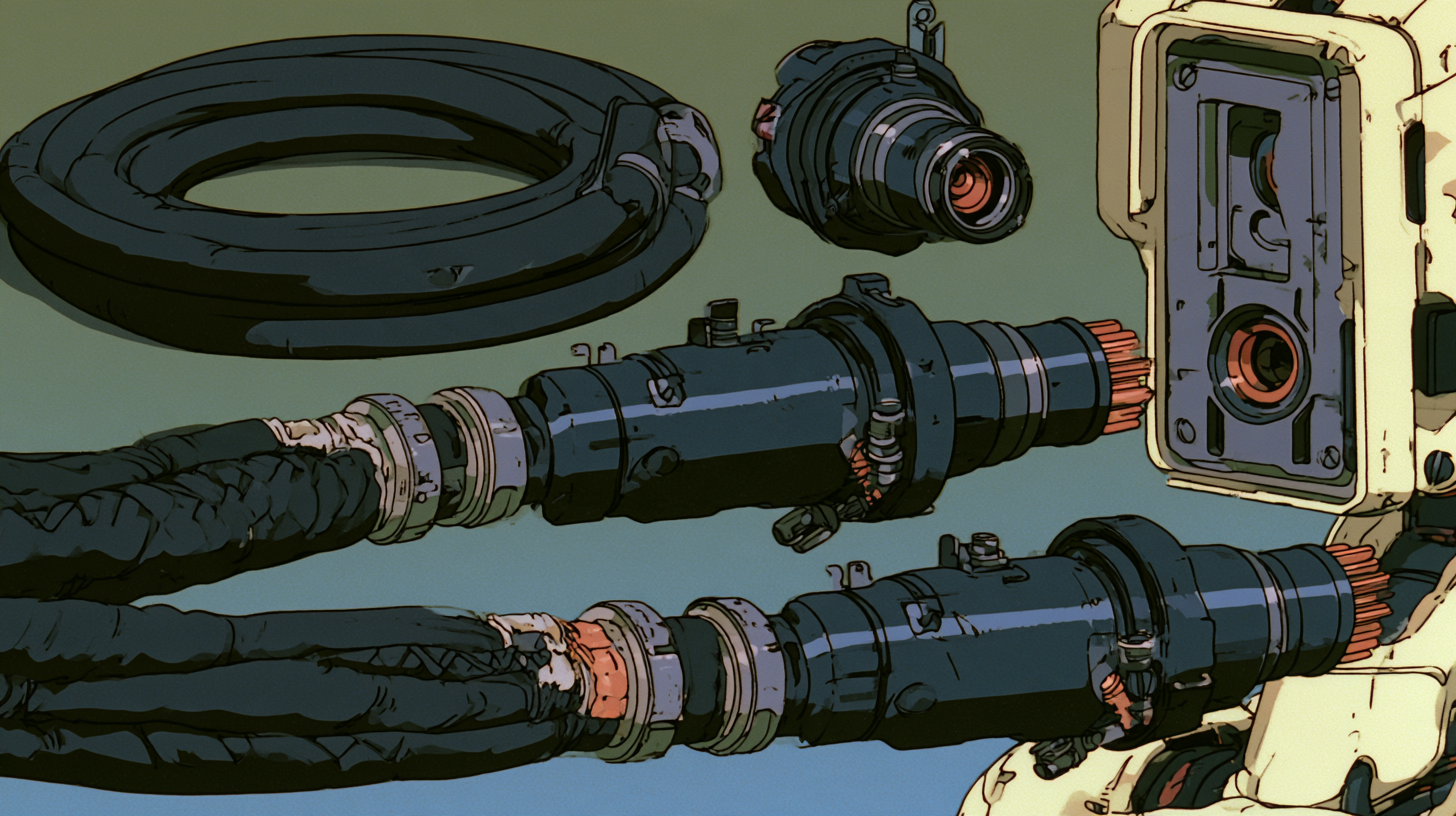
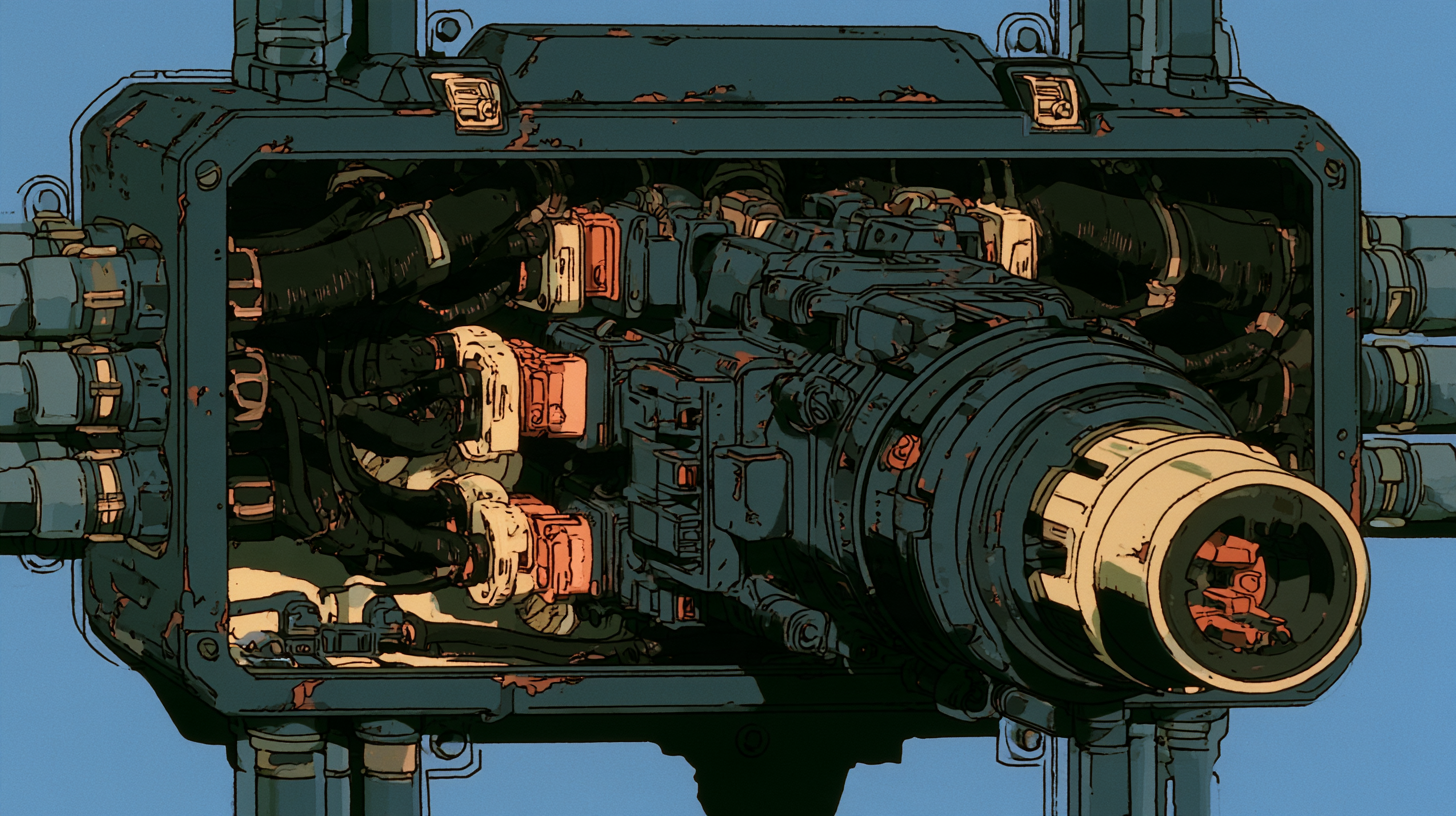
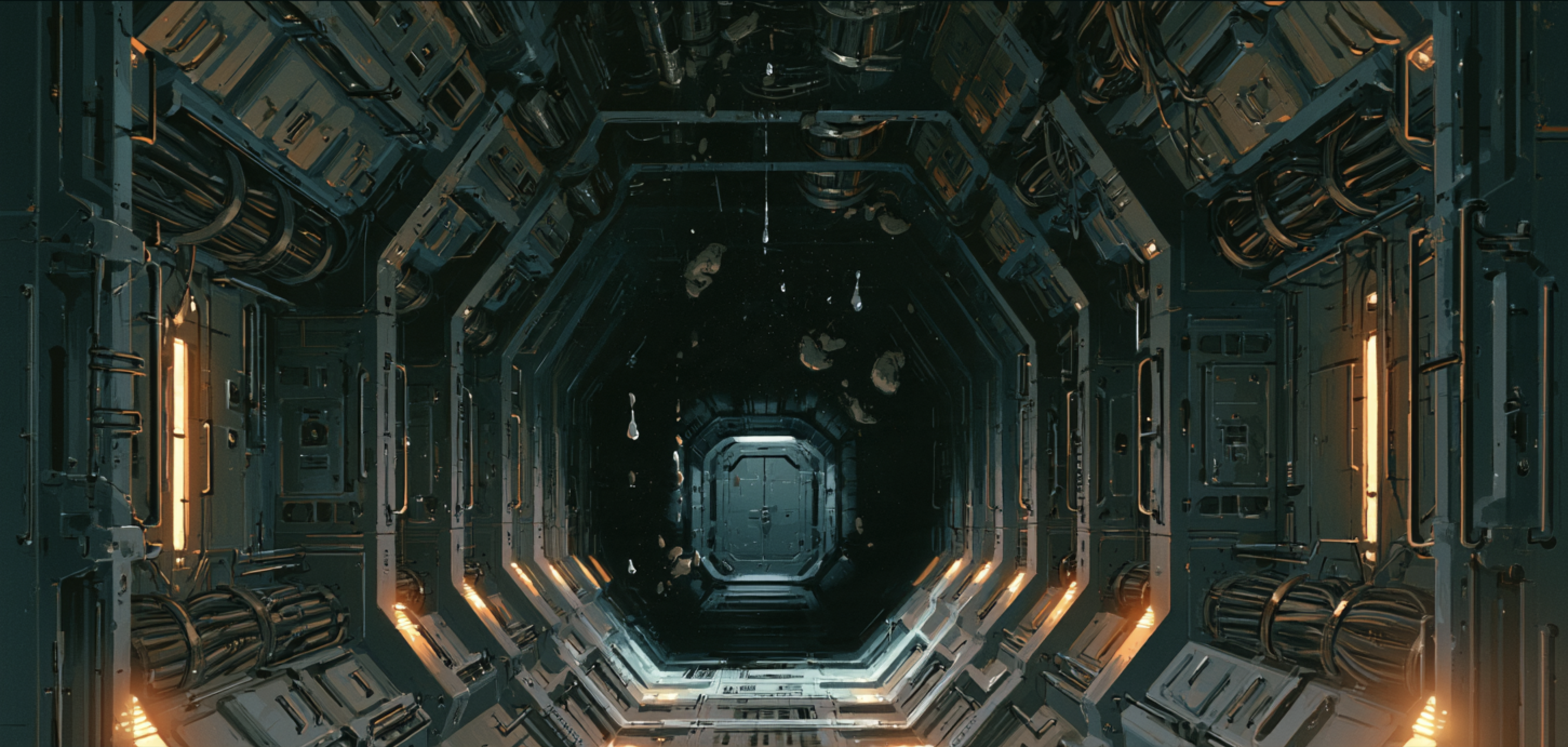
Character, environment, and mechanical reference assets used to establish the visual world of THE CABLE
My prompt included specific instructions for movement, camera framing, environmental animation, and mechanical continuity. For example, the character moves by gripping and pulling herself along the cable. Her body responds to that force, while her hair continues moving independently. I also specified how the power cable should remain connected throughout the sequence and how the mechanical repair should progress without objects disappearing or changing positions.
The intention was to give Kling 4.0 a clear understanding of the physical relationships between the character and her environment. The visual direction was equally important. I requested authentic hand-drawn 2D cel animation, intricate mechanical linework, hard two-and three-tone shading, and hand-painted spacecraft backgrounds. I deliberately avoided photorealism, CGI, modern digital anime aesthetics, and exaggerated visual effects.
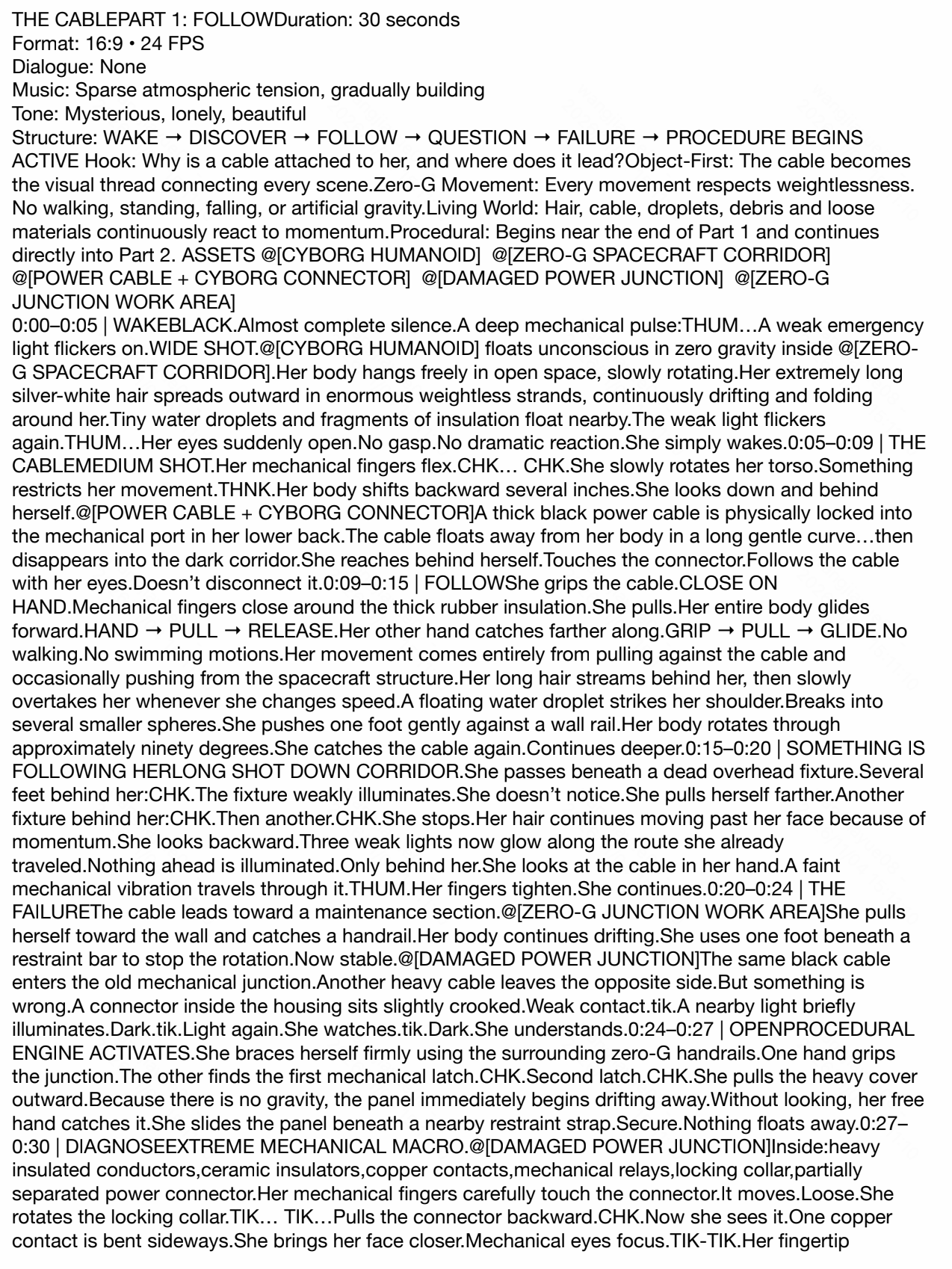
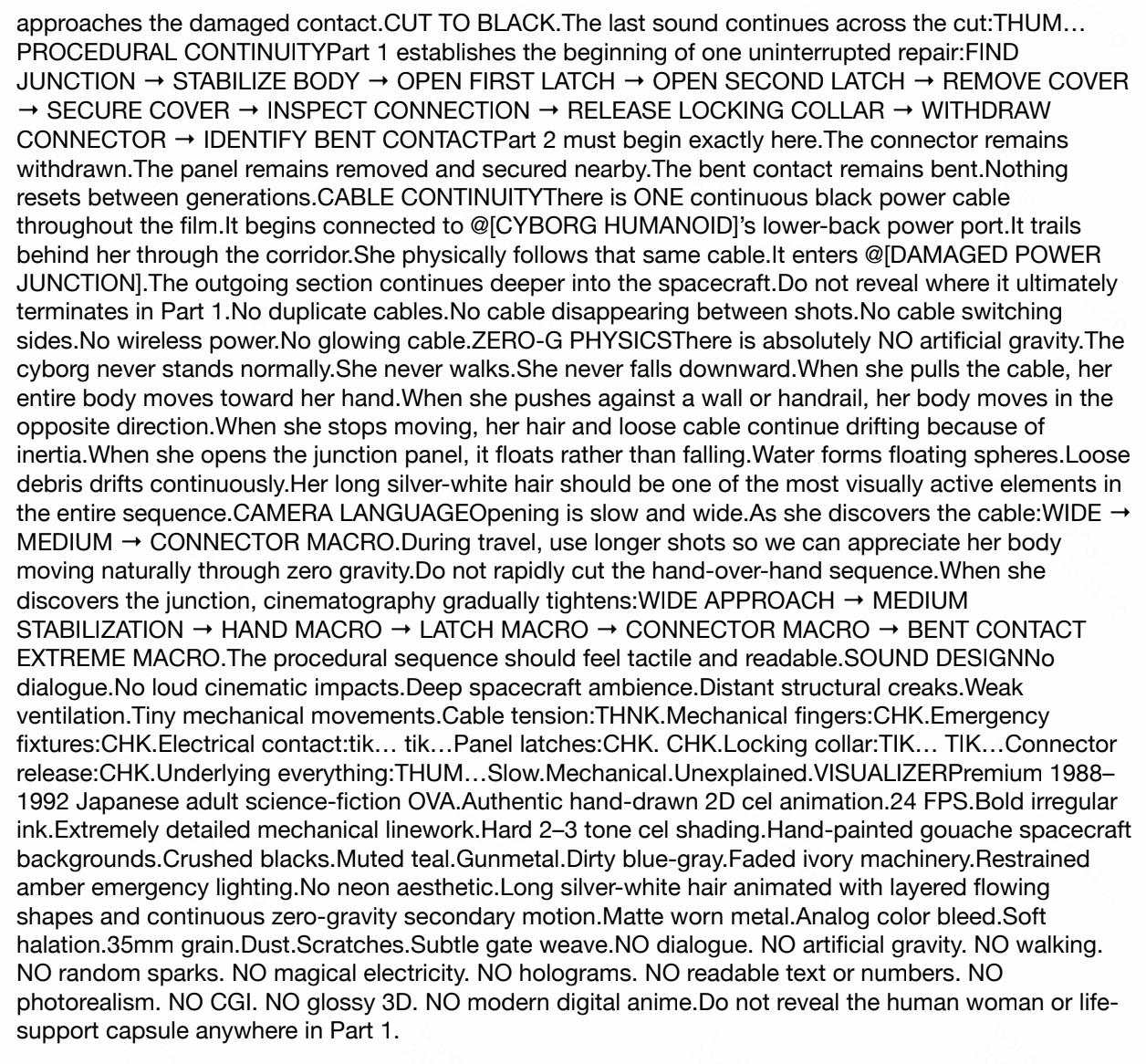
PROMPT
Testing Scenario 1: Visual Style Preservation
- Challenge: One of the biggest difficulties I’ve encountered with AI animation is maintaining the visual characteristics of traditional Japanese anime throughout a moving sequence.
- Test: I used detailed visual instructions and character references to determine whether Kling 4.0 could maintain authentic hand-drawn cel animation, mechanical details, and consistent shading.
- Result: Kling 4.0 successfully maintained the intended retro-anime aesthetic throughout the sequence. The character and environment remained visually consistent without shifting toward a modern CGI appearance.
Testing Scenario 2: Zero-Gravity Physics
- Challenge: Simulating realistic movement in environments without gravity is particularly difficult, especially when multiple elements must respond independently to momentum.
- Test: I instructed Kling 4.0 to animate a floating cyborg moving through a spacecraft while her long silver-white hair, loose debris, and surrounding objects responded naturally to weightlessness.
- Result: This was the most impressive aspect of my testing. Kling 4.0 handled the zero-gravity movement extremely well, particularly the individual strands of hair. Their continuous secondary motion helped make the environment feel physically believable.
Testing Scenario 3: Character Consistency
- Challenge: Maintaining character proportions, mechanical details, and recognizable features across changing camera angles has been a recurring challenge in AI filmmaking.
- Test: I used a consistent character reference while directing the cyborg through multiple movements and camera perspectives.
- Result: Kling 4.0 successfully maintained the character’s appearance throughout the sequence. Her design remained recognizable as she rotated and interacted with the spacecraft environment.
Results & Feedback
Traditional Anime Style: Consistent Throughout
One of the most encouraging results was Kling 4.0’s ability to preserve the intended anime aesthetic. The visual style remained consistent throughout the sequence. For my work, this is particularly important. I’m not trying to create animation that resembles modern 3D rendering or contemporary digital anime.
My goal is to capture the visual character of traditional Japanese cel animation. Seeing that aesthetic maintained during movement was a positive result. It allows me to focus more on directing the scene without constantly worrying that the original visual identity will disappear once the animation begins.
Character Consistency: A Strong Result
Character consistency was another area where Kling 4.0 performed well. The cyborg maintained her recognizable appearance throughout the sequence. This matters because the scene requires her to rotate, travel through the corridor, and interact with mechanical objects from different camera angles.
For serialized storytelling, character consistency is essential. A character needs to remain recognizable across different shots and environments. Otherwise, the audience becomes distracted by visual inconsistencies rather than following the story. In this test, Kling 4.0 handled that requirement well.
Zero-Gravity Animation: The Standout Feature
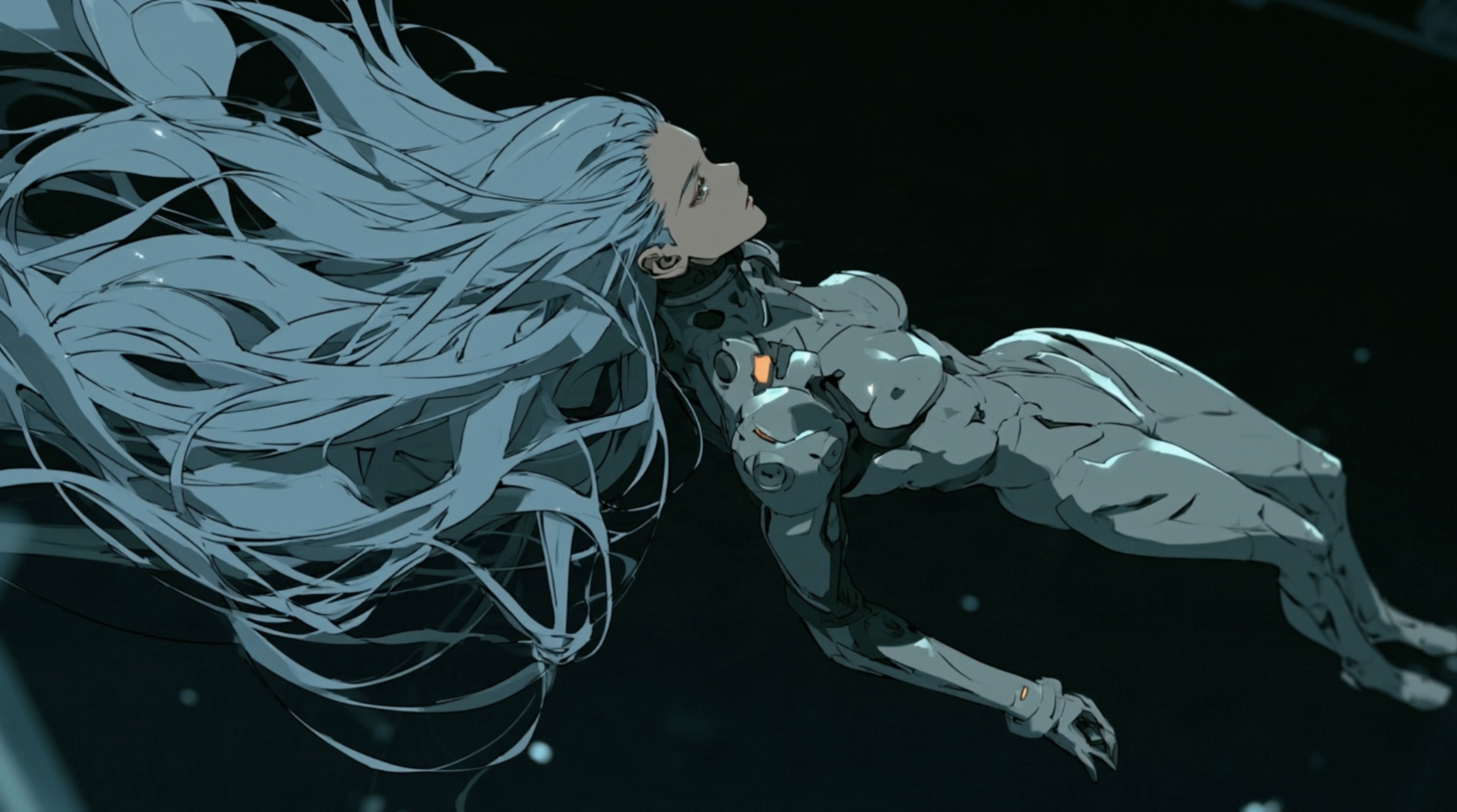
The most impressive aspect of this experiment was the zero-gravity animation, particularly the movement of the character’s hair. Her extremely long silver-white hair was intentionally designed to be one of the most visually active elements in the scene. In zero gravity, hair shouldn’t behave as though it’s being pulled downward. It should drift, spread outward, and respond to changes in momentum.
Kling 4.0 handled this extremely well. What impressed me most was the movement of the individual strands of hair. Rather than behaving as one rigid shape, the hair demonstrated detailed secondary motion that made the weightless environment feel more convincing.
This is the kind of detail that can transform a generated animation from an interesting visual experiment into something that feels cinematic. For me, the result demonstrated how important environmental physics and secondary animation are to creating believable science-fiction worlds.
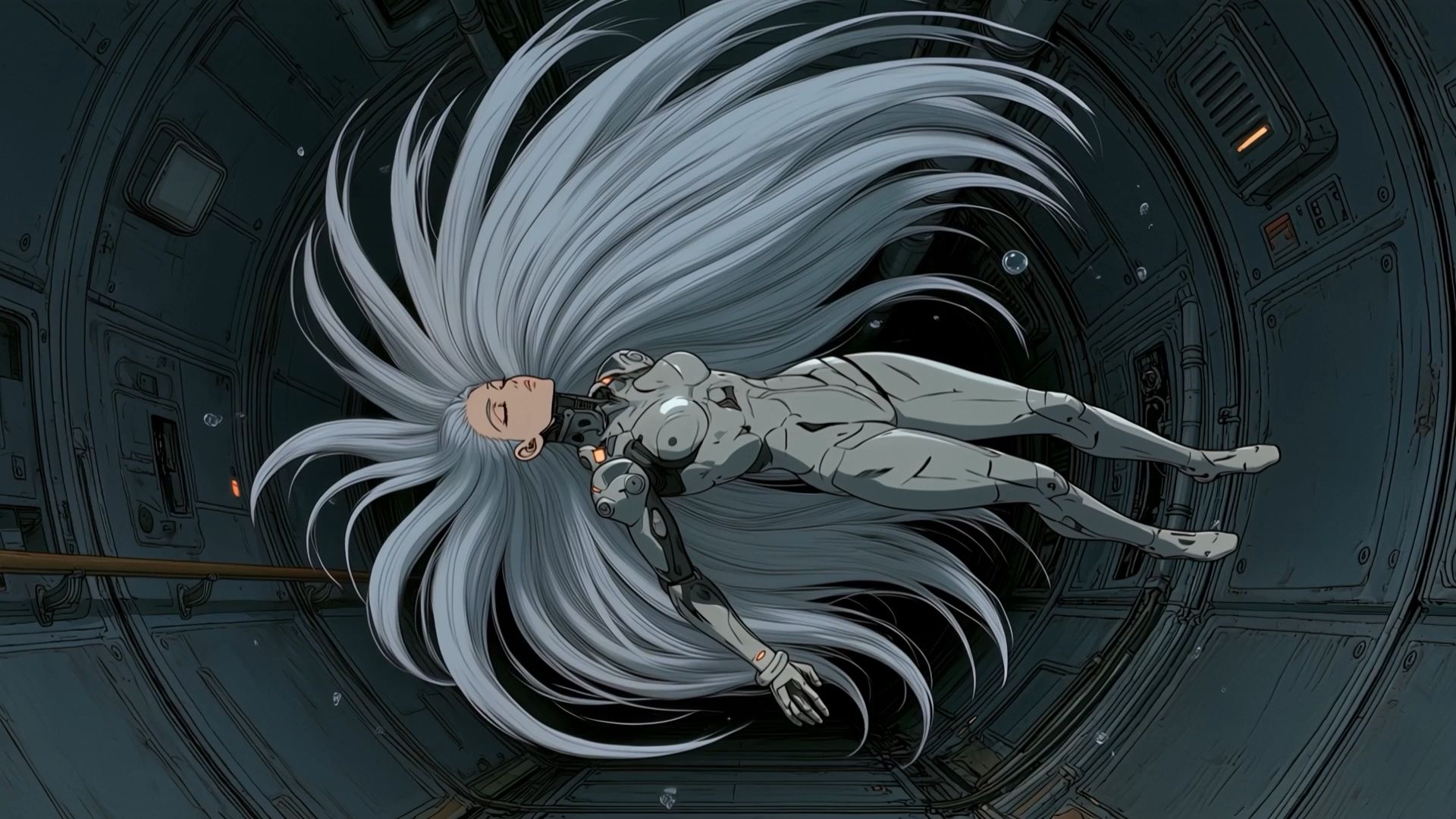
The character’s silver-white hair demonstrates detailed secondary motion in zero gravity
Final Thoughts: Bringing Traditional Animation into a New Production Workflow
My experience with Kling 4.0 was particularly encouraging in three areas: visual style preservation, character consistency, and environmental animation. The strongest result was the model’s handling of zero-gravity movement.
Watching the character’s long silver-white hair respond naturally to her movement was especially impressive. These details matter because believable animation depends on more than the primary action. The surrounding world must respond as well.
For creators developing original animated stories, maintaining that relationship between character, movement, and environment is essential. The results of THE CABLE demonstrated meaningful potential for my particular style of filmmaking. The future of AI animation isn’t simply about generating more movement. It’s about giving creators greater control over how their stories move. And for me, that’s where the technology becomes most exciting.
As I continue developing original animated series, I’m particularly interested in how Kling 4.0 can support longer, more complex cinematic sequences. The improvements I’ve observed in visual consistency and environmental animation are encouraging, especially for creators working in highly stylized genres. I look forward to exploring how these capabilities can contribute to more ambitious storytelling.
A big thank you to @SwordSpeed for taking us behind the scenes of THE CABLE and sharing his experience with Kling 4.0. From preserving retro anime aesthetics to capturing the subtle physics of zero gravity, his experiment offers a closer look at the details that make animation feel convincing. More creator stories and hands-on reviews are on the way.