Portugal's World Cup journey has ended, but its official campaign film Vai Dar Portugal is still going strong with nearly 100M views.
Produced by 78 Films, the film blends live action featuring stars from the Portugal National Football Team with sweeping, emotionally charged visuals: ships battling towering waves, carrying Portugal across the Atlantic toward the United States. Many of these ambitious sequences were created with Kling AI.
As Hybrid Director & AI Lead João Seiça puts it: "This film wouldn't have existed without AI — not in the form it took, and not at the scale it reached."
We spoke with João about why AI was built into the project from day one, how live action and AI came together as one seamless film, and why Kling became the team's creative tool of choice.
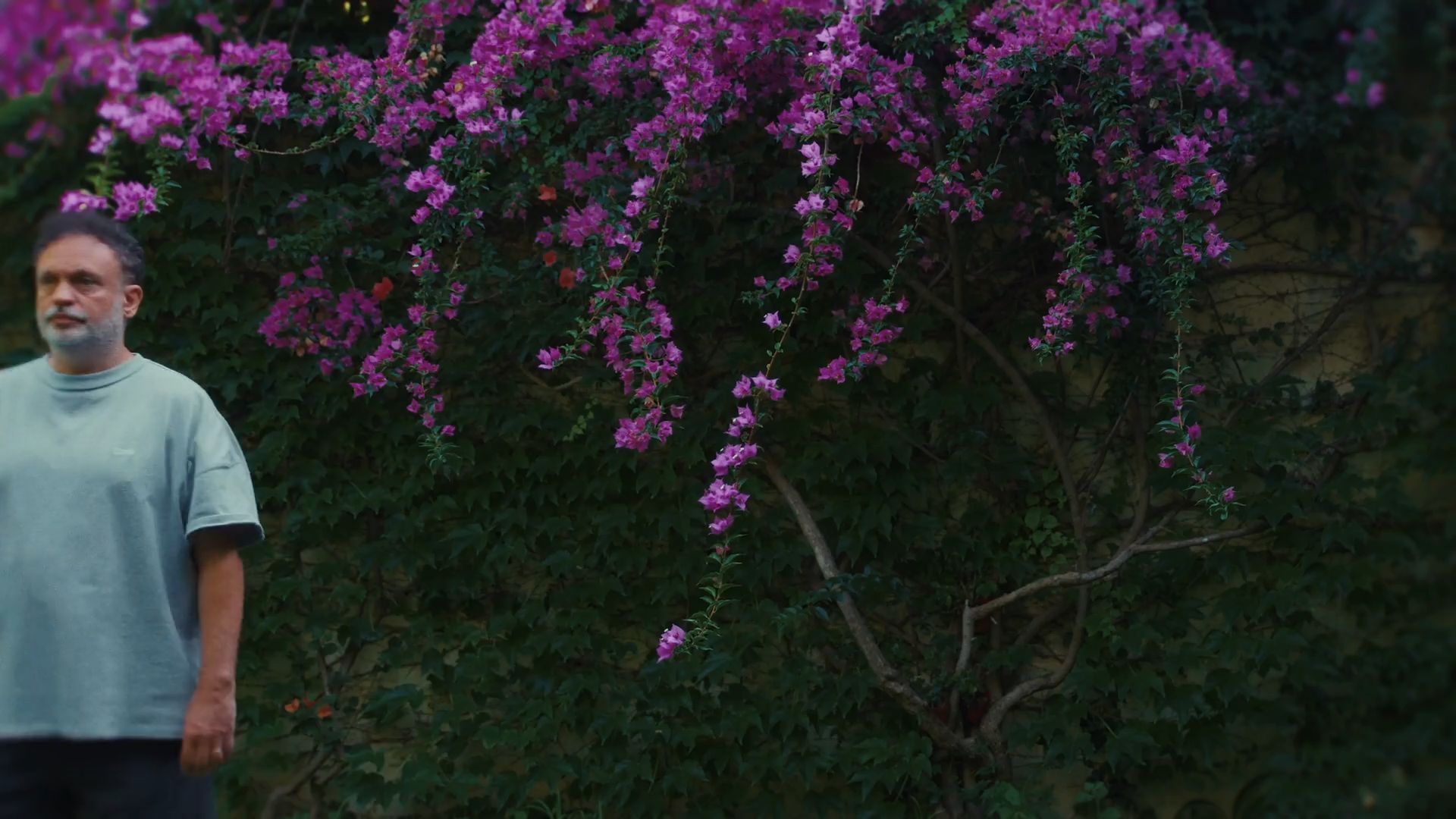

AI was built Into the concept from day one
The project began with an unconventional challenge: how do you make a football film that isn't about football?
Instead of focusing on goals and stadium roars, the creative team wanted to tell a story about Portuguese fans carrying the team to the destination, and the team carrying the country's hopes onto a pitch far from home. That idea eventually evolved into the film's central metaphor—a voyage across the Atlantic.
Bringing that vision to life would have been either impossible or prohibitively expensive through traditional production alone. That's why the production was designed as a hybrid workflow from the very beginning.
"AI wasn't an afterthought. It was built into the project from day one," João says.
The production involved three directors working in parallel. Two overseeing live action on set and João leading AI and VFX direction. Every shot was planned with post-production in mind, allowing the two worlds to blend seamlessly into one film.
"AI gave us the creative freedom to explore and visualize multiple directions quickly, while still putting in the long, careful work to get each final frame exactly right," explains João.
Why Kling became the core creative tool
Around 80% of the film is AI-generated, and more than 80% of those AI shots were created with Kling. For João, the decision to use Kling as the primary tool came down to one quality above all: texture.
Many AI video models, he says, produce imagery that feels technically clean but visually artificial. Kling, by contrast, stood out for its organic quality and cinematic realism.
"The look we were after was naturalistic and emotional, not polished and sterile," João says. "Kling 3.0 consistently delivered that."
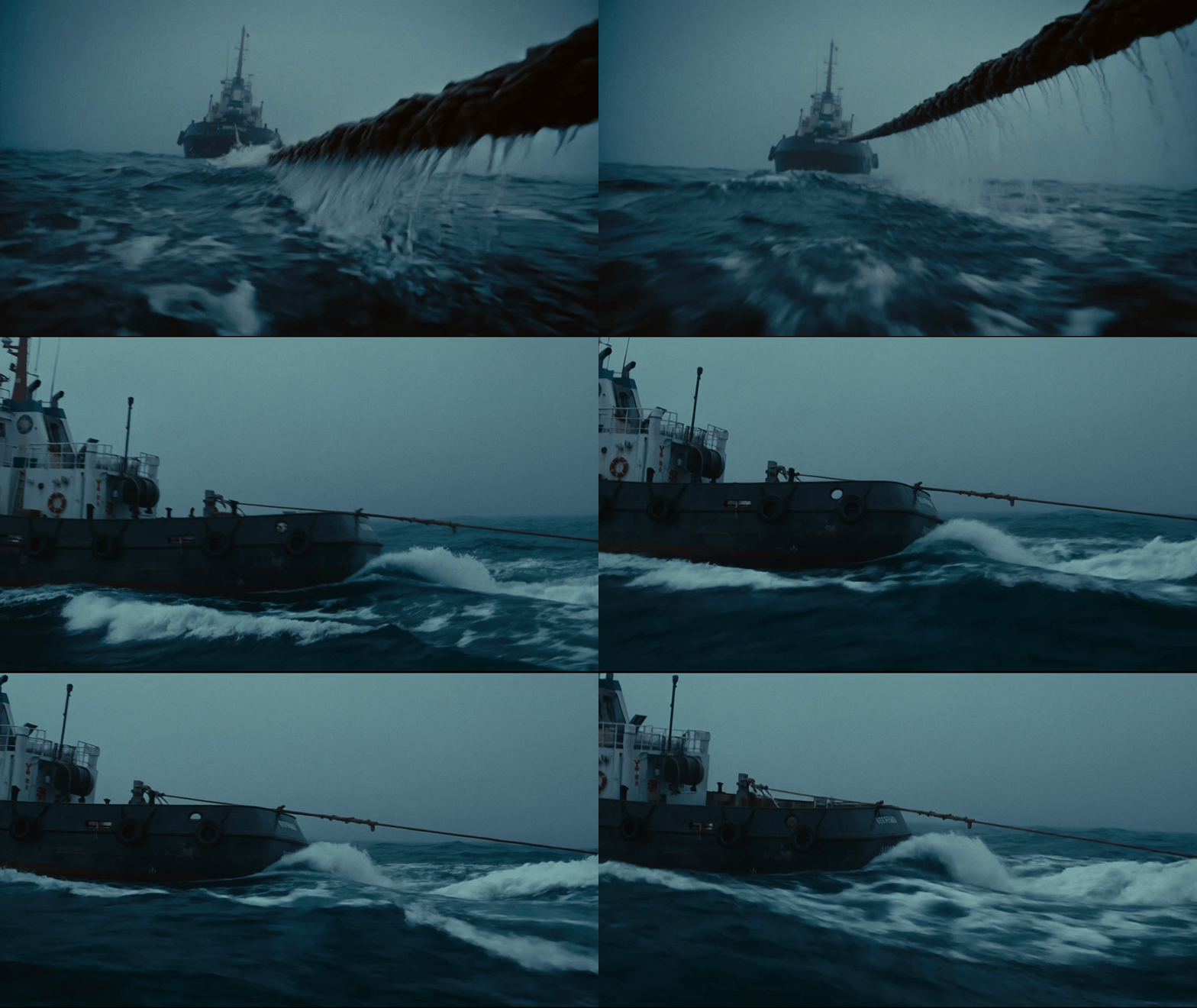
For the ocean sequences, the goal wasn't simply to generate dramatic waves, but to make the ships feel genuinely embedded in the storm. Kling helped create a convincing sense of movement, scale, and atmosphere, allowing the vessels to interact naturally with the waves.
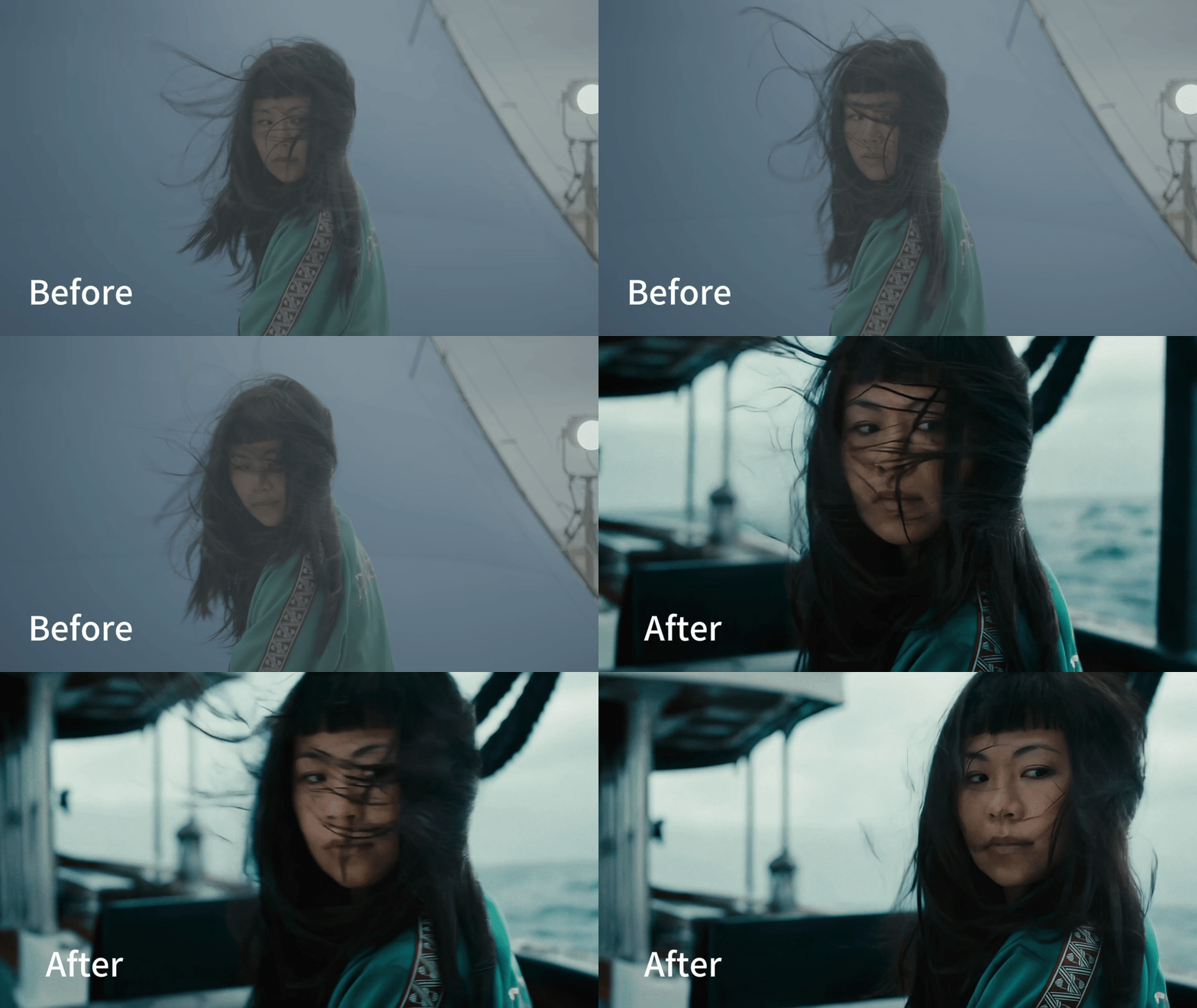
The cabin scenes posed a different challenge. Aside from generating a believable interior, every element needed to feel consistent with the live-action footage, including lighting, atmosphere, and the rhythm of the camera. Kling provided a natural visual foundation that allowed AI-generated shots to blend seamlessly into the film without drawing attention to themselves.
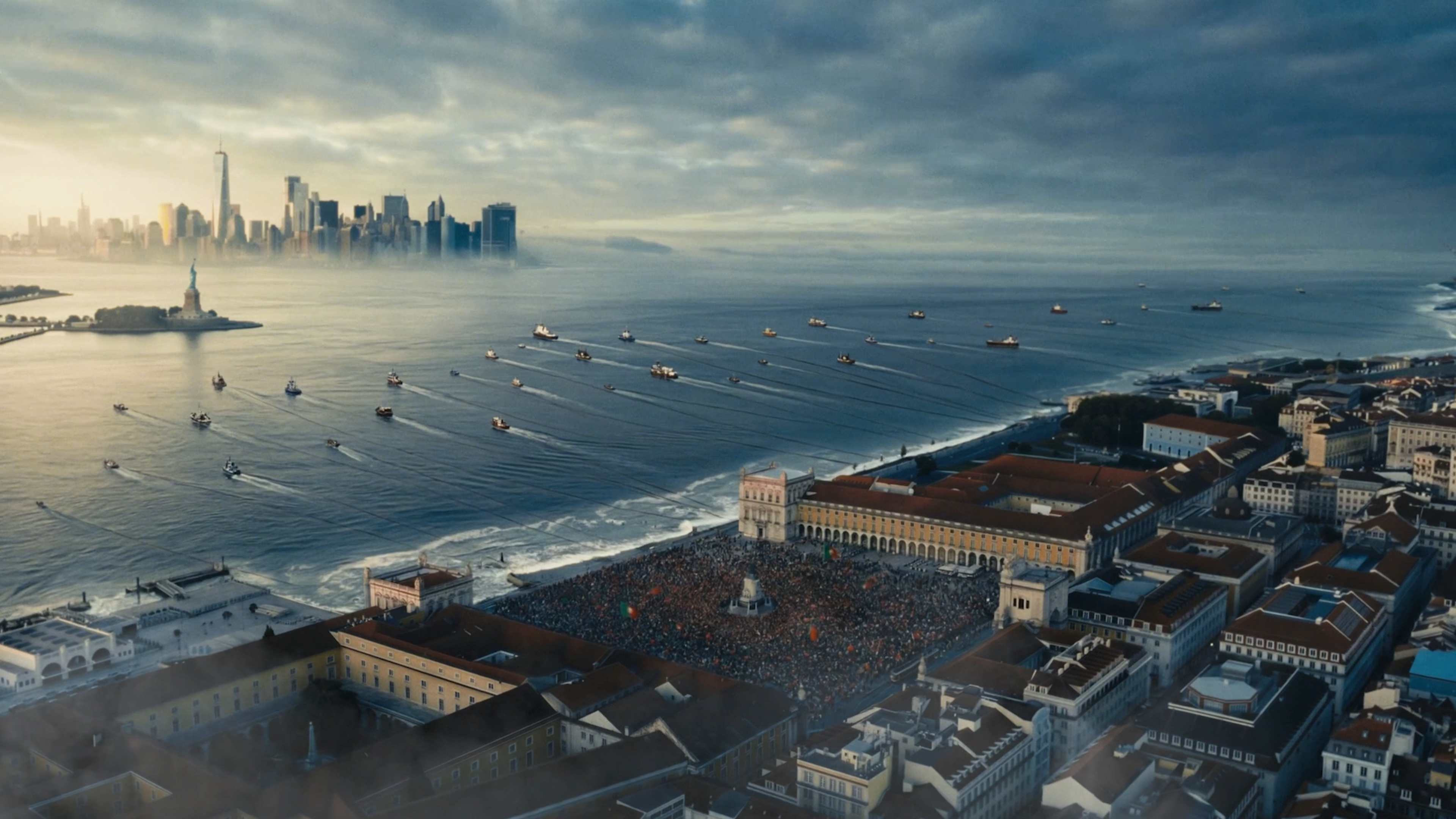
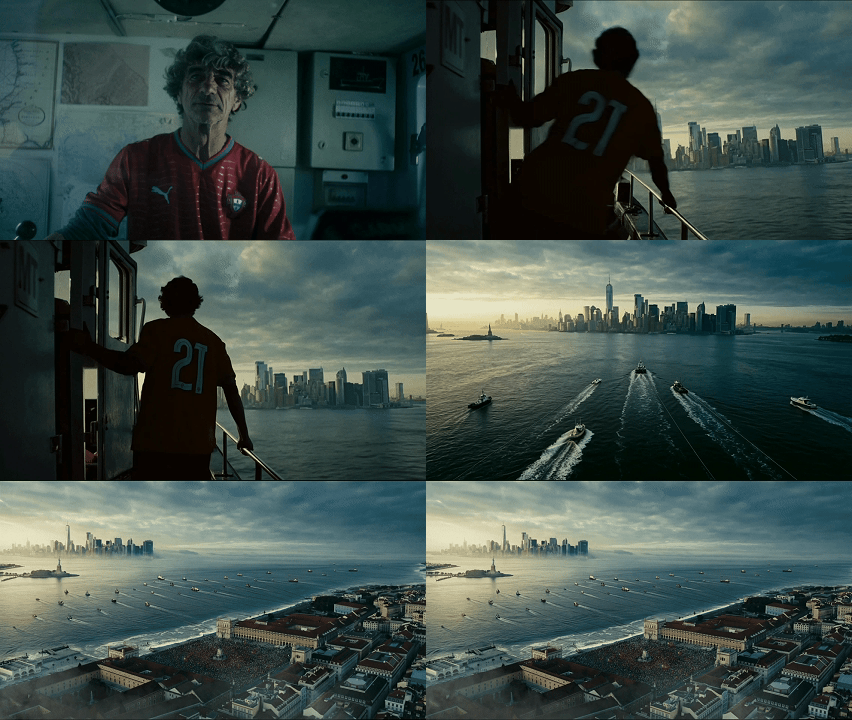
The film's climatic finale, where boats pull Portugal across the Atlantic to meet the United States, is its most powerful visual metaphor. A sequence like this would have required a massive production effort using traditional filmmaking and VFX alone. With Kling, the team was able to achieve that vision within an affordable budget.
AI doesn't replace filmmaking. It expands it.
For João, the emergence of AI has transformed not only production workflows, but also the role of the filmmaker.
His title—Hybrid Director and AI Lead—barely existed a few years ago. Today, it means directing performances on set while simultaneously shaping AI-generated imagery in post-production, ensuring both feel like parts of the same visual language. Yet one principle remains unchanged.
"Actors are the soul of a film," João says. “Kling expands what we can achieve visually and financially, but it doesn't replace the human beings in front of the camera or the people behind it.”
For his team at 78 Films, the question has never been whether to use AI, but how to use it well.
When AI becomes part of the creative process from the very beginning, it not only makes production more efficient, but expands what's creatively possible. That's what Kling brought to Vai Dar Portugal: giving filmmakers the freedom to bring ambitious ideas to the screen, without compromising the emotional core of the story.