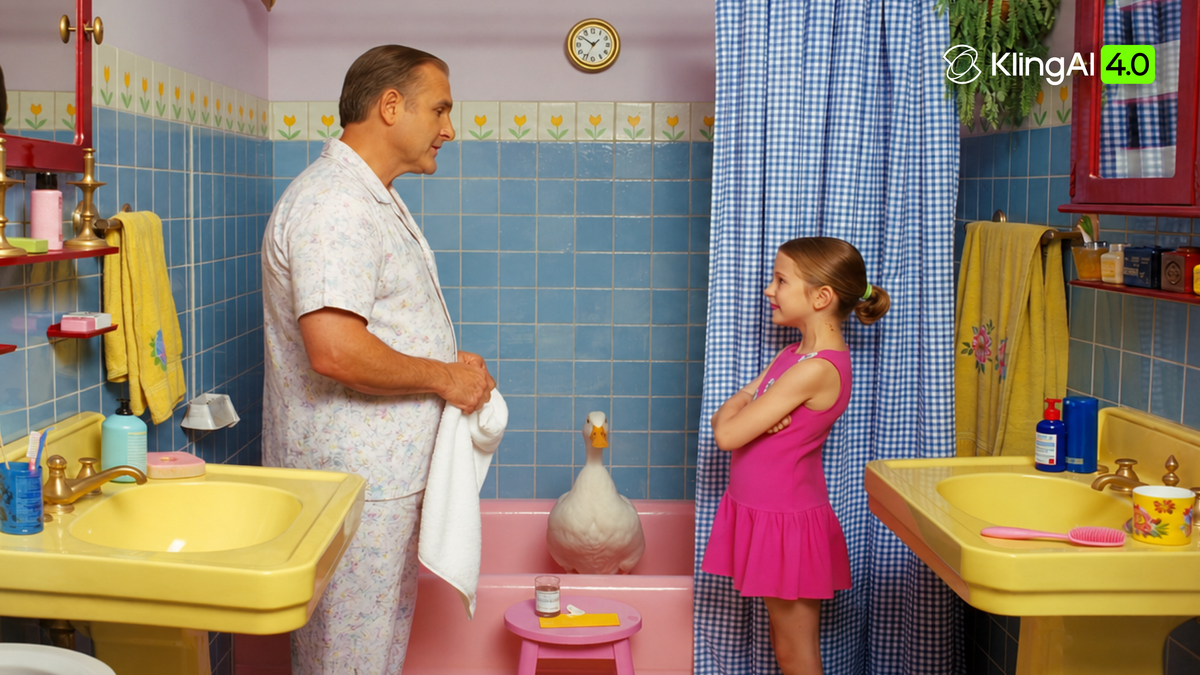
Korean visual content creator 서오키 (@oasis.seo.ai) is known for giving the ordinary an unexpected twist.
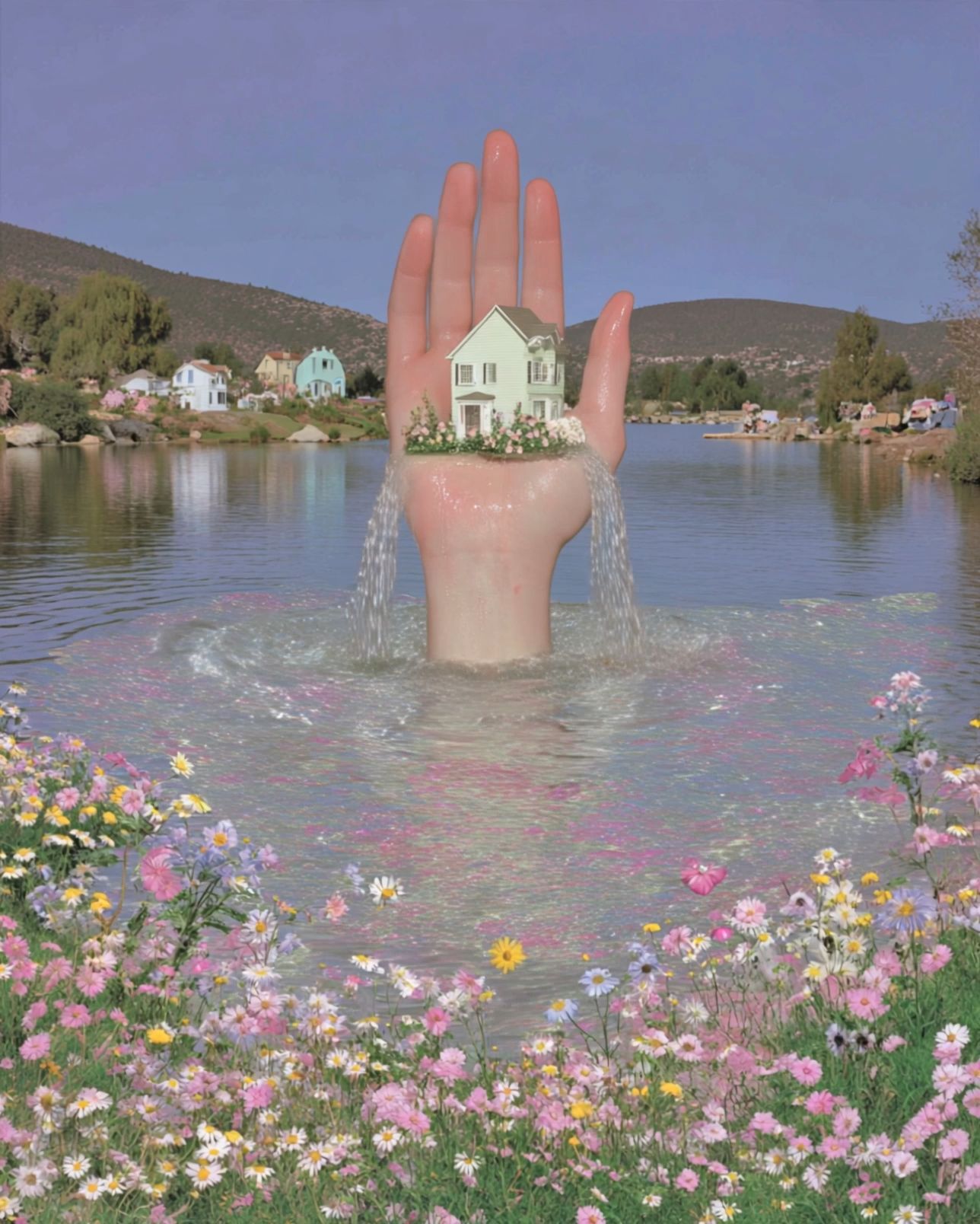
A giant duck might appear in a bathroom, a hand might emerge from a lake, or an entire bedroom might float inside a transparent bubble. But for AI creators like her, imagining the impossible is only half the challenge. The real test is making it feel believable in motion.
We invited her to put Kling 4.0 to the test through three creative experiments exploring Omni Reference, style transitions, and character consistency. How well can Kling 4.0 bring her unusual worlds to life? Let’s find out.
Notes from the Creator
서오키(@oasis.seo.ai)
Korean Visual Content Creator
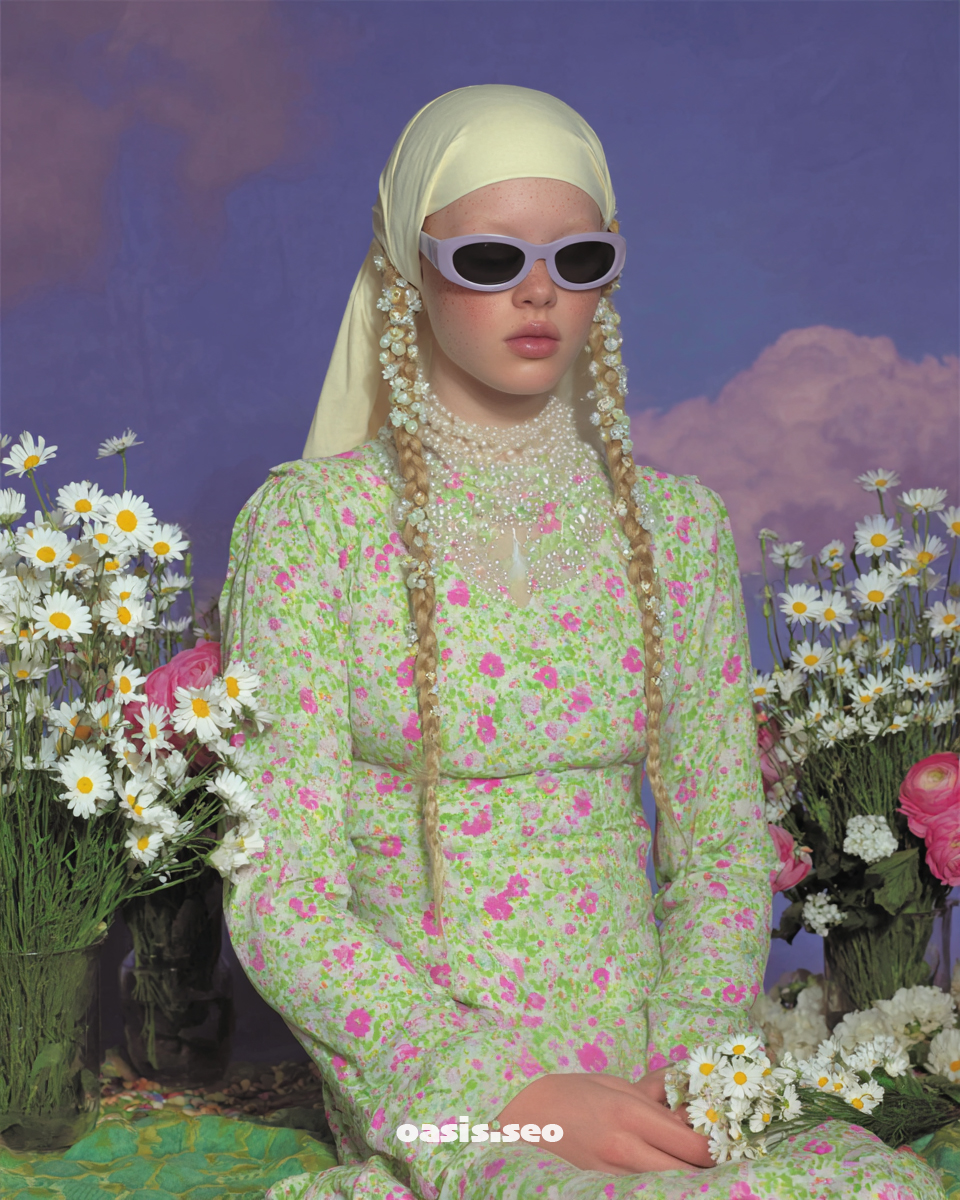
Hello, I’m 서오키 (@oasis.seo.ai). I primarily use AI to create image- and video-based visual content.
My creative process usually begins with reality: real people, everyday spaces, natural lighting, and familiar settings. From there, I introduce situations that are unlikely to happen in real life, or elements that feel unexpected. But I do not want my work to look “surreal” in the conventional sense. What matters more to me is whether the transition between reality and unreality feels natural.
Ideally, viewers should initially perceive the image as real, only to notice something unusual a moment later—as though they were looking at an event that should never have happened, yet was somehow captured on camera.
That is why, when creating images, I pay close attention to color tone, character presence, spatial details, photographic texture, and the overall mood. Once I move into video, my central question becomes: can the atmosphere established in the still image remain intact once everything is set in motion?
This is also one of the challenges I encounter most often in AI video creation. A still image may look perfectly natural, but once motion is generated, facial expressions can become exaggerated, facial features can shift, and camera movement can disrupt the original cinematic texture. This is especially difficult when connecting different images: even if each image works perfectly on its own, the motion between them may not flow smoothly.
So, in testing Kling 4.0, my primary concern was not simply visual quality. I wanted to see whether it could understand and preserve the visual world I had already established—including its characters, spaces, atmosphere, and directorial intent.
In other words, I wanted to find out whether Kling 4.0 could naturally develop a static visual concept into a video that feels fully realized.
@oasis.seo.ai's Instagram page
1.More Natural Character Performance: Surreal Scenes That Feel Like Real Film Sets

Video generated with Kling 4.0:
A duck suddenly appears in the bathroom
1) What I Focused On
For the first test, I focused primarily on the naturalness of the character performances and on character consistency.
More specifically, I examined whether:
- facial expressions, eye movements, hand gestures, and body movements flowed together as naturally as they would in real life;
- the characters’ faces and clothing remained consistent throughout the movement;
- the 1990s film-like color palette, spatial atmosphere, and cinematic texture of the original image carried over into the video;
- the giant duck existed naturally within the same space rather than looking like a CG element composited in afterward.
2) Test Scenario & Prompt
In this test, I wanted to determine whether characters could perform as naturally as actors in a live-action film, even within a surreal situation.
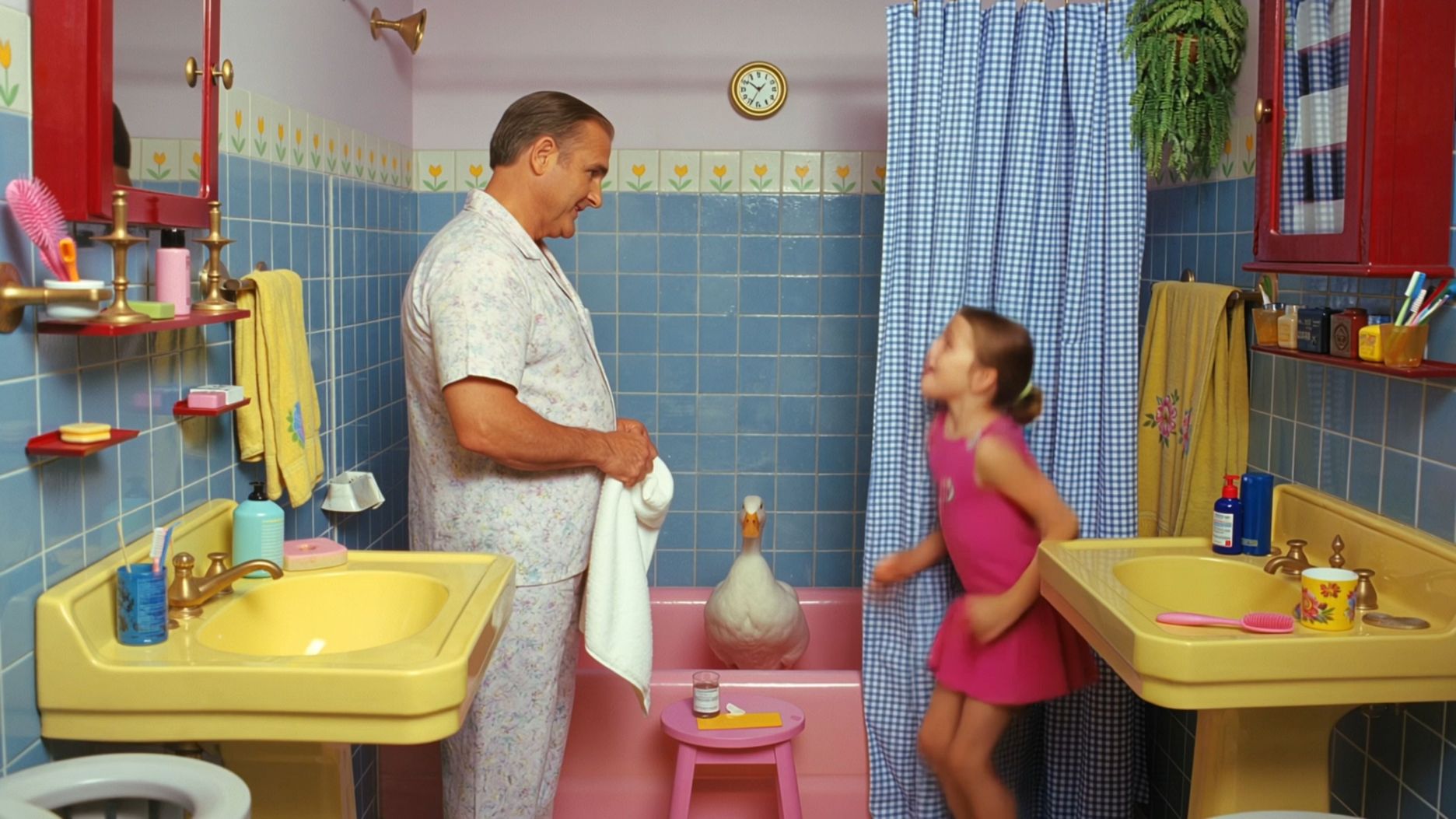
The reference image depicts a bathroom with the cinematic texture of a 1990s film. Two people are going about their morning routine, while an enormous duck sits in the bathtub between them. The scene feels grounded in reality, yet clearly does not belong to it.
This is exactly the kind of imagery I value in my work. Rather than using Dynamic Motions or dramatic reactions, I focused on subtle, true-to-life gestures, shifts in gaze, changes in expression, and the rhythm between the characters. I do not want characters to react with exaggerated surprise or behave comically the moment something unreal appears. The characters continue moving at their own pace, while the surreal element simply exists within the space.
For this test, then, I did not merely want the people and the duck to move. I wanted to see whether Kling 4.0 could preserve each character’s behavioral logic and have them perform within this absurd situation as though it were part of their ordinary lives.
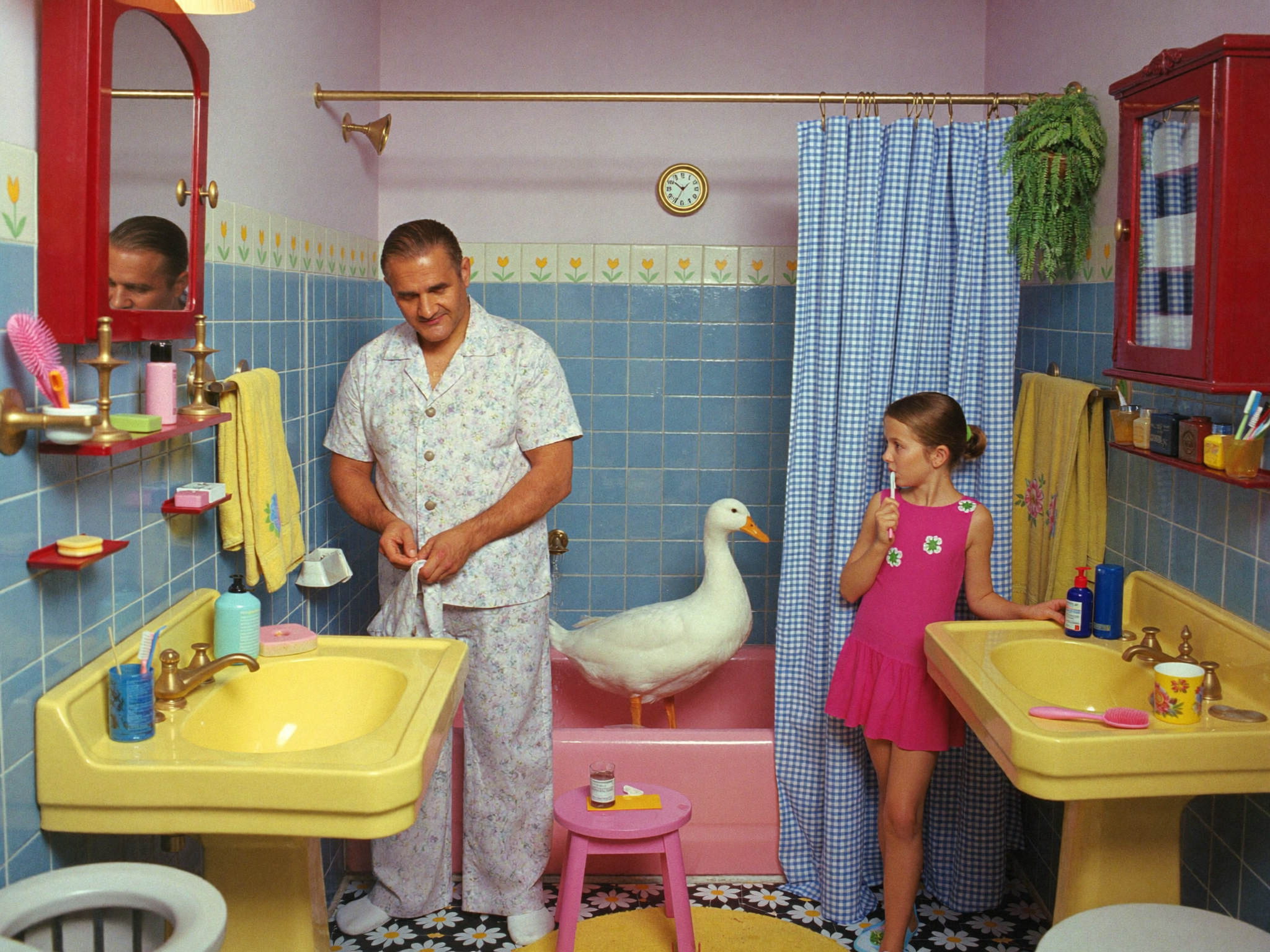
Reference image
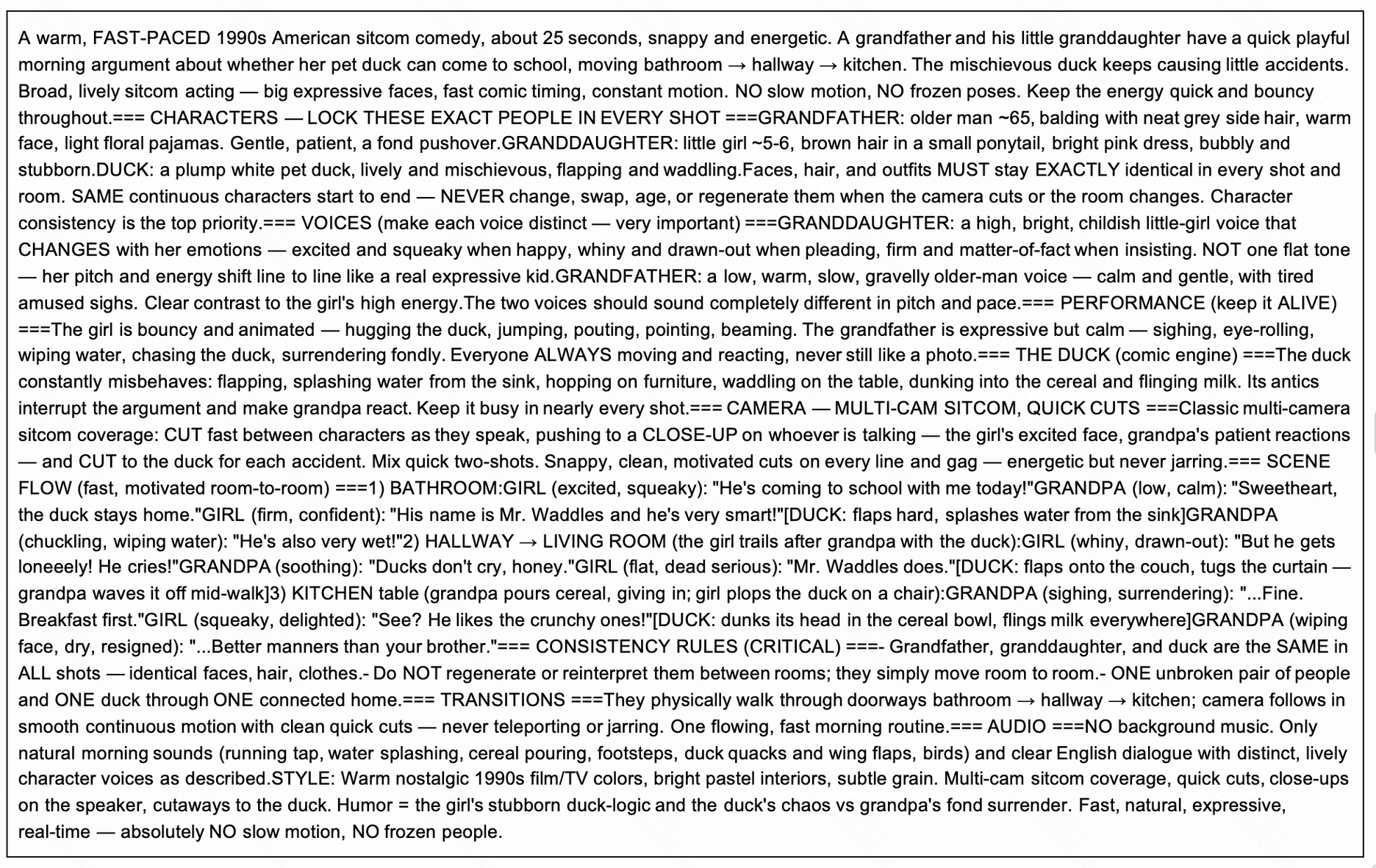
Prompt
3) Results and Feedback
What impressed me most in this test was the natural quality of the character performances and the overall movement. Kling 4.0 does more than simply “make the characters move”—it connects subtle actions such as shifts in gaze, facial expressions, and hand gestures. Many moments feel less like a still image being mechanically animated and more like a scene taken directly from a live-action film.
Even though I did not specify every shot and action in detail in the prompt, Kling 4.0 was able to construct relatively natural camera angles and movements based on the characters’ behavior and the flow of the scene. This is particularly helpful for the way I create. I am rarely trying to produce an exaggerated spectacle; instead, I want to embed unreal elements naturally within real-world environments.
Overall, character consistency and continuity were maintained with a high degree of stability. In scenes containing dialogue, Kling 4.0 also demonstrated its ability to coordinate sound, performance, and visuals. As Lip Sync and Sound Effects continue to improve, the model will offer even greater potential for dialogue-driven and narrative video.
2. More Coherent Multi-Image Transitions: Continuous Narratives Across Different Images
Video generated with Kling 4.0:
A woman appears continuously across three different scenes
1) What I Focused On
For the second test, I focused primarily on the naturalness of the scene transitions and on dynamic stability.
I paid particular attention to two key moments:
- During the transition from the first image to the second, did the space, subject, and camera movement connect naturally?
- During the transition from the second image to the third, did the character suddenly distort, disappear, or get replaced?
- I also wanted to determine whether Kling 4.0 merely transformed the shapes of one image into those of the next, or whether it could genuinely create the missing motion and space between the images, making the connection feel convincing.
2) Test Scenario & Prompt
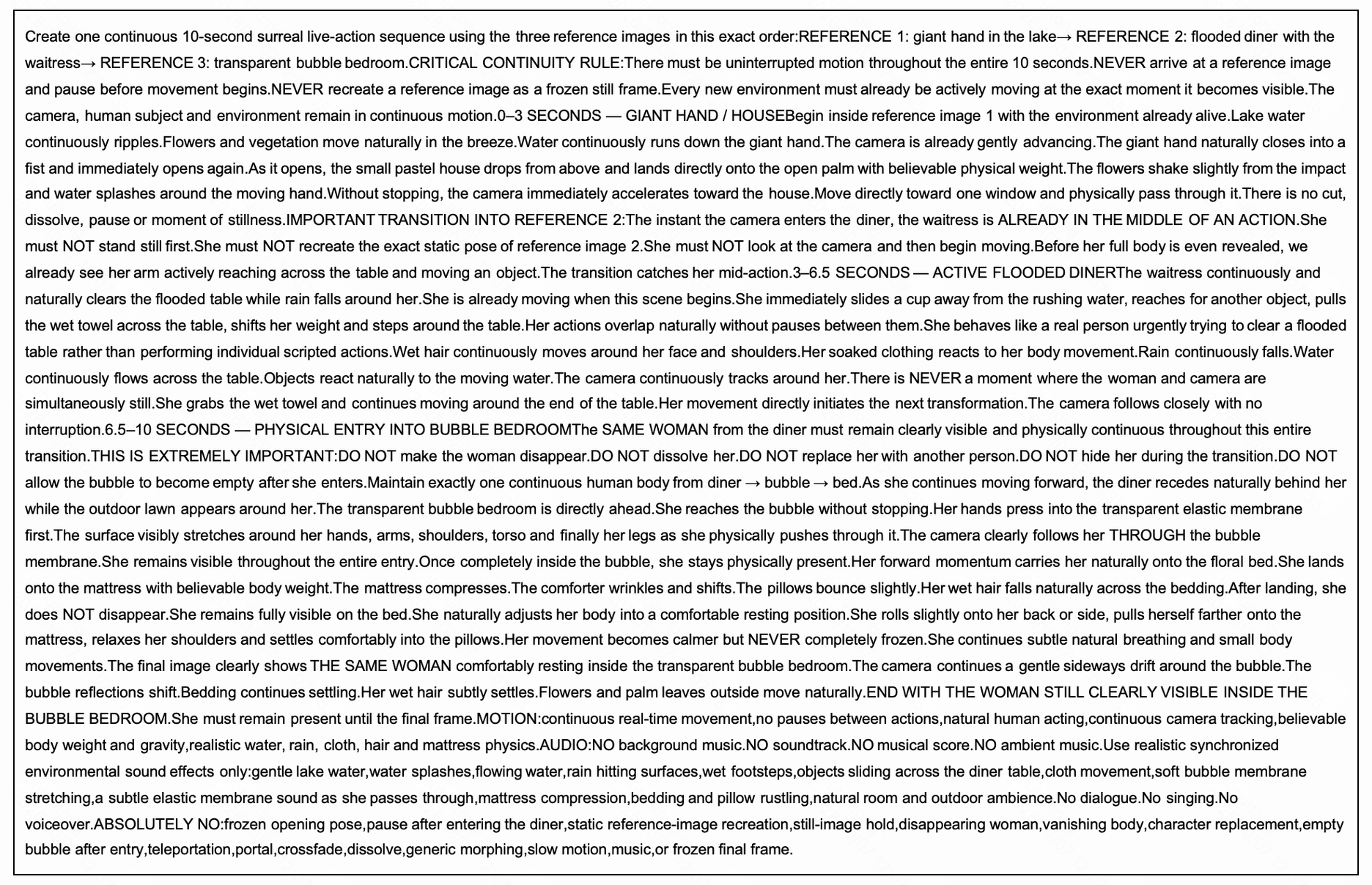
In this test, I wanted to see whether Kling 4.0 could naturally connect three completely different images into one continuous video. Each image was created as an independent scene. But to connect them as a video, the model had to create motion between the first and second images, and between the second and third—motion that did not exist in any of the originals. The goal was not to display three images one after another, but to make the movement in each preceding scene the reason for entering the next.
I did not want the model to simply use dissolves, distort one image, or morph it into another. My goal was to make camera movement and character behavior motivate each scene transition, so viewers would not consciously register that “the image has changed,” but instead accept the sequence as one continuous process.
For me, the most important part of connecting multiple images is not how spectacular the transition effect looks, but whether the logic of movement behind the change in scene is convincing.
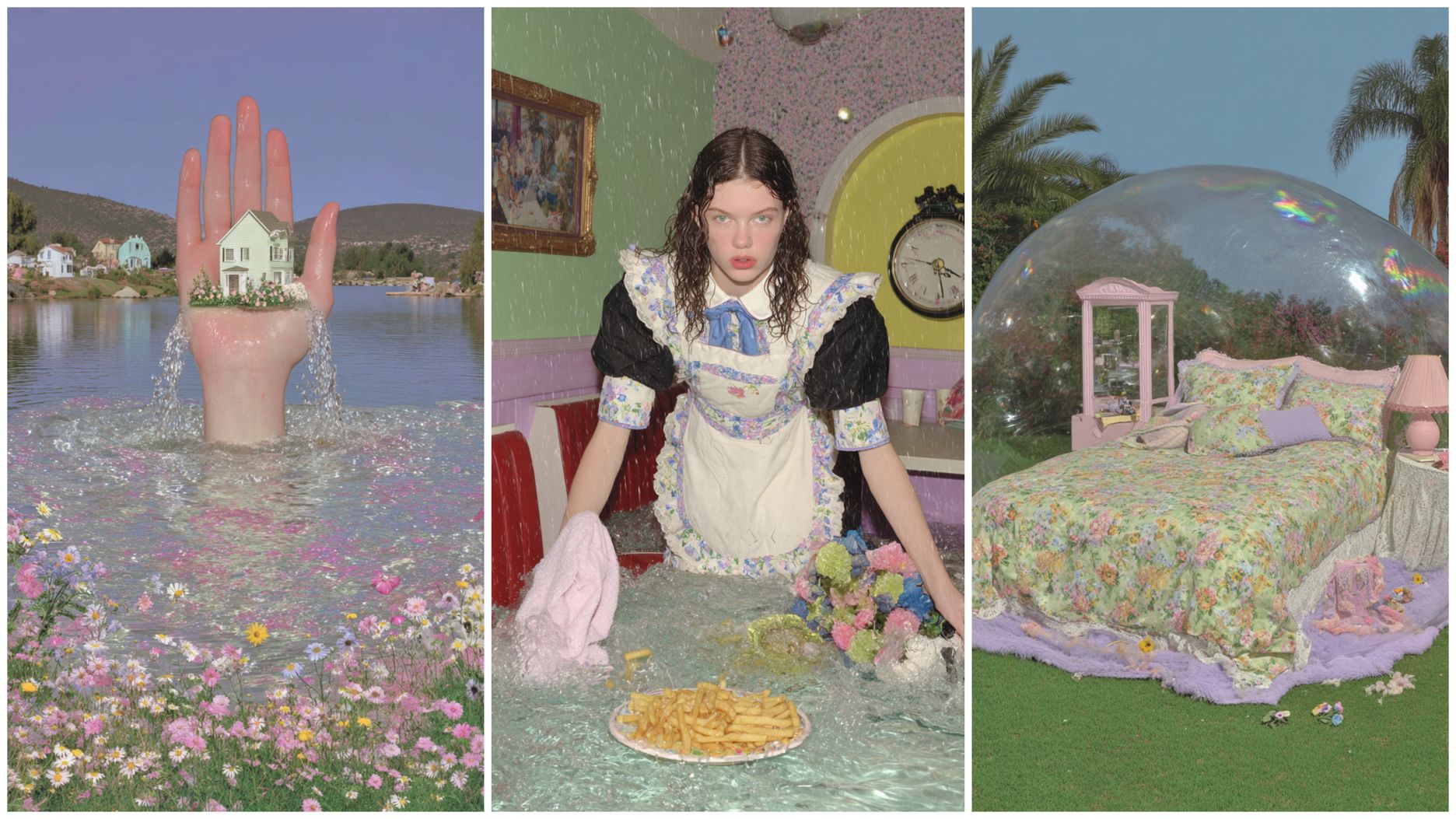
Reference images
Prompt
3) Results and Feedback
What surprised me most was how well the style and atmosphere of each original image were preserved while connecting the three different images. Even when the setting changed dramatically, the color palette and visual texture did not break abruptly. Instead, the transitions felt like natural spatial shifts taking place within the same video.
I had often tried connecting multiple images in earlier versions as well. This is an inherently demanding task for a model because it involves more than moving “from one image to another.” The model must also fill in the continuous logic of how the camera, subject, and space change between them.
This time, Kling 4.0 produced far more natural transitions throughout the 1→2 and 2→3 movements, while preserving the styles of the original images more consistently. For me, this means less repeated generation and less post-production repair to achieve the desired transitions. In workflows that combine multiple images into a continuous video, the improvement is especially noticeable.
3. More Stable Style Transitions: Character Consistency Between Live Action and Animation
Video generated with Kling 4.0:
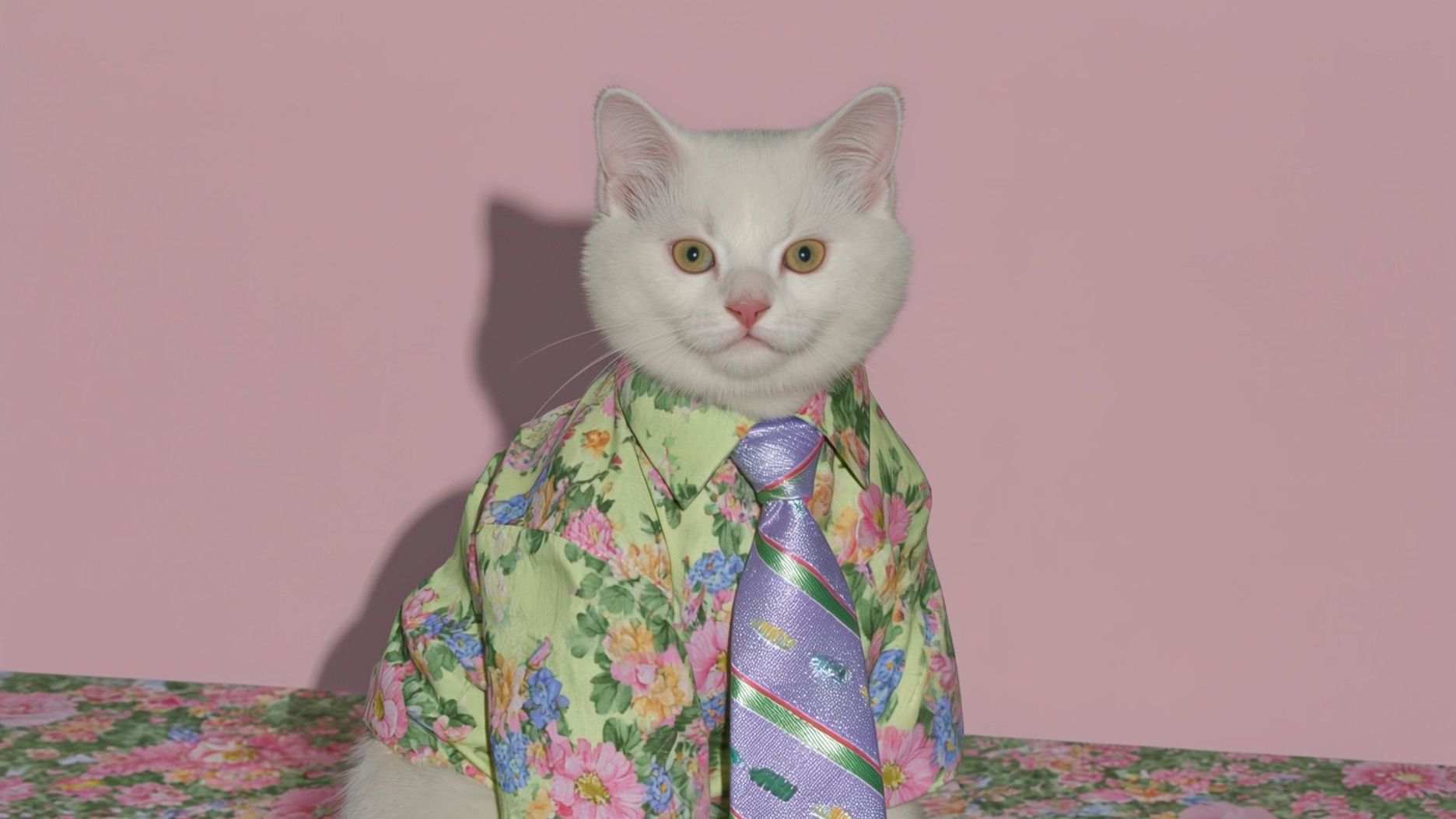
A kitten moves back and forth between the real world and a cartoon world
1) What I Focused On
For the third test, my primary focus was the naturalness of the style transitions and the stability of the motion throughout those transitions.
I mainly examined three points:
- When the video shifted from live action to animation, did the character’s form and movement continue naturally?
- When it returned to live action, did the character still look like the same character?
- Did each visual style maintain clearly defined boundaries without blending together or becoming indistinct?
2) Test Scenario & Prompt
In this test, I explored a creative approach that I use frequently: live action → animation → live action → animation, with different visual styles repeatedly alternating within the same video.
This type of video is highly demanding for a model. Once the visual style changes dramatically, the character’s form, direction of movement, and overall visual texture can easily become unstable. In particular, when transitioning from live action to animation and then back to live action, continuity is immediately disrupted if the character no longer looks like the same character.
So, the key question in this test was whether the same character and the movement within the scene could remain coherent, even through significant changes in visual style.
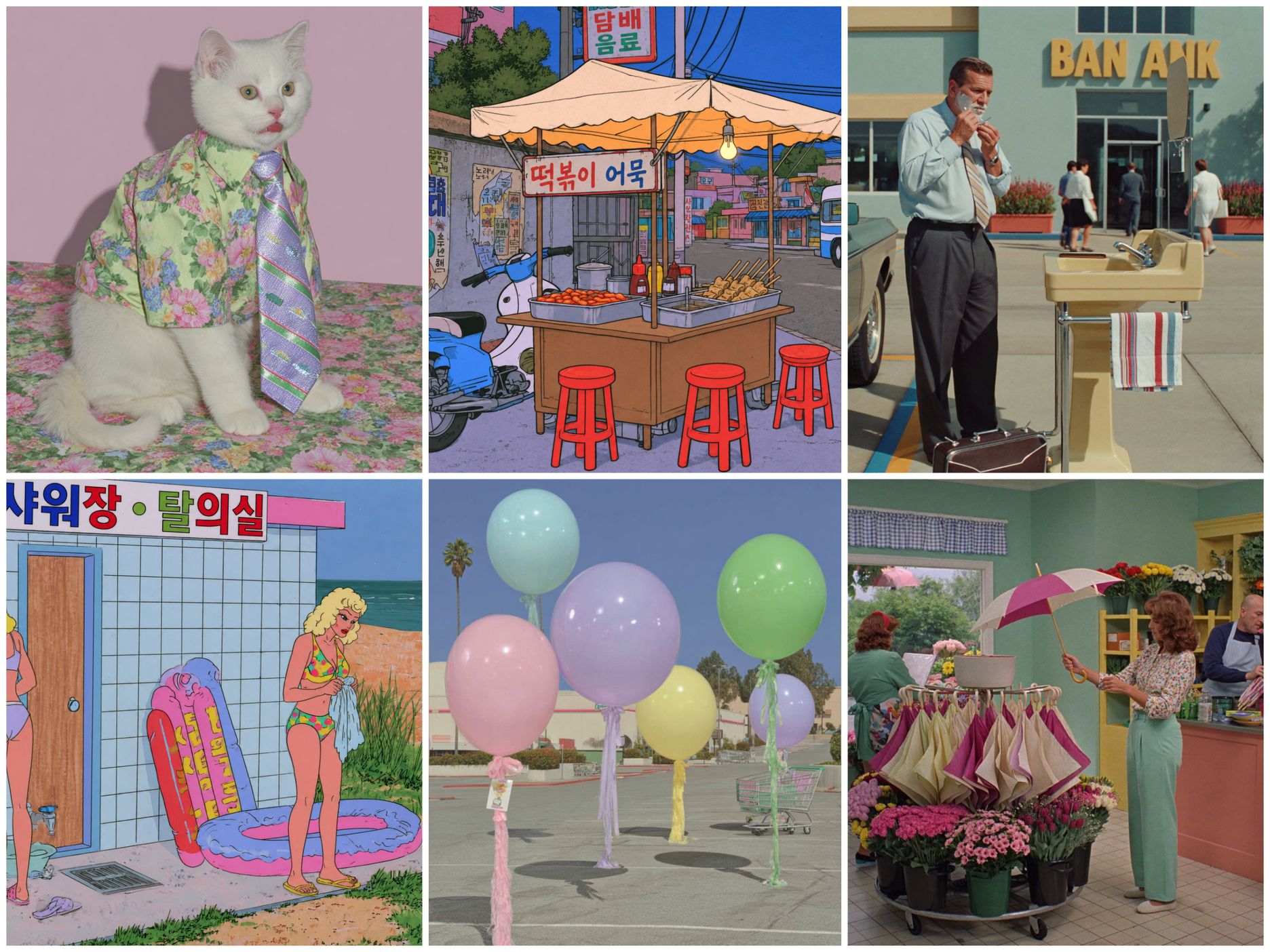
Reference images
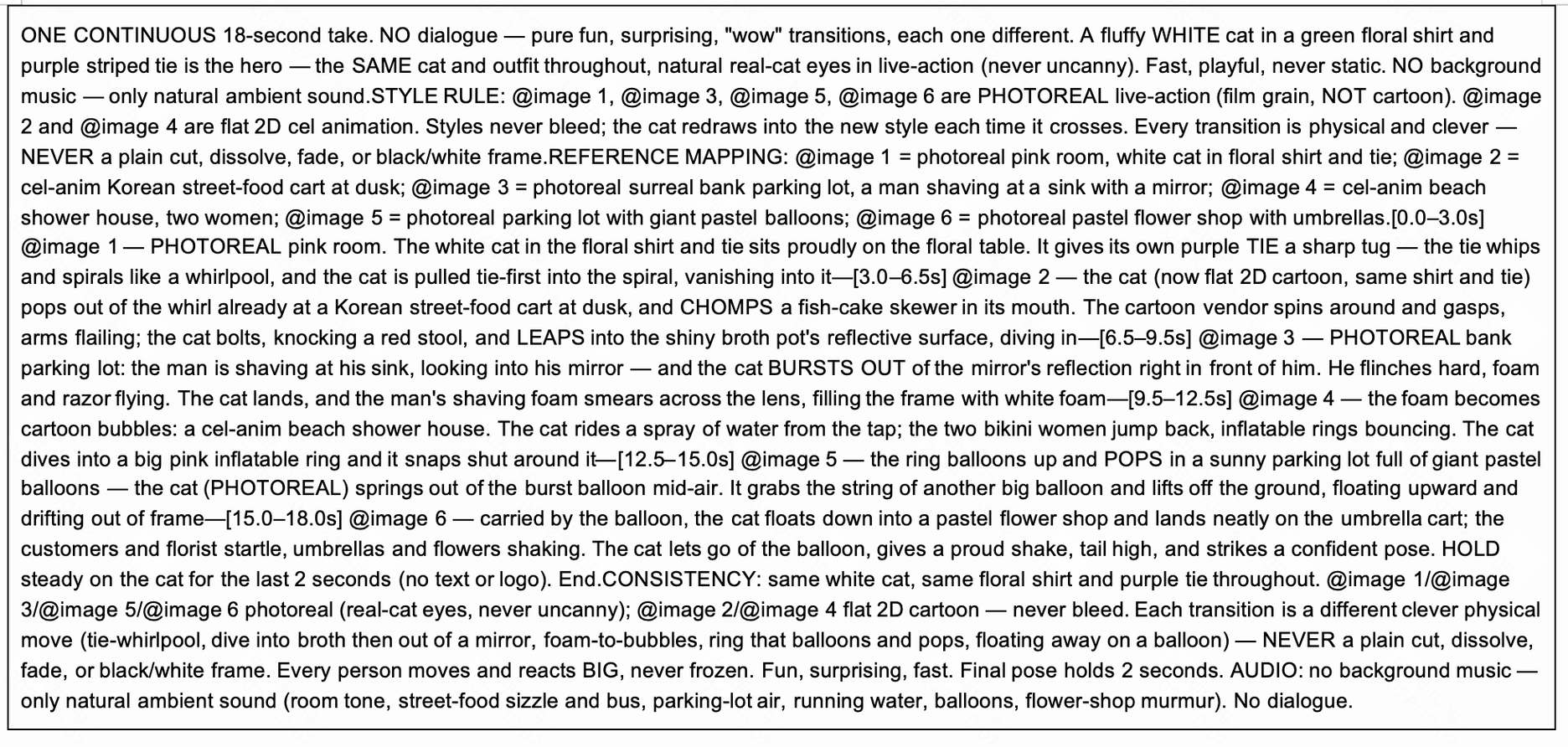
Prompt
3) Results and Feedback
Overall, Kling 4.0 handled the repeated transitions between live action and animation with remarkable fluidity. Different visual styles could appear continuously within the same video without any noticeable breaks, revealing the model’s strong potential for mixed-style video creation. Even in a continuous sequence spanning dramatically different styles, Kling 4.0 maintained the relationships among the character, action, and environment. As a result, each style transition became more than a visual effect—it became part of the narrative action itself.
Kling 4.0 also demonstrated strong stability in scenes combining fast motion with dramatic stylistic changes. For creators, this capability opens up more complex and imaginative forms of video creation, such as blending live action with animation, moving characters across different visual styles, and building continuous narratives across distinct visual worlds.
4. Conclusion
My impression from testing Kling 4.0 was that the process of turning a creator’s envisioned scene into video has become more stable. It does more than simply set an image in motion—it preserves the original image’s character and rhythm more effectively through character performance, camera movement, and visual continuity.
My work often introduces surreal situations into real-world settings, so I am not simply looking for more complex movement or more spectacular motion effects. What matters more to me is whether the color palette, character presence, spatial texture, and mood established in a still image can remain intact in the resulting video. Based on this test, Kling 4.0 has given me clear confidence in its ability to do exactly that.
Of course, I also hope to see continued improvements in performance details, Sound Effects, character consistency, and fine-grained control. Once these capabilities become sufficiently stable, AI video creation will no longer be merely about “making images move.” It will be able to play a more meaningful role in the creator’s decision-making process, helping them sustain and develop a complete visual world.