AI food & restaurant videos
Scroll-stopping, on a plate. Appetising food video comes down to a close-up, one hero motion and warm light — here are two real clips (a text-to-video cheese pull and a real-dish animation) and the prompts that make food sell.
On this page
Get in close so the dish fills the frame, add one hero motion (a cheese pull, steam, a drizzle, a pour, a sizzle), light it warm with a shallow depth of field, and slow it down. Kling has no food mode — it's ordinary text-to-video, as in the real cheese-pull demo. For the plate on your menu or listing, start from a photo of your actual dish with image-to-video, as in the real burger clip. Both are real and unedited below.
Two food shots, two real clips
Two ways to make food video, both real and unedited from Kling — a text-to-video hero shot you can conjure from a sentence, and an image-to-video animation of a real dish (the path for menus and listings). The exact prompts are under each clip to copy.
The appetite shot · a cheese pull (text-to-video)
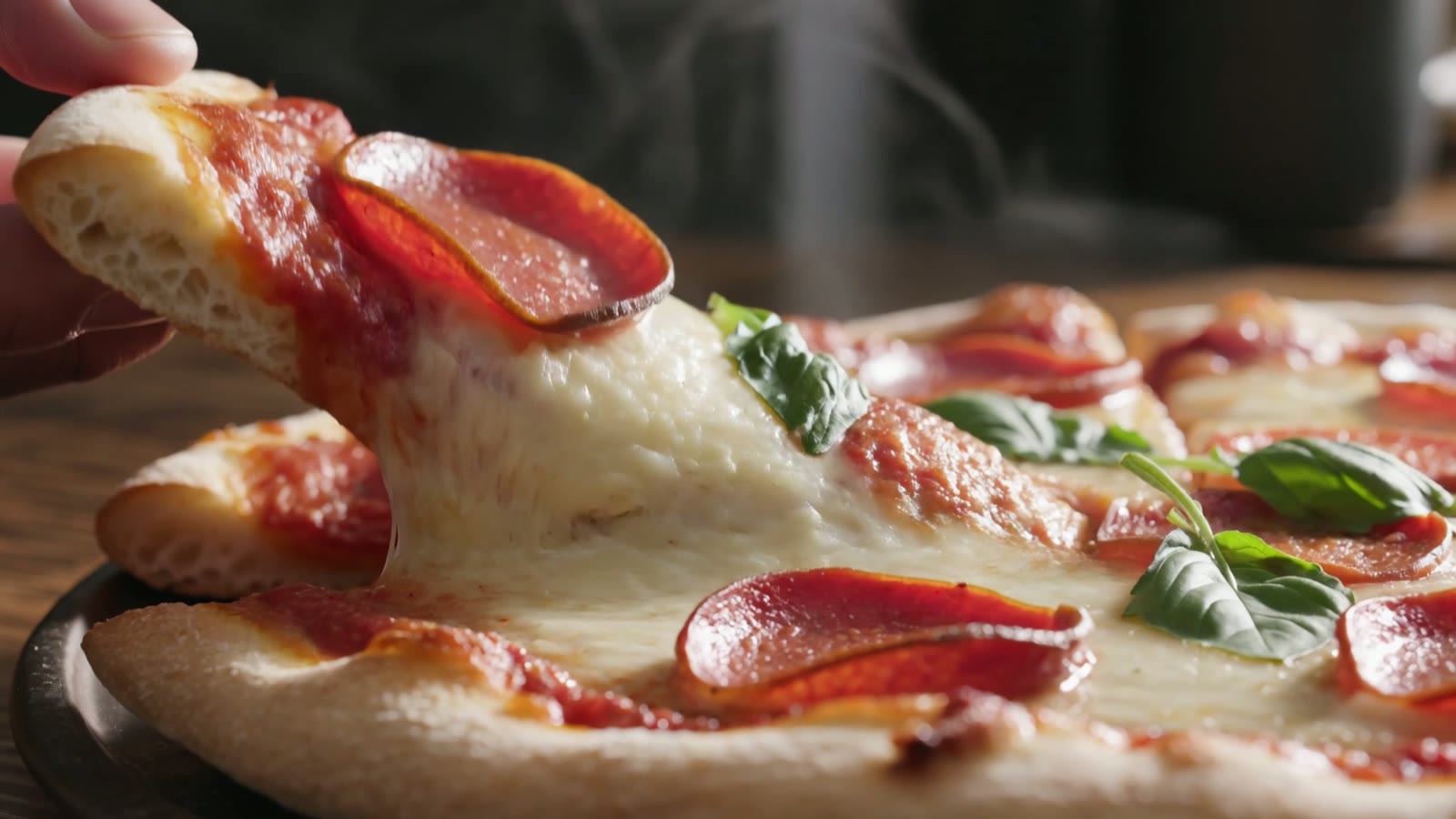
Cinematic close-up food shot, a slice of hot pizza being lifted from a whole pizza, gooey melted cheese stretching in long strings, wisps of steam rising, glistening toppings and fresh basil, warm appetizing light, shallow depth of field, gentle slow motion, photorealistic and mouth-watering.
Close, moving, warm. The frame is filled with the slice, the cheese pull is the one hero motion, and warm light plus slow motion make it glisten — three cues that turn food into something you can almost taste, all from a sentence.
Your real dish · steam off a burger (image-to-video)
Steam curls and drifts slowly upward from the hot gourmet burger, gentle continuous motion, the melted cheese glistening, everything else held still, warm restaurant light, photorealistic. (Image-to-video: describe only what moves, not the dish itself.)
This is the menu-safe path. Starting from a photo of the actual burger and prompting only the steam keeps the clip true to what’s served — ideal for menu boards and delivery listings, where the promo has to match the plate.
How to make food look delicious
Get in close and fill the frame
Appetising food video is intimate. Ask for an extreme close-up that fills the frame with the dish, so the texture — the melt, the crust, the glaze — is the whole shot. Distance kills appetite appeal; the crave lives in the detail.
Add the one hero motion
Food looks alive when one thing moves: a cheese pull stretching, steam rising, sauce drizzling, a pour, a sizzle. Name that single hero motion and let it carry the clip — it's the thing a still photo can't do, and one believable detail beats a whole plate trying to come alive.
Light it warm and shallow
Warm, soft light and a shallow depth of field make food glow and pull the eye to the hero bite. Say ‘warm appetising light, shallow depth of field’ and the dish reads as fresh and delicious rather than flat.
Slow it down
Slow motion makes food luxurious — the stretch, the steam, the drizzle all turn hypnotic. It's the single easiest cue for turning an ordinary food clip into something that stops the scroll.
Use your real dish for menus & listings
For a generic hero shot, text-to-video is instant. But for the plate on your menu or delivery listing, start from a photo of your actual dish with image-to-video and prompt just the motion — so what's promoted matches what's served. Export at the platform's ratio (9:16 for Reels/TikTok, 1:1 or 4:5 for a feed, 16:9 for a menu-board loop) rather than cropping after.
There's no food-video mode — it's Kling's ordinary text-to-video, prompted for the close-up, hero motion and warm light that make food look its best, which is why the same recipe works for a pizza, a pour, a sizzle or a drizzle. For a generic hero shot, text-to-video (the cheese pull) is instant. For your actual plate — the one on your menu or delivery listing — start from a photo of it with image-to-video (the burger), so what's promoted matches what's served. A finished 1080p, 3-second single-shot clip (Multi-Shot and Native Audio off) is the cheapest setup — the exact credit cost shows on the generate button before you run; add branding and text overlays afterward in an editor, and check your platform's video specs before you post.
Four more food shots to copy
Four more copy-paste food prompts, each built on the same recipe — close, one hero motion, warm light, slow. Swap in your own dish and drink; keep it generic and logo-free.
Cinematic close-up of a colourful cocktail being poured over ice in a chilled glass, a citrus twist garnish, condensation beading on the glass, bright bar lighting, bubbles rising, slow motion, photorealistic and refreshing.
Cinematic close-up of a steak sizzling on a hot grill, flames licking the edges, juices glistening, smoke curling up, char marks forming, warm dramatic light, shallow depth of field, slow motion, photorealistic and mouth-watering.
Cinematic close-up of warm chocolate sauce drizzling over a stack of pancakes with melting butter, syrup cascading down the sides, a dusting of powdered sugar, soft morning light, shallow depth of field, slow motion, photorealistic and indulgent.
Cinematic close-up of chopsticks lifting noodles from a steaming bowl of ramen, rich broth and a soft-boiled egg, wisps of steam rising, warm moody light, shallow depth of field, slow motion, photorealistic and comforting.