AI cooking videos that look appetising
The sizzle, on demand. A prompt can render the mouth-watering action of cooking — here's a real sizzling-pan shot, and how to prompt the process, the steam and the warm light.
On this page
Choose the process shot and angle (an overhead sizzling pan, a close-up chop), show the sizzle, steam and toss, light it warm and appetising, and keep the motion smooth and close. Kling generates a dish of its own invention — ideal for food-content mood, intros and backdrops. It's the cooking process, not a finished-plate hero shot.
A pan, sizzling
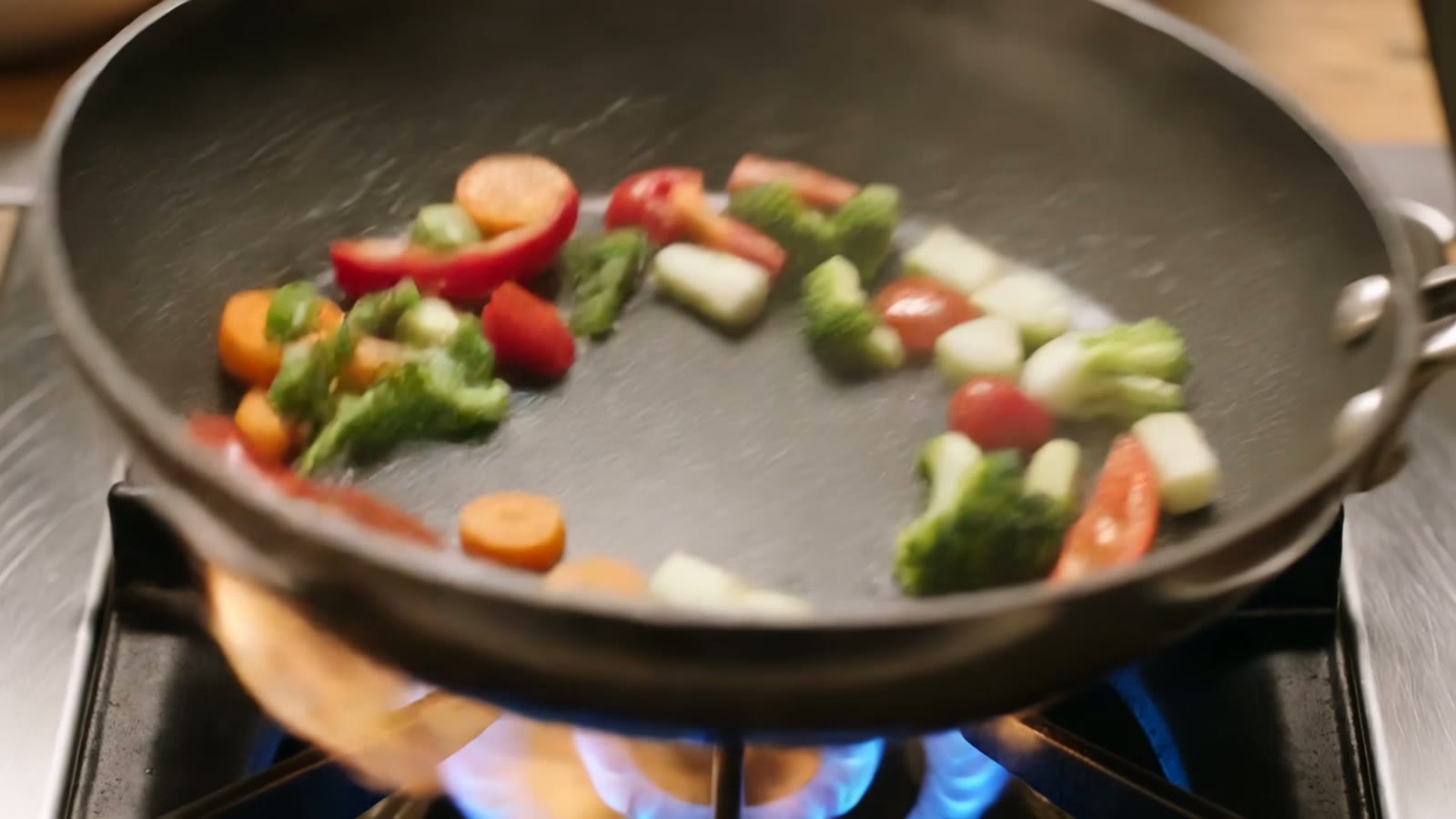
This is a real, unedited Kling text-to-video generation — the mouth-watering action of cooking from one prompt. The sizzle, the rising steam and the warm light are exactly what food content trades on:
Cinematic overhead shot of a sizzling pan on a stove, fresh vegetables and herbs being tossed in, steam and small flames rising, glistening oil, appetising and dynamic, close-up food-process style, warm kitchen light, photorealistic.
Angle, action, warmth. The overhead framing shows the whole pan, the tossing and rising steam bring the cooking to life, and the warm kitchen light makes the food look fresh and delicious — appetising cooking footage, from a sentence.
How to prompt a cooking video
Choose the process shot and angle
Cooking content is about the action. Pick the moment and the angle — an overhead sizzling pan, a close-up chop, a slow pour, a lift of the finished dish. A clear cooking action, framed tight or from above, is what makes it read as real cooking.
Show the sizzle, steam and toss
The life of cooking is its motion: sizzling and small flames, rising steam, ingredients being tossed, oil glistening, a sauce drizzling. Naming one or two of these active, appetising cues is what turns a static plate into mouth-watering process footage.
Light it warm and appetising
Food looks best in warm, soft light. Ask for warm kitchen light, a soft glow, gentle highlights on the food — that warmth is what makes ingredients look fresh and the dish look delicious rather than flat or clinical.
Keep the motion smooth and close
Good food footage is smooth and intimate. Ask for a steady overhead or close-up camera with a slow move, so the texture and the action stay clear. Smooth, tight motion is what reads as polished food content rather than a shaky home clip.
There's no cooking mode — this is text-to-video, prompted for the process shot, the sizzle and steam, and the warm light that make food footage appetising. The dish in the clip is invented: the model made it up from a sentence, so it is right for mood, concept, intros and backdrops, and wrong for anything that has to be a specific dish. Where the actual food matters, shoot it and use generated clips as B-roll around it.