AI drone & aerial videos
The fly-over, no drone. A prompt can render a sweeping aerial of a dramatic landscape — here's a real one, and how to prompt the view, the light and the drone move.
On this page
Name the landscape and the light (a canyon at golden hour), ask for the drone move by name (a sweeping forward flight, a reveal over a ridge, an orbit), keep it high, smooth and slow, and add depth cues to sell the altitude. Kling generates the look of aerial footage — no drone, no licence, no permit. It's a style of place, not a specific location, so film or use image-to-video for a real one.
A fly-over, from a prompt
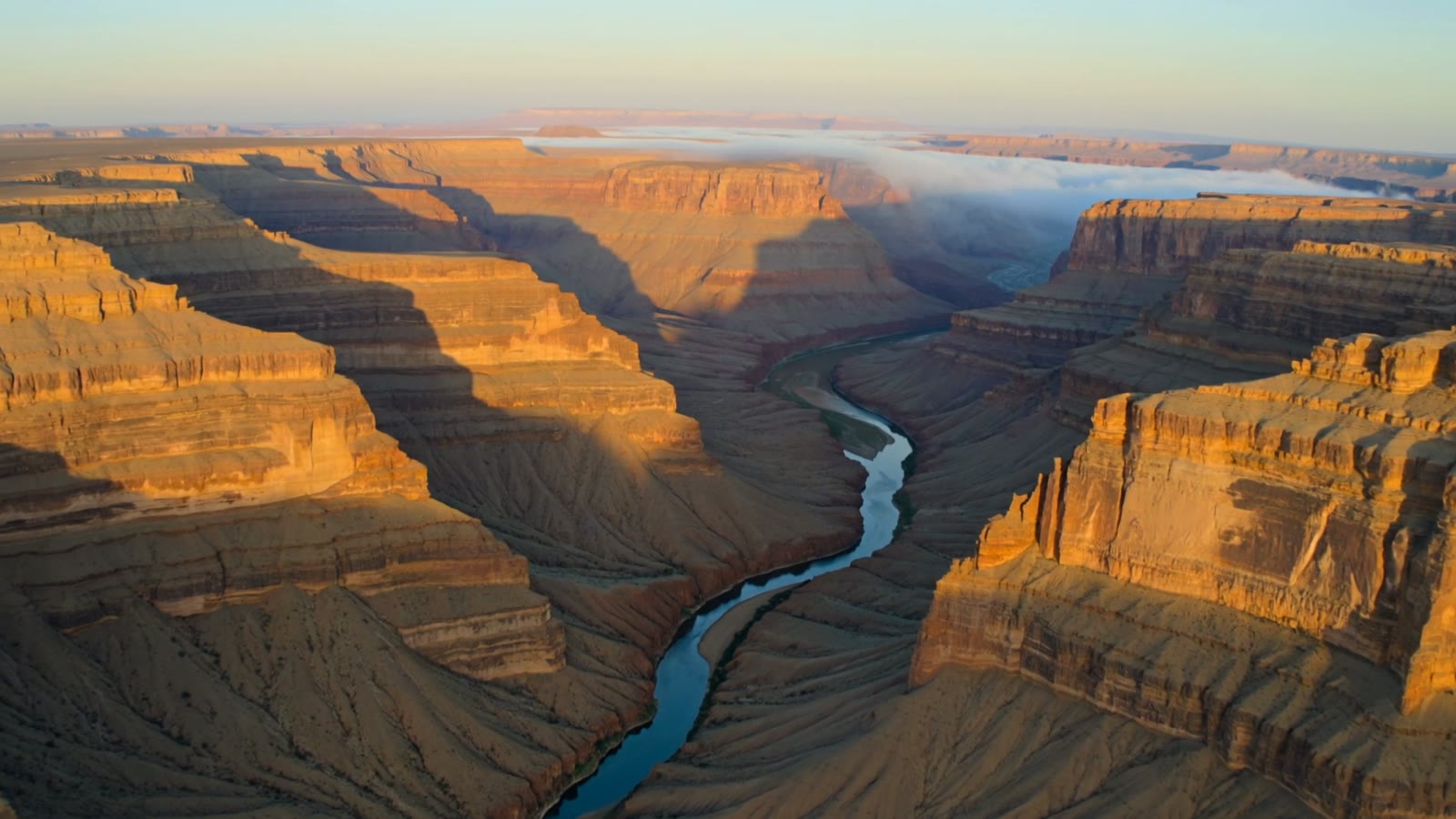
This is a real, unedited Kling text-to-video generation — no drone, no permit, no location. It reads like aerial footage because the prompt named the landscape, the golden light and the sweeping drone move:
Cinematic aerial drone shot sweeping over a dramatic canyon at golden hour, a winding river far below, layered rock formations glowing in warm light, soft haze in the distance, epic scale, smooth flowing forward flight, photorealistic.
Landscape, light, motion. The canyon and river give the view, golden hour gives the mood, and the smooth forward flight gives it that effortless drone feel — height and grandeur from a sentence.
How to prompt an aerial
Name the landscape and the light
Aerials live on the view. Lead with a dramatic landscape — a canyon, a coastline, a mountain range, a forest — and the light: golden hour, misty dawn, blue hour. The land plus the light is what makes a fly-over cinematic.
Ask for the drone move by name
Drone footage is defined by its motion. Name the shot: a sweeping forward flight, a slow reveal over a ridge, an orbit around a peak, a rise to a wide vista. Naming the move is what makes it read as aerial rather than a static wide shot.
Keep it high, smooth and slow
Aerials feel effortless. Ask for smooth, flowing, unhurried motion from a high vantage; jittery or fast movement breaks the calm, expansive feel a drone shot trades on.
Set the scale and the depth
Reinforce the sense of height with depth cues — a tiny river far below, layered ridges fading into haze, long shadows. Naming those cues gives the shot its epic scale and altitude.
There's no aerial mode — it's text-to-video prompted for the landscape, the light and the drone move that make a fly-over. That's the appeal: a sweeping canyon or coastline in a couple of minutes, no drone, no pilot's licence, no flight permit, no weather to wait on. It's a style of place, not a specific real location, so use it for cinematic B-roll, intros and mood — and for a real, specific place, film it or start from a real photo with image-to-video.