How to make a 1-minute AI short film
A film is shots, cut together. AI can generate cinematic shots on demand — string them to a shot list and edit them into a one-minute short. Here's a real shot, and the workflow around it.
Write a one-line premise and a numbered shot list first — a minute is roughly 8 to 15 shots. Prompt each shot for its specific job (establishing wide, detail, turn, resolution); Kling generates up to 15 seconds per shot. Hold light, palette and any recurring character consistent across prompts, then cut the shots together with music and sound in a video editor. AI generates the shots; the edit makes the film.
One shot from a short film
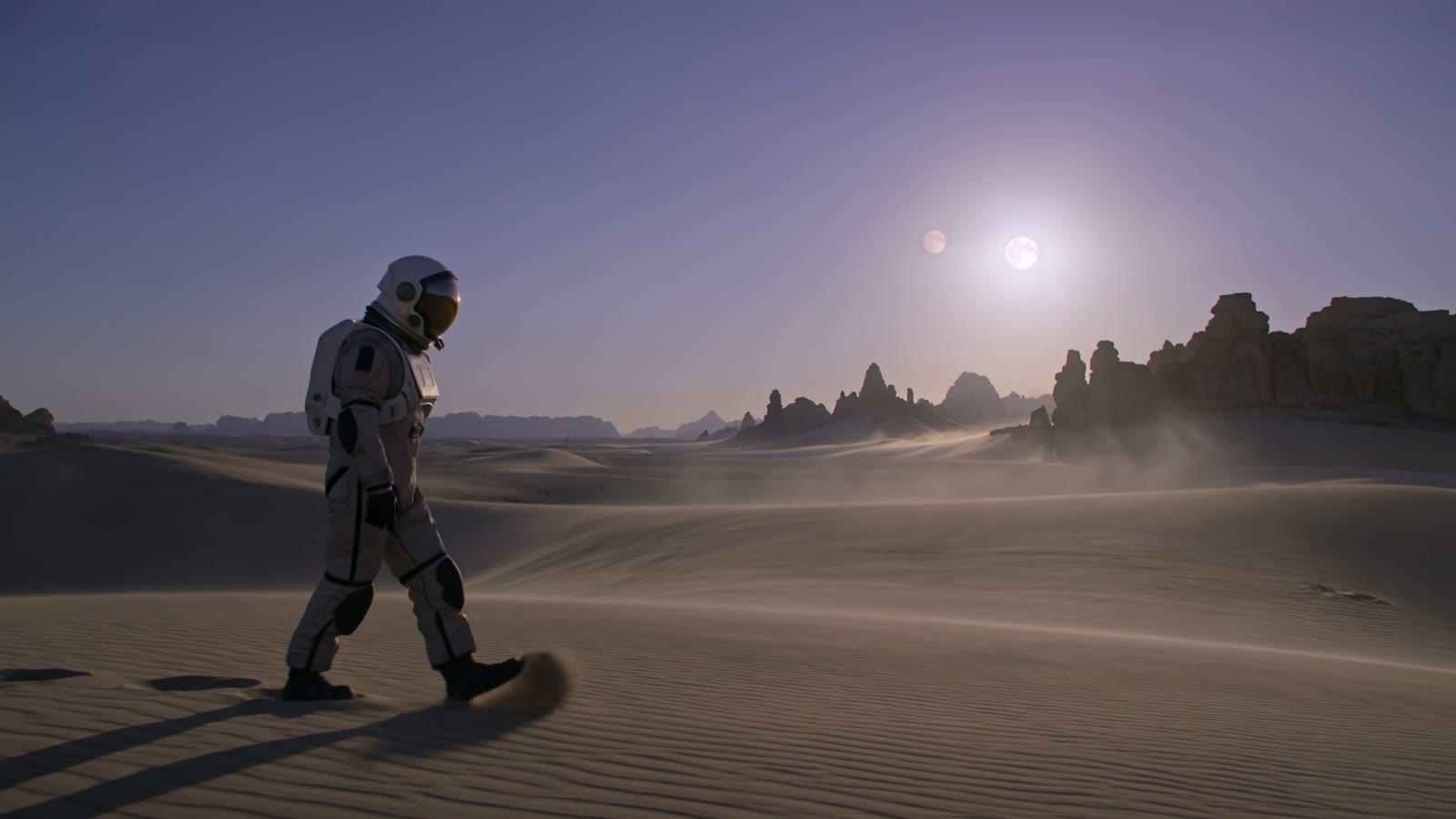
This is a real, unedited Kling generation — a single cinematic establishing shot, the kind that opens a short film. On its own it's one beat; a full short strings a shot list of these together and cuts them with sound:
A lone astronaut in a weathered spacesuit walks slowly across a vast alien desert at dusk, two moons rising in a deep purple sky, fine sand blowing across the dunes, distant jagged rock formations, cinematic wide tracking shot, dramatic sci-fi atmosphere, volumetric light, slow deliberate camera move.
This is shot one, not the film. A minute of story is a handful of shots like this — a wide to set the world, a detail, a moment of tension — planned on a shot list and edited to a rhythm.
How to make a 1-minute short film
Write a tight premise and shot list
A minute is roughly 8–15 shots. Before generating anything, write a one-line premise and a numbered shot list — establishing wide, a detail, a turn, a resolution. The list is your film; the clips just fill it in.
Generate each shot for the frame it needs
Prompt every shot for its specific job: a slow establishing wide here, a tight detail there. Kling generates up to 15 seconds per shot, so make each clip earn its place rather than asking one generation to tell the whole story.
Hold continuity across shots
Keep the light, palette and — if a character recurs — their description consistent from prompt to prompt, so the shots feel like one film. For a recurring face, lean on a reference image; consistency has limits, so many shorts lean on mood, place and objects.
Cut it together with sound
Drop the shots into any editor, trim to a rhythm, and add music, ambience and any voiceover. The pacing of the cut and the sound design are what turn a folder of clips into a one-minute film.
Kling generates shots, not finished films — a one-minute short is assembled from several clips (each up to 15 seconds) in a video editor, where the cut, the pacing and the sound design do the storytelling. Plan the shot list before you generate, hold continuity across prompts, and treat the edit as the real creative work. That split is exactly how films are made; AI just replaces the shoot, not the filmmaker.