Does clip length affect AI video quality?
A real test — the same scene at 3 seconds and 15 seconds. The result isn't what you'd expect: the thing that changes dramatically with length isn't quality, it's cost.
On this page
In our own test, no — a 15-second clip of a locked-camera, single continuous motion held stable, coherent quality all the way to its last frame, same as the 3-second version. What changed dramatically was cost: the 15-second clip cost five times the 3-second one — duration scales the price linearly.
What actually drives clip quality
Camera stability over time
A locked-off camera has less to maintain than a moving one — our own test held pixel-stable framing from the first frame to the last across a full 15-second clip, with nothing appearing to drift.
How many distinct things are happening
Our test used one continuous motion (water flowing) with nothing else changing. A longer clip asking for several distinct actions in sequence is a different, harder case this test doesn't cover.
What actually scales with length
Credits scale directly and predictably with duration — in our own account the 15-second version cost five times the 3-second version, an almost perfectly linear rate, not a quality-related cost.
Where degradation risk realistically lives
Complexity, not raw duration, is the more likely source of any quality drop — a longer clip with a moving camera, changing scene elements, or multiple characters has more it could get wrong than a longer clip of one simple, steady motion.
Length scaled the credit cost predictably. It didn't scale visible quality loss — at least not for the one simple scene we tested.
A real test: 3s vs. 15s
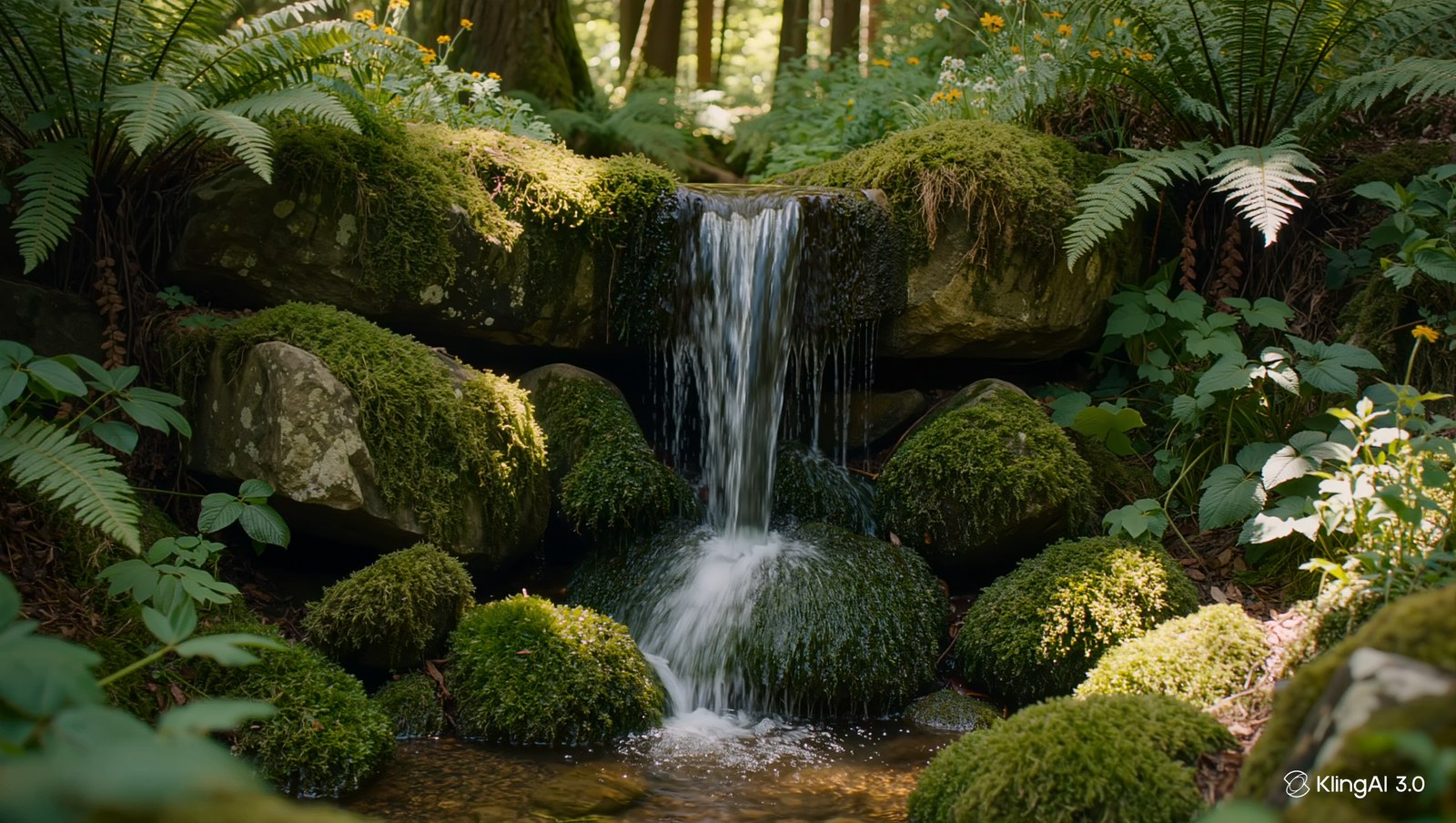
Same waterfall photo, same prompt, same locked camera — the only variable changed was duration. Both are real, unedited first-take clips:
Water flows gently over the rocks, camera locked completely still.
The platform default length — clean, stable, natural water motion throughout.
Water flows gently over the rocks, camera locked completely still.
Checked at the start, 25%, 50%, 75%, and the very last frame — camera framing stayed pixel-stable throughout, no visible drift or artifacts appeared later in the clip.
The real cost of going longer
Figures below are directly observed on this project's own account, not published rates:
| Duration | Settings | Credits | Approx. cost |
|---|---|---|---|
| 3 seconds (default) | 1080p, single-shot, no audio | Baseline cost | Exact number shows on the generate button |
| 15 seconds (maximum) | 1080p, single-shot, no audio | ≈5× the 3-second cost | Scales linearly with duration |
This is one real test on one simple, single-continuous-motion, locked-camera scene — not a survey across every possible subject. A busier scene with a moving camera, multiple characters, or several distinct actions in sequence is a materially different case this article doesn't claim to have tested, and might behave differently over a longer duration. Treat the cost finding as the reliable, general takeaway; treat the quality finding as true for scenes like this one specifically.