An engine roars through the silence. Tires bite into a corner, sending water spraying across the road. Rain pours down over the city as a high-speed race begins.
Every frame feels like it belongs in a blockbuster racing film. But creating this kind of footage with AI video generation involves much more than simply making a car move fast. The real challenge lies in keeping the action convincing, the camera movements coherent, and every detail consistent from shot to shot.


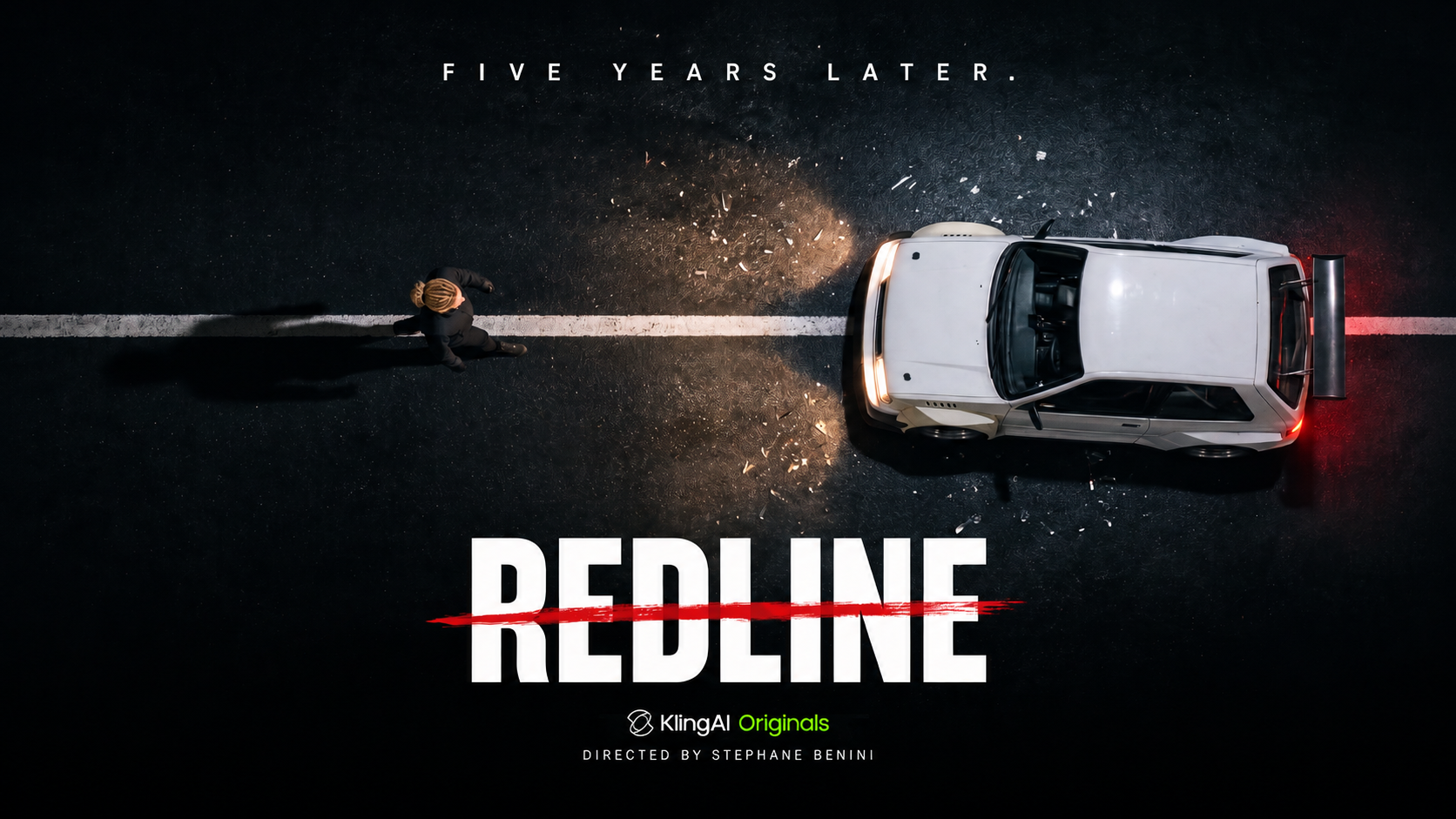
Powered by Kling 4.0, Redline is a Kling AI Original created in collaboration with Stephane Benini, an award-winning AI director and digital artist. Set during a high-speed street race through a rain-soaked city at night, the film takes on the challenges of bringing the racing genre to life with AI.
Here's a closer look at how its cinematic quality comes together — from dynamic motion and camera movements to lighting, texture, and character performance.
1. Delivering Convincing Motion and Camera Movements
The defining challenge of any racing film is motion. Throughout Redline, cars accelerate down wet streets, drift around sharp corners, and slide across the track at extreme speeds. Kling 4.0 strikes a balance between motion blur and visual clarity, delivering cinematic motion that makes every high-speed sequence feel convincing and dynamic.
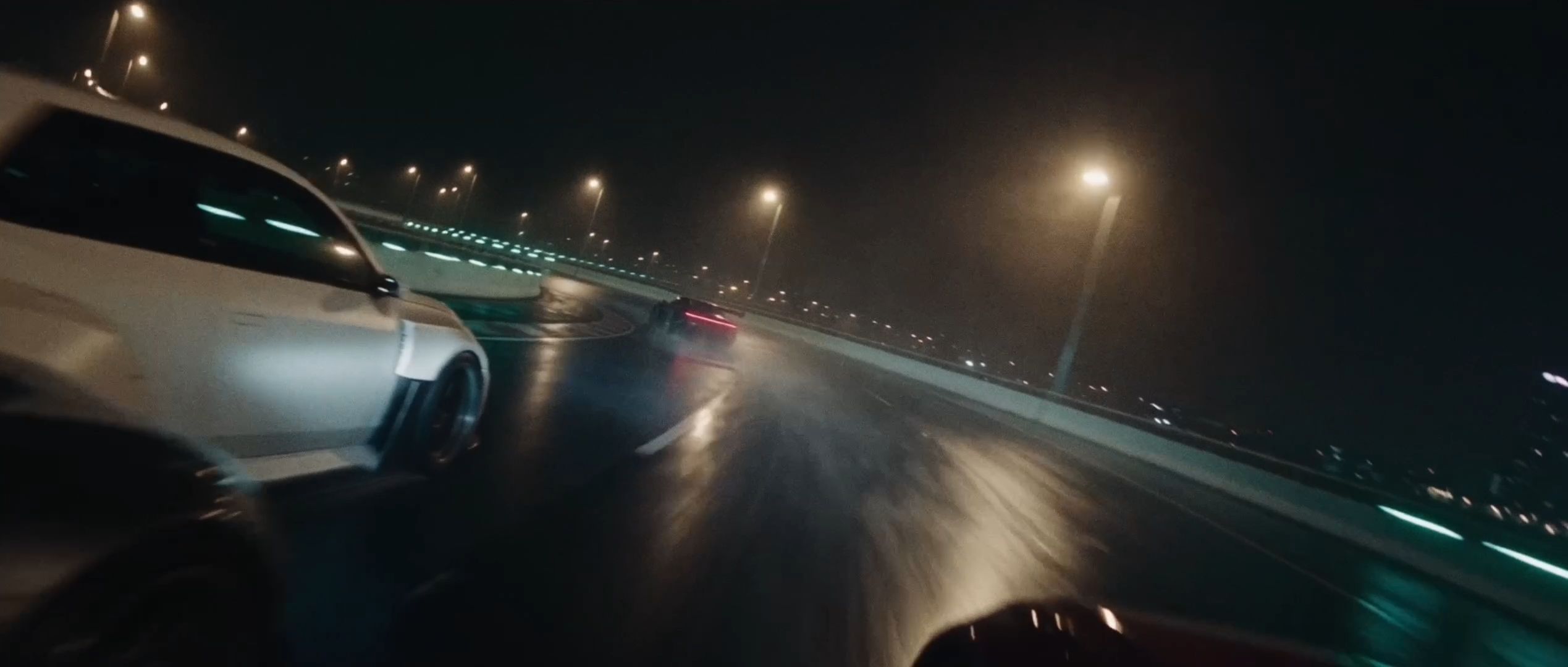
The more demanding test comes during drifts and tight corners. As a car slides sideways, its body, wheels, and surrounding environment must remain structurally consistent. Kling 4.0 generates these high-speed sequences while maintaining the cars' shape and visual consistency, bringing dynamic movements to life with greater stability.
Speed alone does not make a racing sequence cinematic. The camera determines how the audience experiences that speed.
In Redline, the race moves through tunnels, bridges, and urban highways. The camera shifts between different perspectives: sometimes skimming just above the road, sometimes placing the audience inside the cockpit, and sometimes rising high above the city to reveal the full racing environment.
.gif)
Each shot type has a distinct narrative purpose. Here are a few classic approaches used in racing films:
- Low-angle shots to establish speed and impact.
The opening sequence uses a ground-level perspective to bring the audience close to the action. A low camera position, paired with wide-angle framing, makes the rotating wheels and speeding cars feel larger and more immediate. As the vehicles race across the bridge, the shot captures their movement against the city's illuminated architecture.
.gif)
- In-car POV shots to create immersion.
The steering wheel, gear shifter, rearview mirror, and dashboard are classic elements in racing films. The camera shifts between the driver's tense expression, their hands gripping the steering wheel, and the blurred city outside the windshield. These familiar details establish a clear point of view, placing the audience directly in the driver's seat.
.gif)
- Tracking shots and forward-moving perspectives to communicate momentum.
The camera follows behind the speeding cars or moves forward along the racing route. Roadside lights, guardrails, and reflections sweep past the frame, making the direction and intensity of the movement immediately clear.
.gif)
- Wide and aerial shots to establish scale.
High-angle views reveal elevated roads winding between skyscrapers, with illuminated racing lines cutting through the nighttime city. Before the race begins, silhouettes of cars and spectators establish the scale of the event and give the story a wider setting.
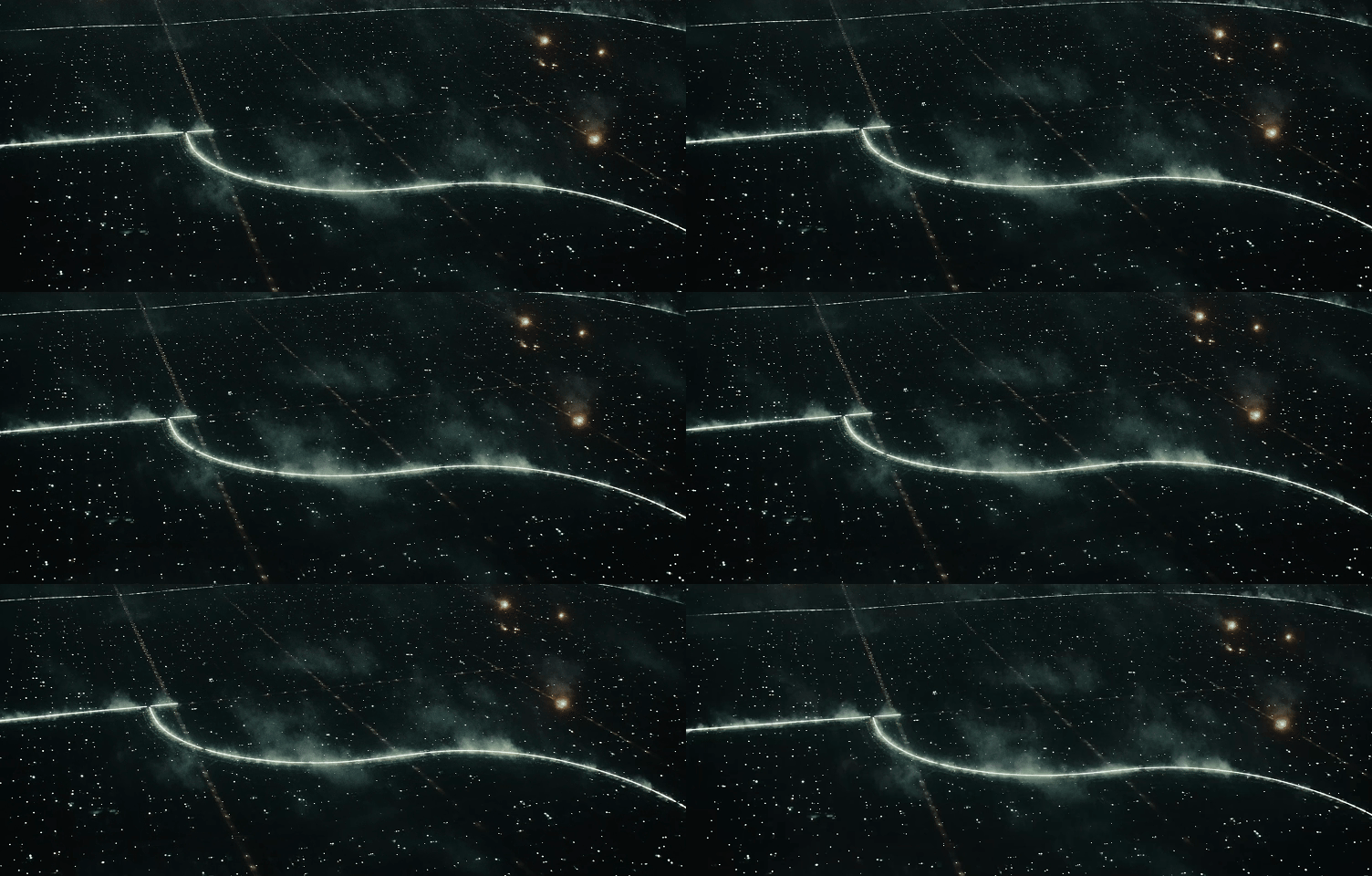
The challenge is not simply generating these individual perspectives, but making them work together as a sequence. Kling 4.0 takes camera control and scene coverage further, supporting high-speed action, continuous motion, tracking, orbiting, and close-up shots within moving scenes. Across longer sequences and changing environments, visual consistency is equally important: the cars and their surroundings need to remain recognizable as the camera changes position.
Of course, beyond the model's capabilities, careful editing by Stephane Benini's team is also essential to bringing the shots together into a coherent sequence and making the visual storytelling even more impactful.
Prompting tip: Plan each shot with clear camera directions and keyframes
When creating a racing sequence, think in terms of individual shots rather than asking one prompt to describe an entire film. Specify the camera angle, movement, subject, and intended visual effect for each shot.
You can also use keyframes to define the visual progression of a shot. Kling 4.0 supports up to 10 keyframe images as inputs, allowing creators to pinpoint important moments of visual change and guide how a scene evolves from one frame to the next. By establishing these key visual states, you can achieve smoother, more natural transitions and maintain greater control over the progression of a sequence.
For example, a low-angle tracking shot, an in-car POV, and an aerial establishing shot each communicate a different aspect of the race. Combining precise camera directions with carefully selected keyframes helps bring these perspectives together into a more coherent cinematic sequence.
2. Building Atmosphere Through Lighting and Texture
In a nighttime racing film, atmosphere comes as much from light and texture as it does from movement. In Redline, most of the frames unfold in deep shadows, punctuated by the warm glow of headlights and streetlamps. Reflections spread across the wet road, while fine mist in the air adds depth between the foreground and distant cityscape. As the camera moves through the city, distant headlights gradually emerge from the haze. Streetlight reflections stretch across the road, further establishing the depth and scale of the track.
.gif)
The cars themselves present another challenge. When the camera moves closer, the metallic paintwork of the black and white vehicles needs to respond naturally to changes in viewing angle. Reflections from the surrounding environment should shift across the curved surfaces of the bodywork rather than remain fixed in place.
.gif)
Kling 4.0's texture and rendering capabilities help maintain visual coherence across complex interactions between lighting, surfaces, and camera movements. Reflections on different surfaces respond naturally to their surroundings, while transitions between highlights and shadows retain an organic, cinematic quality. These capabilities are particularly valuable in high-contrast environments such as nighttime streets, backlit scenes, and neon-lit cityscapes, where preserving detail in both highlights and shadows is essential.
Kling 4.0's output provides a solid foundation, while the team's polished color grading further elevates the film's cinematic quality, giving it a cohesive, big-screen look.
Prompting tip: Describe the interaction between lighting and surfaces
Instead of simply asking for a "cinematic nighttime city," consider specifying the light sources, surface materials, and how they interact.
Example: "A rain-soaked urban street at night, warm headlights and streetlights reflecting across glossy asphalt, subtle mist in the distance, deep shadows, and metallic car paint reflecting the surrounding city lights."
These details help establish a consistent visual environment.
3. Bringing the Human Elements into the Race
A racing film is never just about cars and speed. It is also about courage and fear, reason and adrenaline, and the personal stakes behind every decision made behind the wheel.
Five years ago, a driver named Elias died in a car accident. Five years later, his girlfriend Elle, who learned to drive from Elias, returns to the same car. Determined to challenge her rival Devin and reclaim Elias's lap-time record, she gets back behind the wheel. But the past has not left her. As Elle drives, her gaze begins to drift, taking her back to the day Elias died. Just a split second before a collision, she suddenly jolts awake with a gasp. The entire sequence is revealed to have been a nightmare.
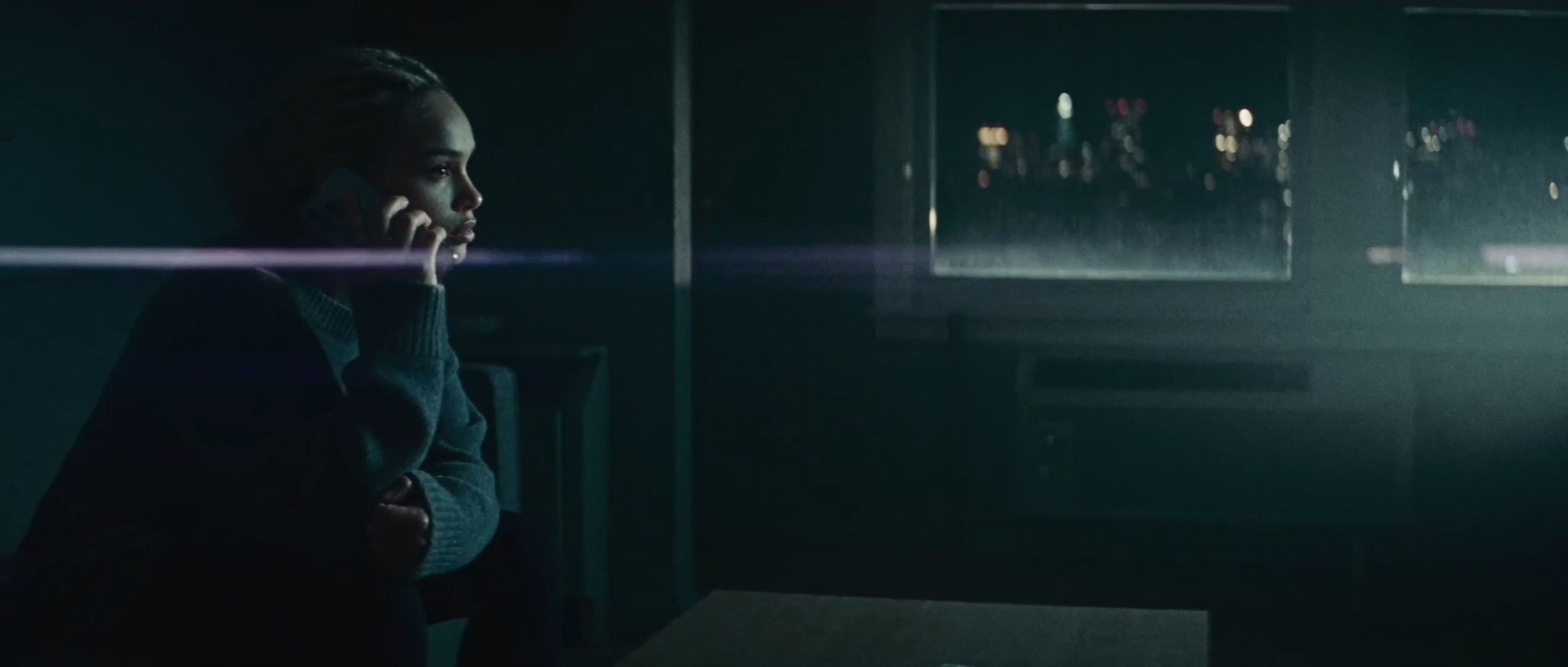
This scene offers an interesting test of AI-generated character performance. Unlike a high-speed sequence, where motion and spectacle dominate the frame, the emotional weight here depends on subtle changes in facial expression. Kling 4.0 brings characters to life with expressive, natural-looking performances, capturing nuanced facial expressions and body language. A glance, a moment of hesitation, or a slight change in expression can communicate an emotional shift without requiring explicit dialogue.
Throughout Redline, close-ups carry much of the storytelling. A shaky hand after witnessing a tragedy. A gloved hand shifting gears with precision. A foot pressing down hard on the accelerator. A driver's confident or anxious expression before entering a corner. These details gradually reveal the drivers' mindsets. Rather than relying on dialogue, the film uses physical gestures and facial expressions to convey passion, grief, and the drivers' determination to push beyond their limits.
.gif)
Achieving compelling character performances starts with how the characters are developed — not only their visual traits, but also their personalities, backstories, and intentions. This is where the human craft of storytelling from Stephane Benini's team comes into play.
Prompting tip: Give characters an emotional beat, not just an expression
A useful character prompt should describe what the character is feeling, what triggers that feeling, and how it becomes visible. Instead of simply asking for a "worried driver," consider describing a sequence of behavior: a focused gaze begins to drift, the driver's expression grows tense, and a sudden movement interrupts the moment. This emotional progression gives the model a more specific performance to depict and gives the resulting shot a clearer narrative purpose.
Beyond the Finish Line
The ultimate goal of AI filmmaking is not simply to generate a visually impressive subject or a technically flawless frame. It is to create images that can sustain a complete narrative and emotional experience.
Looking back, the film's most compelling moments are not necessarily its fastest or most spectacular shots. They are the moments when technical execution and cinematic expression come together: a car holding its shape through a difficult drift, a camera movement that makes the audience feel the speed, or a subtle change in a driver's expression that reveals the story behind the race.
.gif)
For creators, Redline offers an inspiring way to approach AI video production: begin with a story you're eager to tell, visualize the action you want the audience to experience, decide how the camera should communicate it, and then consider the lighting, texture, and character details that make each scene convincing.
Every great journey begins with a decisive first move. Just as a racing driver commits to every corner, creators can use Kling 4.0 to explore more ambitious visual ideas and discover new ways of telling stories.
The finish line is only the beginning.
Explore Kling 4.0 and discover what's possible in AI filmmaking.